Sandoval-Hernández Adrián G, Buitrago Luna, Moreno Herman, Cardona-Gómez Gloria Patricia, Arboleda Gonzalo
Grupo de Muerte Celular, Instituto de Genética Universidad Nacional de Colombia, Bogotá, Colombia.
Departments of Neurology and Physiology/Pharmacology, The Robert F. Furchgott Center for Neural and Behavioral Science, SUNY Downstate Medical Center, Brooklyn, New York, United States of America.
PLoS One. 2015 Dec 31;10(12):e0145467. doi: 10.1371/journal.pone.0145467. eCollection 2015.
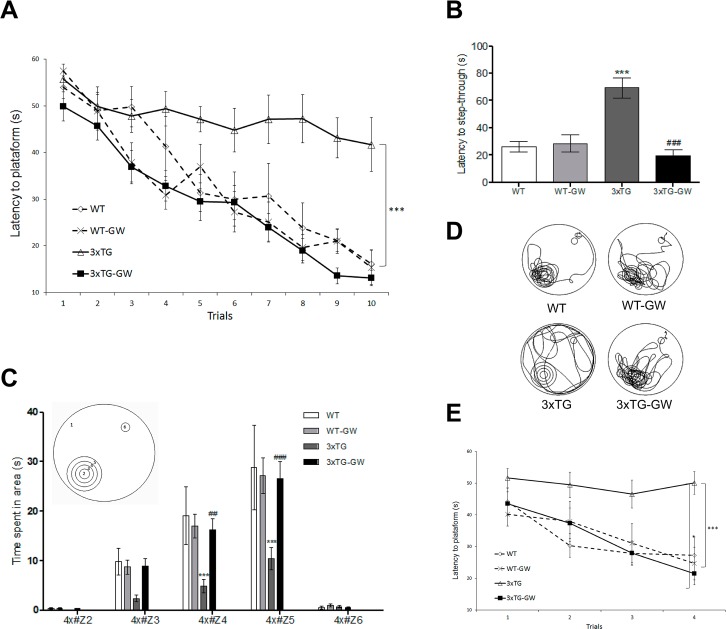
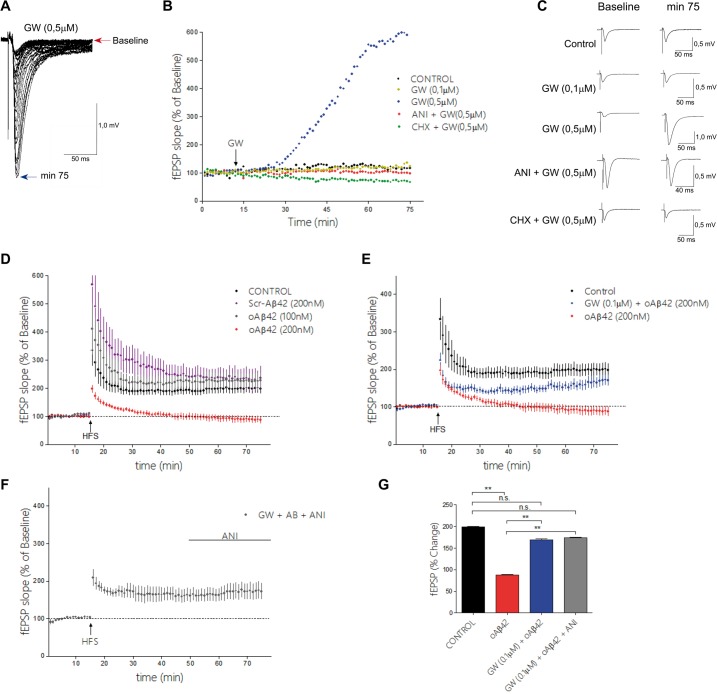
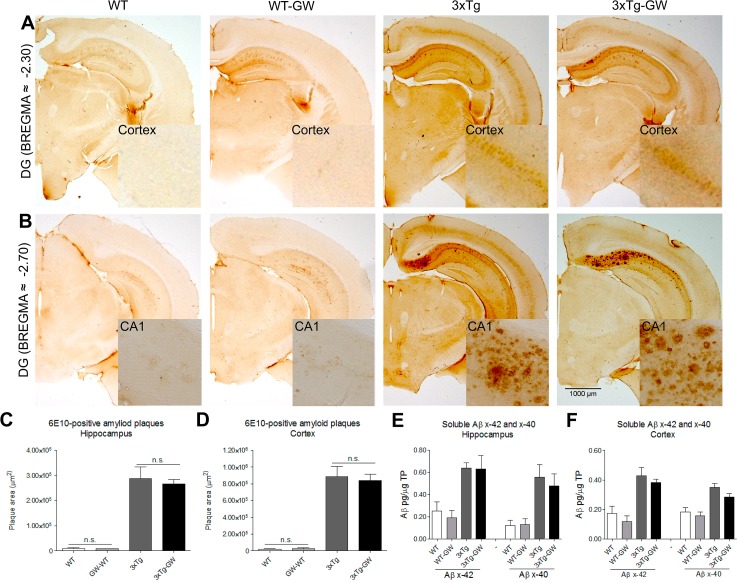
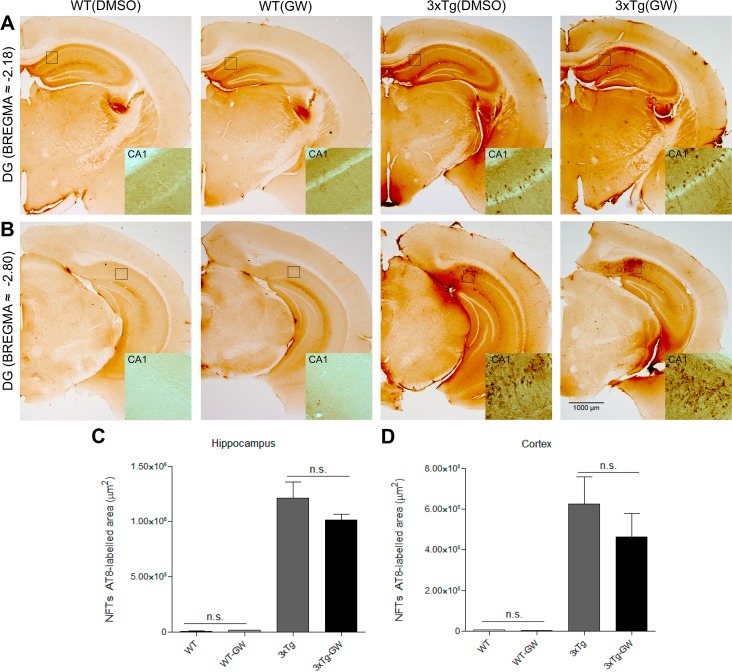
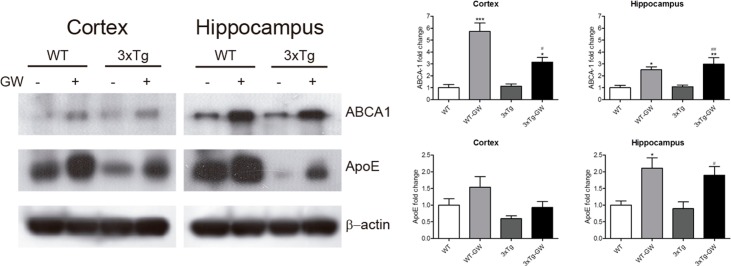
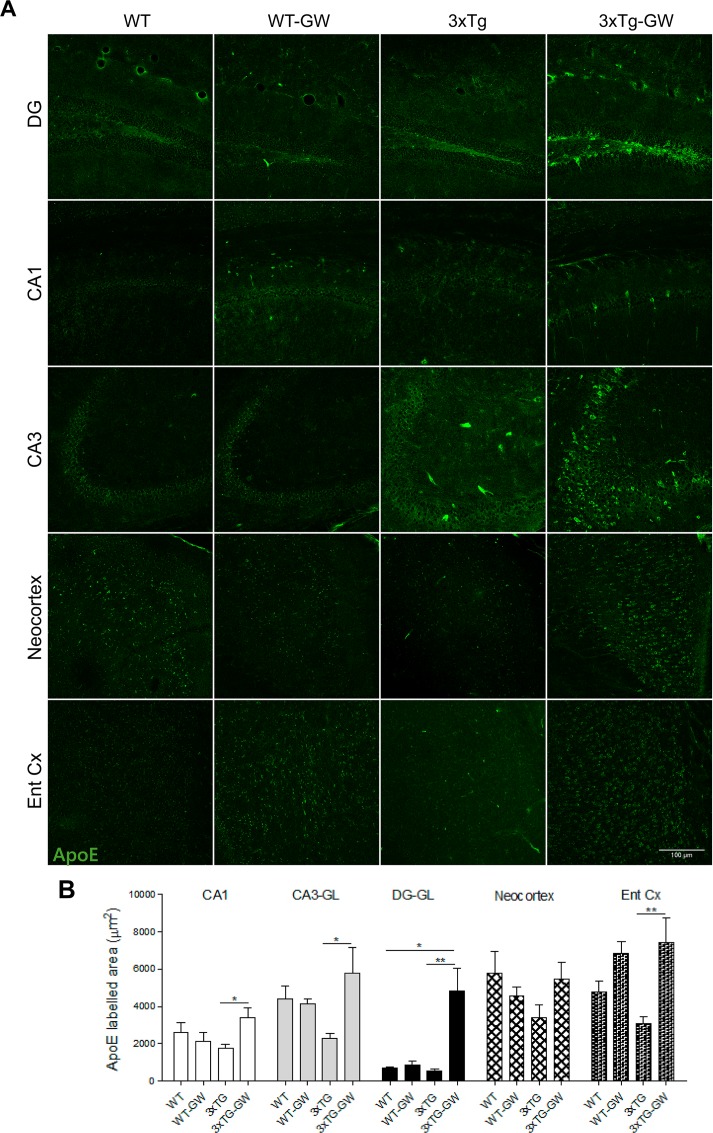
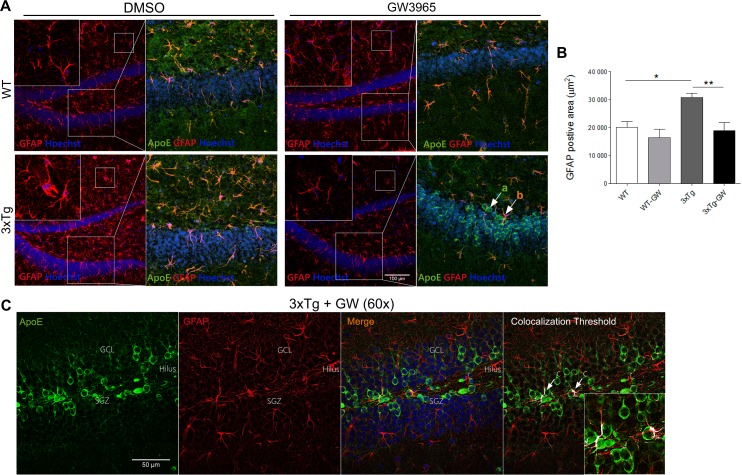
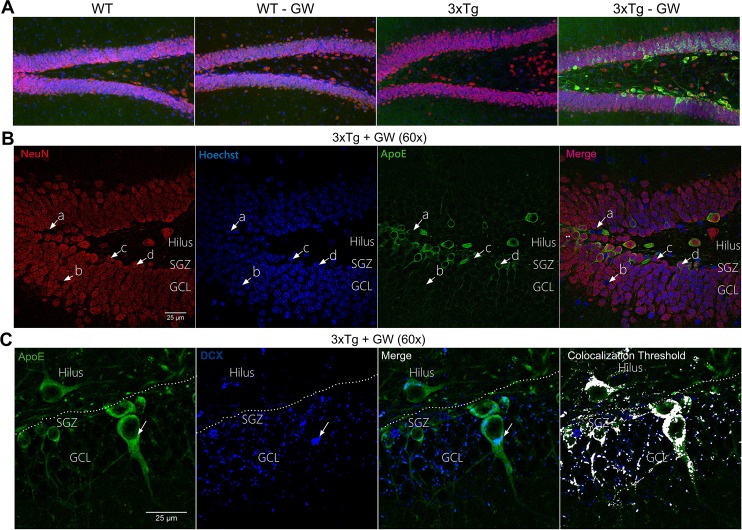
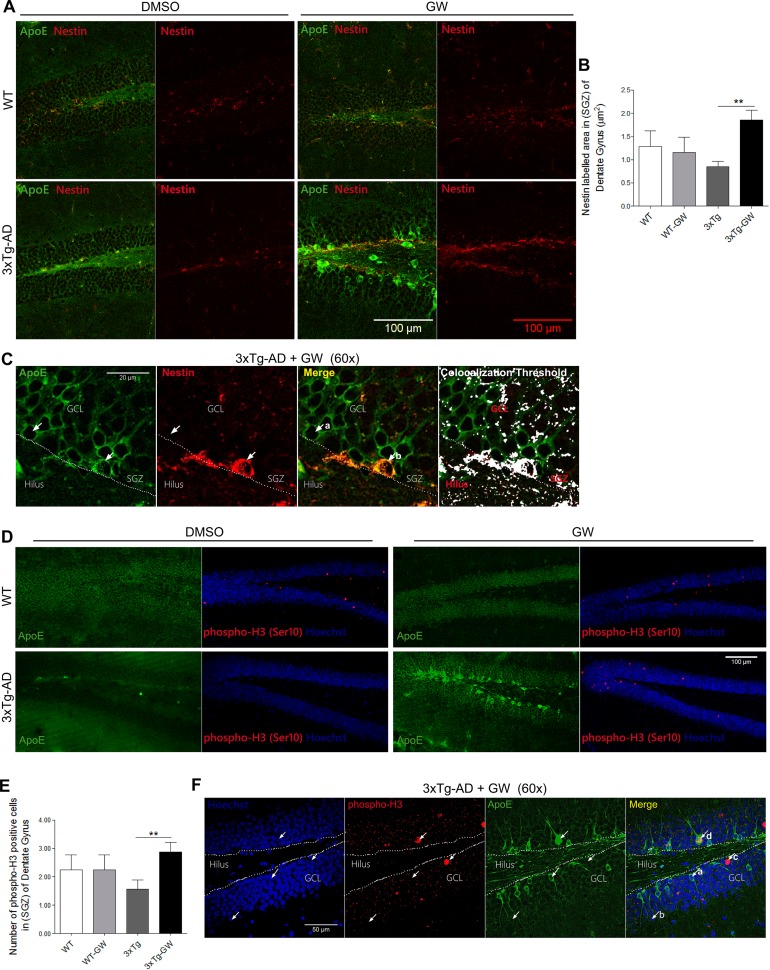
Alzheimer's disease (AD) is the major cause of dementia worldwide. The pharmacological activation of nuclear receptors (Liver X receptors: LXRs or Retinoid X receptors: RXR) has been shown to induce overexpression of the ATP-Binding Cassette A1 (ABCA1) and Apolipoprotein E (ApoE), changes that are associated with improvement in cognition and reduction of amyloid beta pathology in amyloidogenic AD mouse models (i.e. APP, PS1: 2tg-AD). Here we investigated whether treatment with a specific LXR agonist has a measurable impact on the cognitive impairment in an amyloid and Tau AD mouse model (3xTg-AD: 12-months-old; three months treatment). The data suggests that the LXR agonist GW3965 is associated with increased expression of ApoE and ABCA1 in the hippocampus and cerebral cortex without a detectable reduction of the amyloid load. We also report that most cells overexpressing ApoE (86±12%) are neurons localized in the granular cell layer of the hippocampus and entorhinal cortex. In the GW3965 treated 3xTg-AD mice we also observed reduction in astrogliosis and increased number of stem and proliferating cells in the subgranular zone of the dentate gyrus. Additionally, we show that GW3965 rescued hippocampus long term synaptic plasticity, which had been disrupted by oligomeric amyloid beta peptides. The effect of GW3965 on synaptic function was protein synthesis dependent. Our findings identify alternative functional/molecular mechanisms by which LXR agonists may exert their potential benefits as a therapeutic strategy against AD.
阿尔茨海默病(AD)是全球痴呆症的主要病因。核受体(肝X受体:LXRs或视黄酸X受体:RXR)的药理学激活已被证明可诱导ATP结合盒A1(ABCA1)和载脂蛋白E(ApoE)的过表达,这些变化与淀粉样蛋白生成性AD小鼠模型(即APP、PS1:2tg-AD)中认知功能改善和淀粉样β病理减少有关。在此,我们研究了用特定LXR激动剂治疗对淀粉样蛋白和Tau AD小鼠模型(3xTg-AD:12月龄;三个月治疗)的认知障碍是否有可测量的影响。数据表明,LXR激动剂GW3965与海马体和大脑皮层中ApoE和ABCA1的表达增加相关,而淀粉样蛋白负荷没有可检测到的减少。我们还报告说,大多数过表达ApoE的细胞(86±12%)是位于海马体颗粒细胞层和内嗅皮层的神经元。在经GW3965治疗的3xTg-AD小鼠中,我们还观察到星形胶质细胞增生减少,齿状回颗粒下区的干细胞和增殖细胞数量增加。此外,我们表明GW3965挽救了被寡聚淀粉样β肽破坏的海马体长期突触可塑性。GW3965对突触功能的影响依赖于蛋白质合成。我们的研究结果确定了LXR激动剂作为治疗AD的潜在策略可能发挥其潜在益处的替代功能/分子机制。