Feng Pan, Garboczi Edward J, Miao Changwen, Bullard Jeffrey W
Southeast University, Nanjing, Jiangsu 210096, China ; National Institute of Standards and Technology, Gaithersburg, MD 20899, United States.
National Institute of Standards and Technology, Gaithersburg, MD 20899, United States.
Constr Build Mater. 2015 Oct 15;96:391-403. doi: 10.1016/j.conbuildmat.2015.07.186.
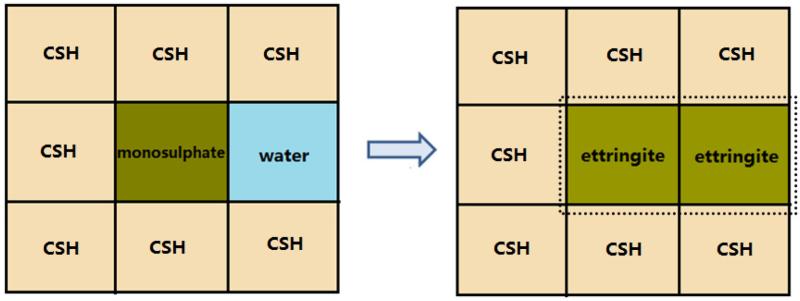
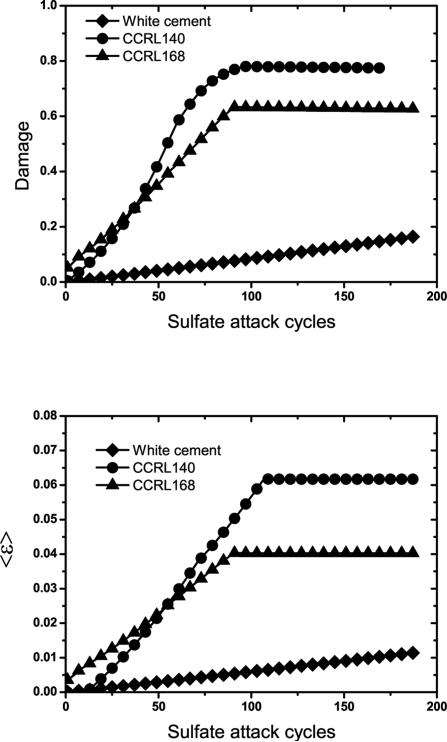
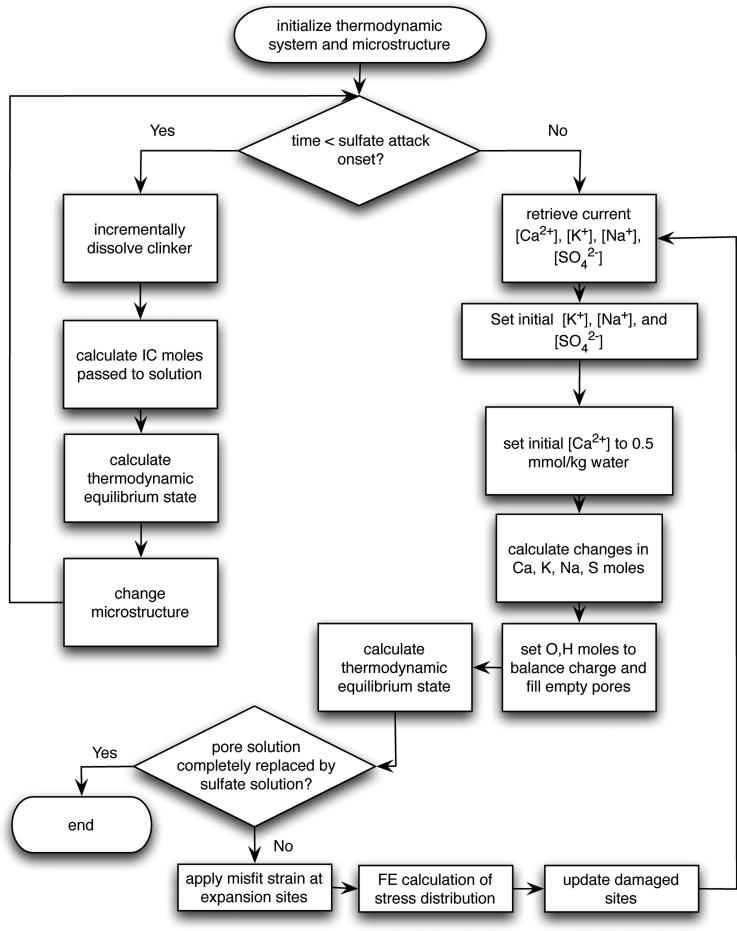
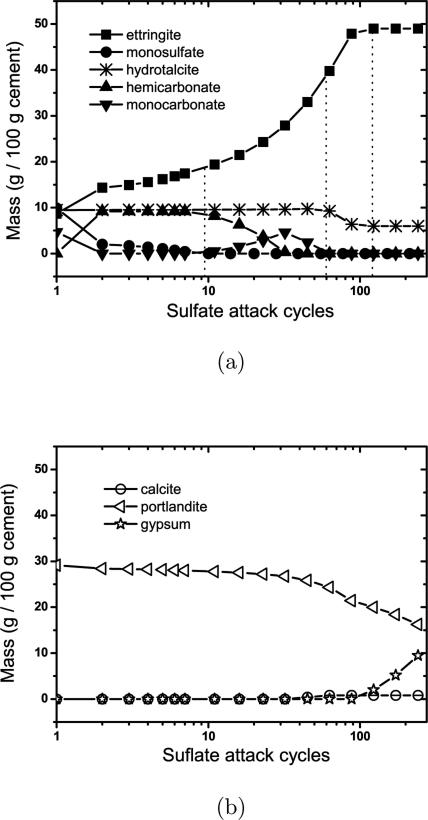
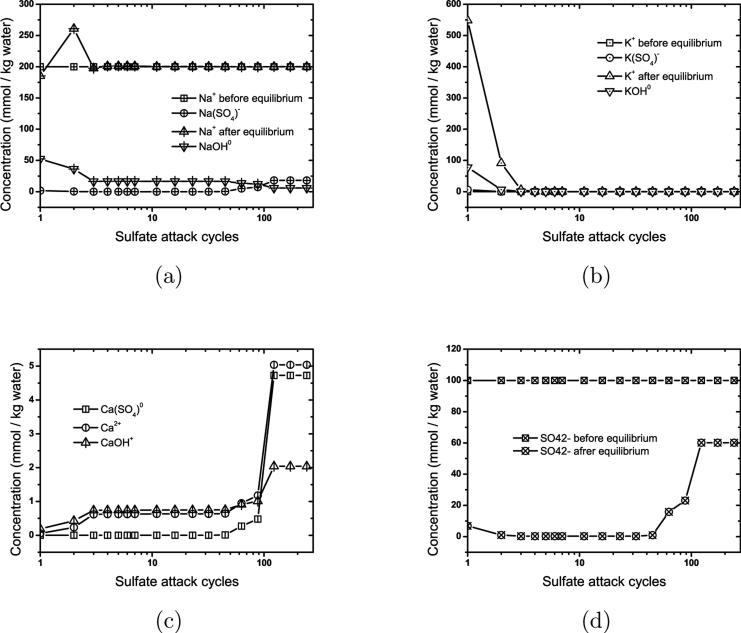
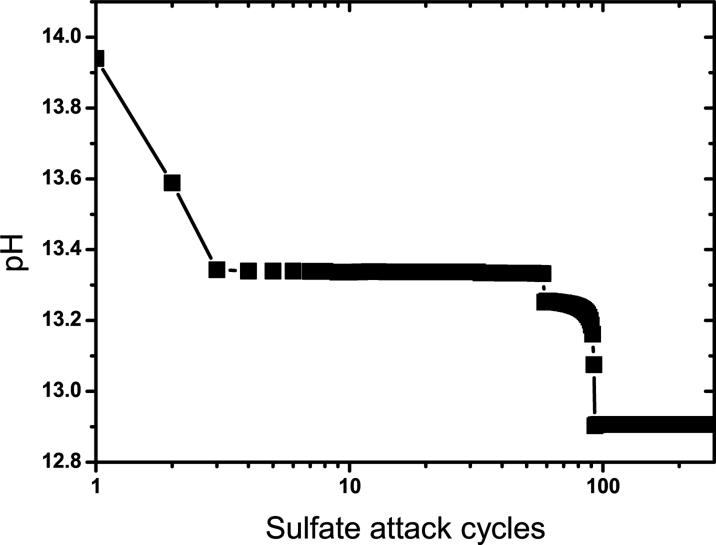
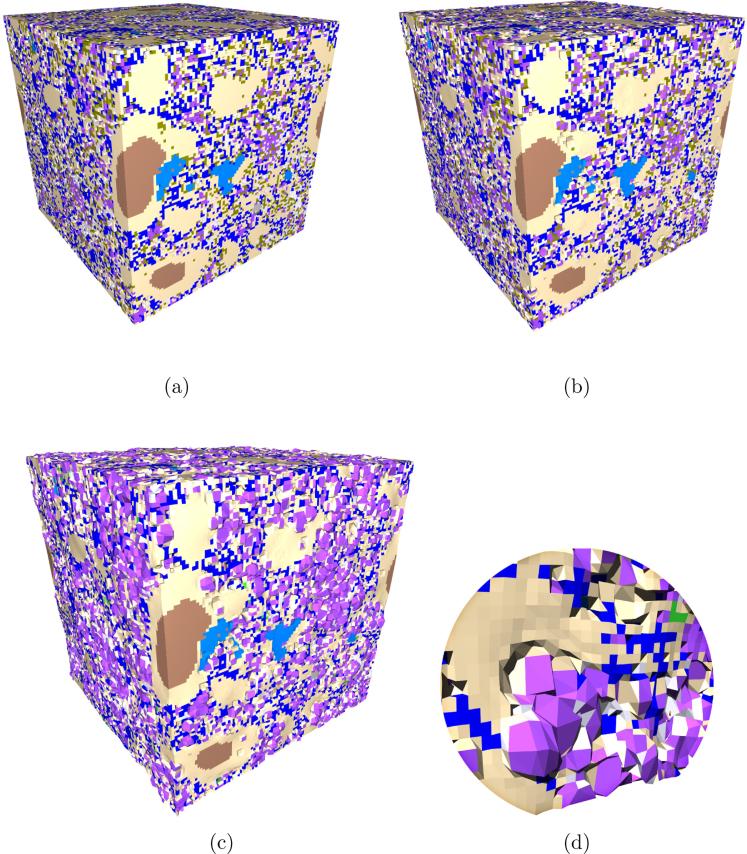
A microstructure model has been applied to simulate near-surface degradation of portland cement paste in contact with a sodium sulfate solution. This new model uses thermodynamic equilibrium calculations to guide both compositional and microstructure changes. It predicts localized deformation and the onset of damage by coupling the confined growth of new solids with linear thermoelastic finite element calculations of stress and strain fields. Constrained ettringite growth happens primarily at the expense of calcium monosulfoaluminate, carboaluminate and aluminum-rich hydrotalcite, if any, respectively. Expansion and damage can be mitigated chemically by increasing carbonate and magnesium concentrations or microstructurally by inducing a finer dispersion of monosulfate.
一种微观结构模型已被用于模拟与硫酸钠溶液接触的波特兰水泥浆体近表面降解。这种新模型利用热力学平衡计算来指导成分和微观结构的变化。它通过将新固体的受限生长与应力和应变场的线性热弹性有限元计算相结合,预测局部变形和损伤的起始。受限的钙矾石生长主要分别以单硫铝酸钙、碳铝酸盐和富铝水滑石(如果有的话)为代价发生。通过增加碳酸盐和镁的浓度可以在化学上减轻膨胀和损伤,或者通过诱导单硫酸盐更细的分散在微观结构上减轻膨胀和损伤。