Sarabipour Sarvenaz, Hristova Kalina
Department of Materials Science and Engineering, Johns Hopkins University, Baltimore, Maryland 21218, USA.
Nat Commun. 2016 Jan 4;7:10262. doi: 10.1038/ncomms10262.
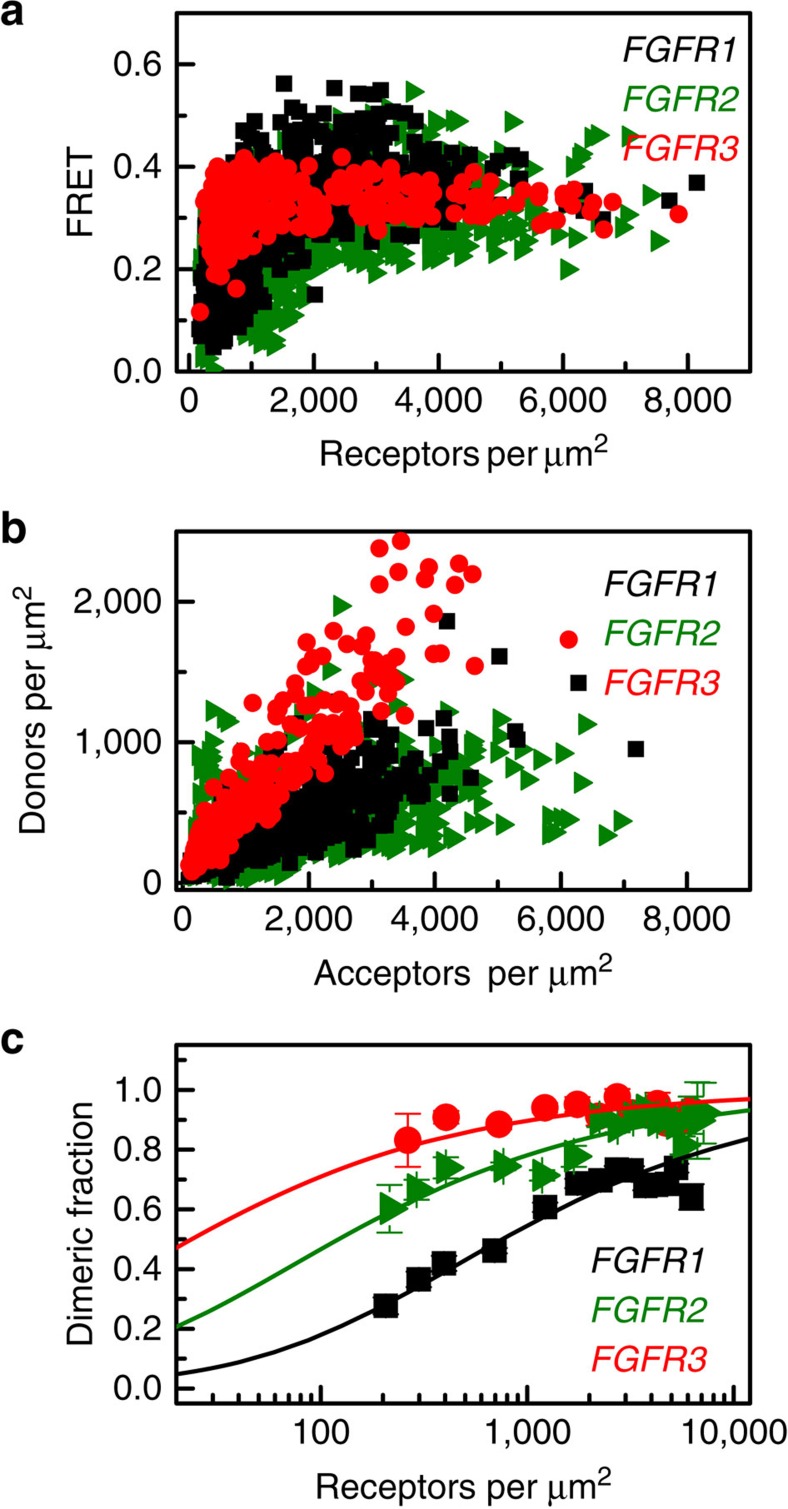
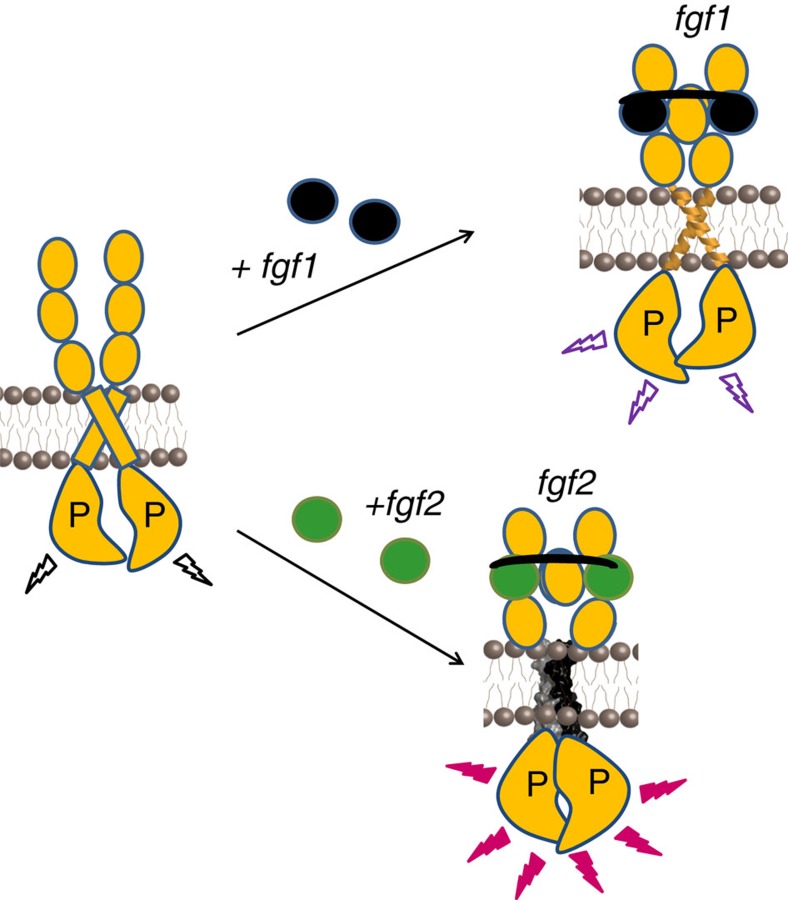
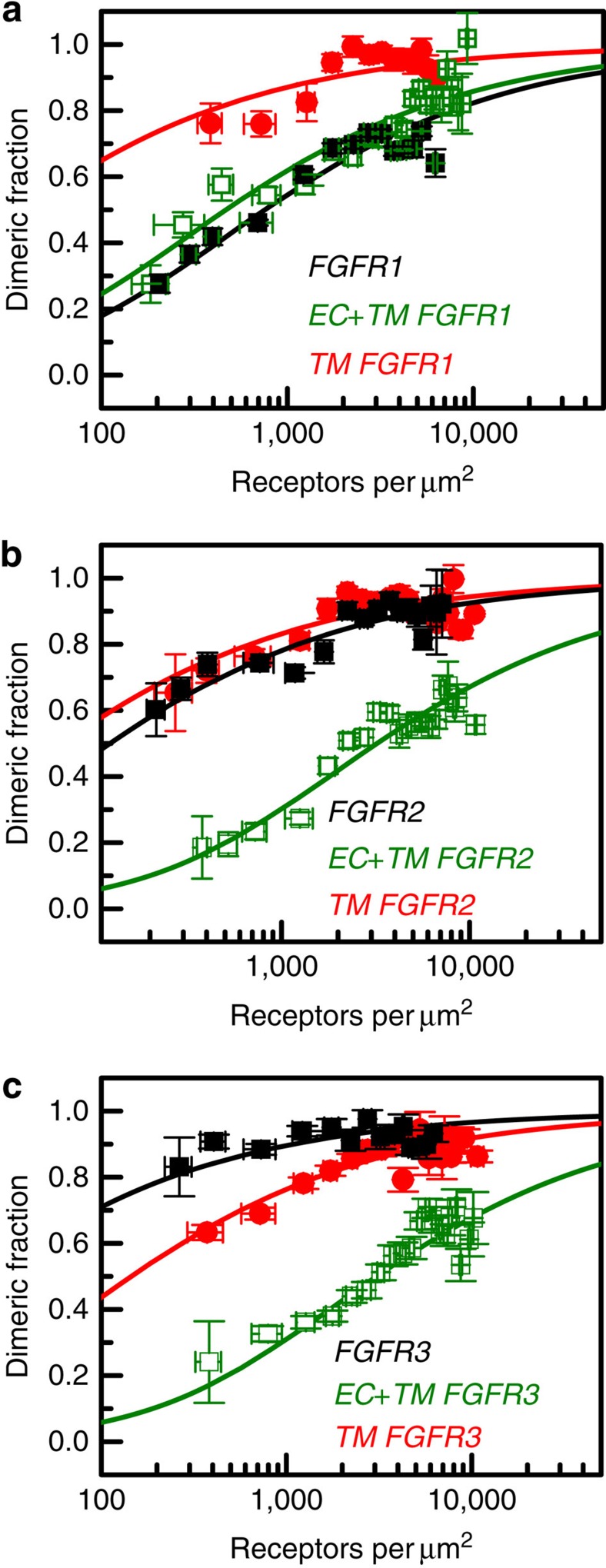
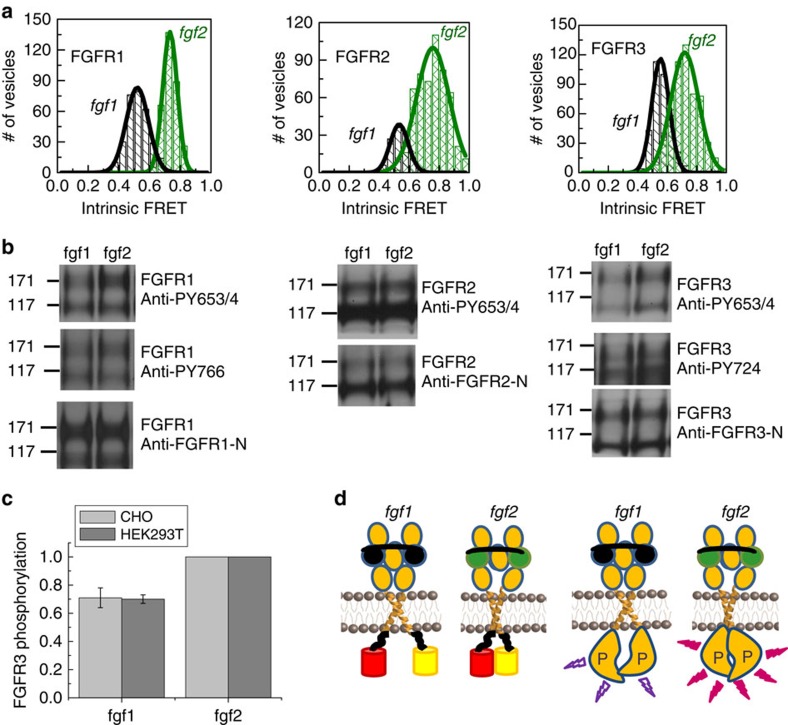
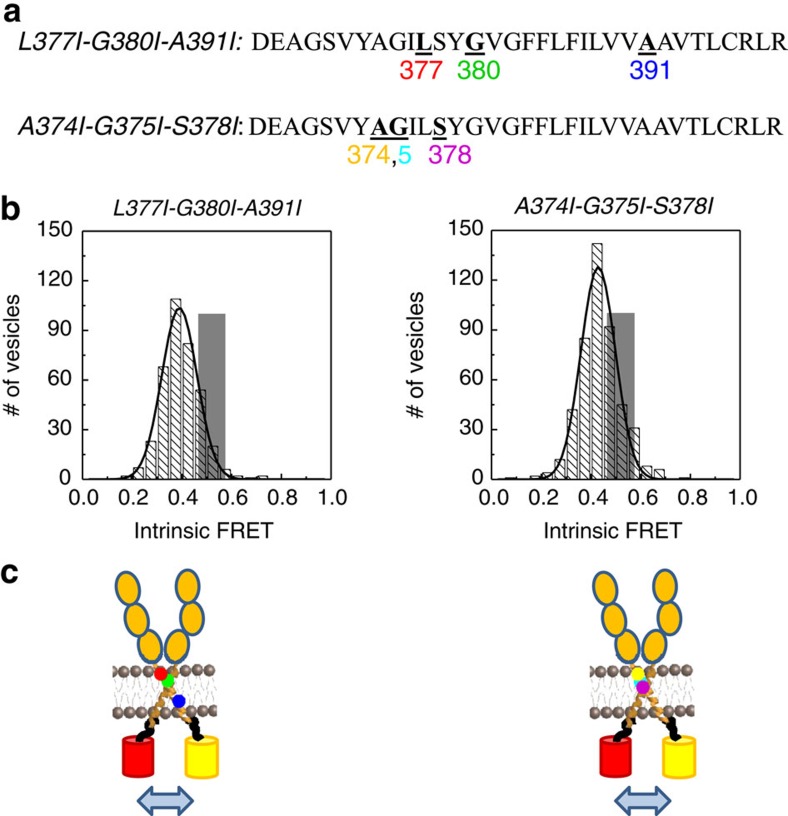
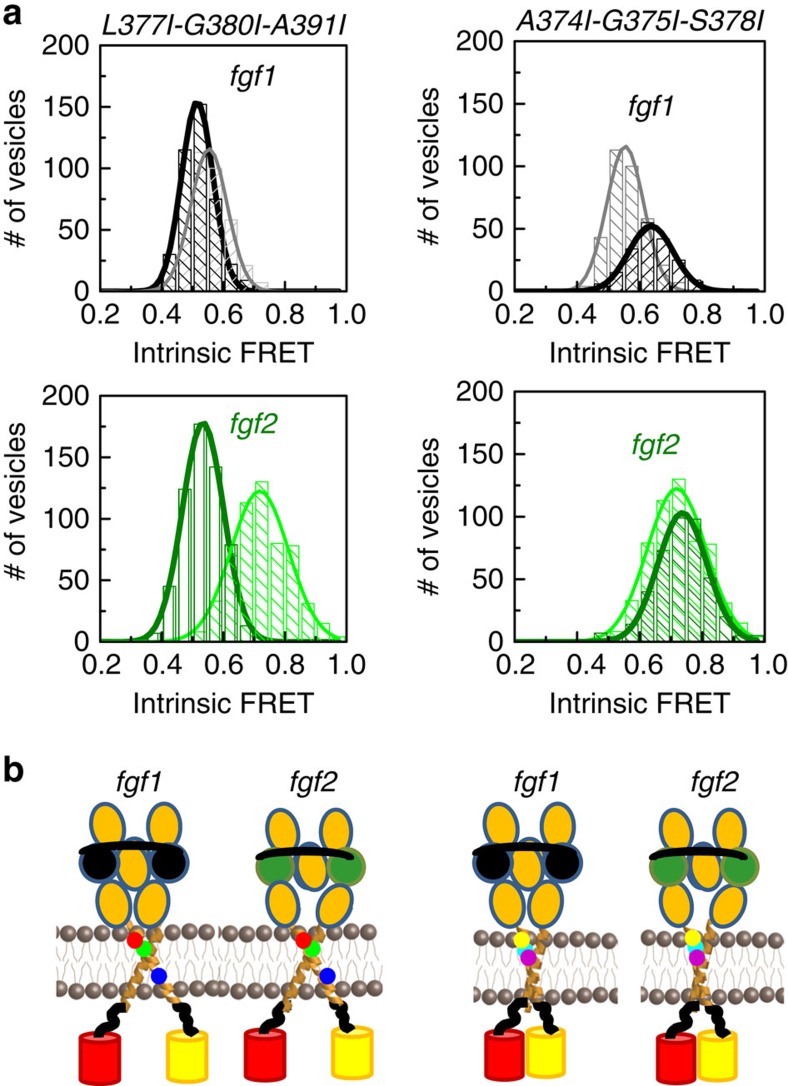
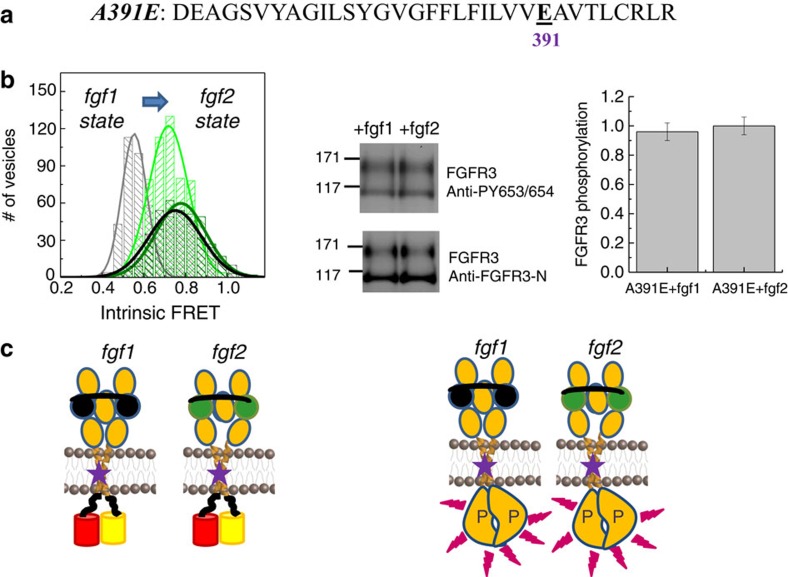
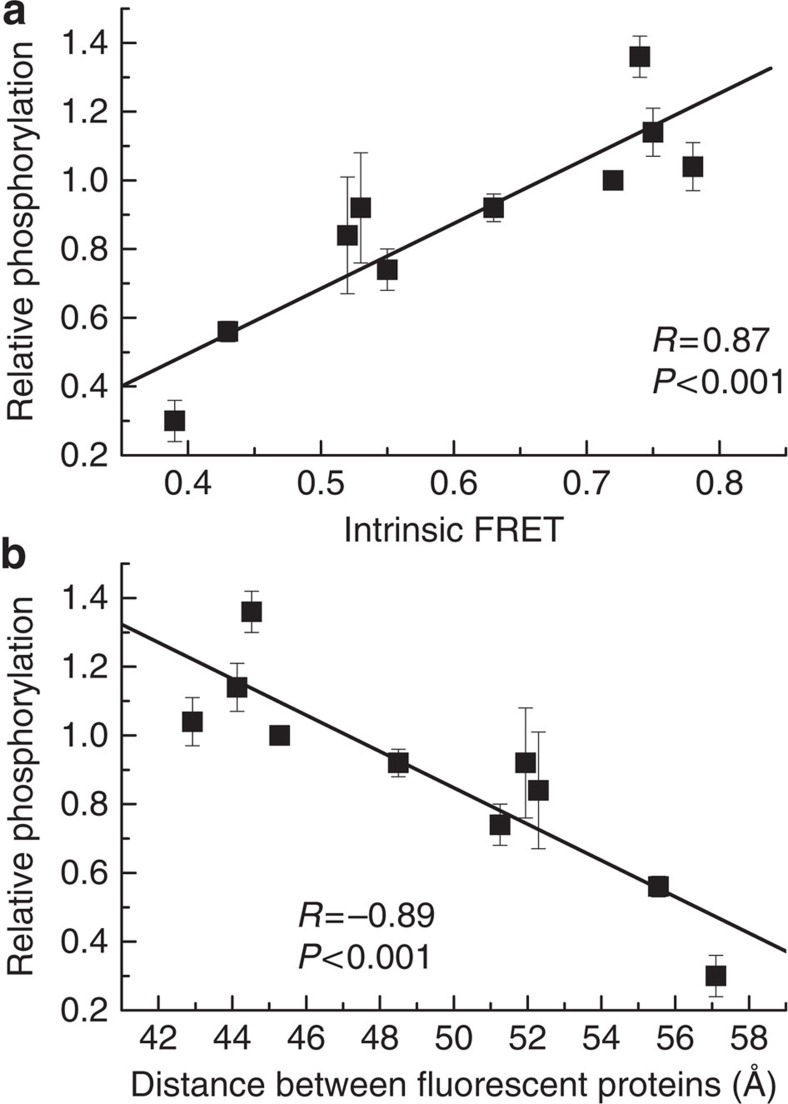
Fibroblast growth factors (fgfs) are widely believed to activate their receptors by mediating receptor dimerization. Here we show, however, that the FGF receptors form dimers in the absence of ligand, and that these unliganded dimers are phosphorylated. We further show that ligand binding triggers structural changes in the FGFR dimers, which increase FGFR phosphorylation. The observed effects due to the ligands fgf1 and fgf2 are very different. The fgf2-bound dimer structure ensures the smallest separation between the transmembrane (TM) domains and the highest possible phosphorylation, a conclusion that is supported by a strong correlation between TM helix separation in the dimer and kinase phosphorylation. The pathogenic A391E mutation in FGFR3 TM domain emulates the action of fgf2, trapping the FGFR3 dimer in its most active state. This study establishes the existence of multiple active ligand-bound states, and uncovers a novel molecular mechanism through which FGFR-linked pathologies can arise.
成纤维细胞生长因子(FGFs)被广泛认为通过介导受体二聚化来激活其受体。然而,我们在此表明,FGF受体在没有配体的情况下形成二聚体,并且这些未结合配体的二聚体被磷酸化。我们进一步表明,配体结合会触发FGFR二聚体的结构变化,从而增加FGFR磷酸化。观察到的由配体FGF1和FGF2引起的效应非常不同。与FGF2结合的二聚体结构确保了跨膜(TM)结构域之间的最小间距以及最高可能的磷酸化,这一结论得到了二聚体中TM螺旋间距与激酶磷酸化之间强烈相关性的支持。FGFR3 TM结构域中的致病性A391E突变模拟了FGF2的作用,将FGFR3二聚体捕获在其最活跃的状态。这项研究确定了多种活性配体结合状态的存在,并揭示了一种可能导致FGFR相关病理的新分子机制。