Swogger Marc T, Conner Kenneth R, Caine Eric D, Trabold Nicole, Parkhurst Melissa N, Prothero Laurel M, Maisto Stephen A
Department of Psychiatry.
Department of Psychology.
J Consult Clin Psychol. 2016 Mar;84(3):248-58. doi: 10.1037/ccp0000065. Epub 2016 Jan 4.
In a randomized controlled trial we studied a brief motivational intervention (BMI) for substance use, examining core psychopathic traits as a moderator of treatment efficacy.
Participants were 105 males and females who were 18 years of age and older and in a pretrial jail diversion program. The sample was approximately 52% Black and other minorities and 48% White. Outcome variables at a 6-month follow-up were frequency of substance use (assessed with the Timeline Follow-back Interview and objective toxicology screens), substance use consequences (Short Inventory of Problems-Alcohol and Drug version), and self-reported participation in nonstudy mental health and/or substance use treatment. Psychopathy was assessed using the Psychopathy Checklist-Revised (PCL-R).
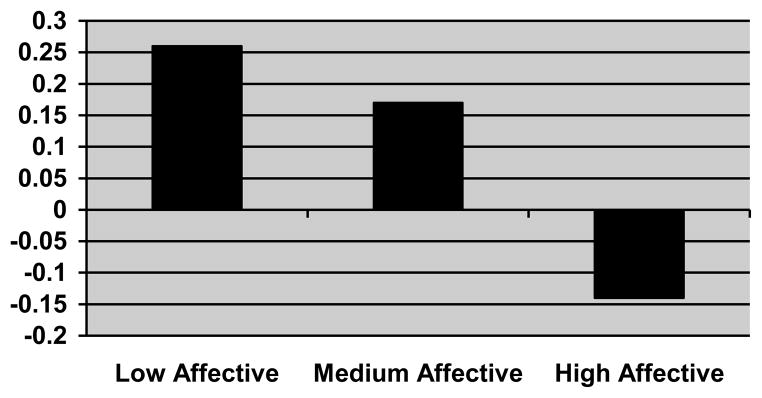
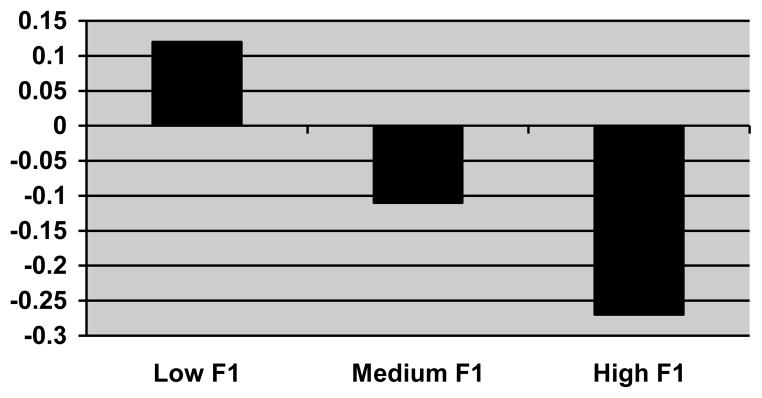
BMI interacted with core psychopathic traits to account for 7% of the variance in substance use at follow-up. Treatment was associated with greater use among individuals with high levels of core psychopathic traits. Toxicology screening results were consistent with self-report data. The treatment and standard care groups did not differ on substance use consequences or nonstudy treatment participation at follow-up, and no moderation was found with these outcomes. An exploratory analysis indicated that low levels of affective traits of psychopathy were associated with benefit from the BMI in terms of decreased substance use.
Findings suggest that caution is warranted when applying BMIs among offenders; individuals with high levels of core psychopathic traits may not benefit and may be hindered in recovery. Conversely, they indicate that a low-psychopathy subgroup of offenders benefits from these brief and efficient treatments for substance use.
在一项随机对照试验中,我们研究了针对物质使用的简短动机干预(BMI),并将核心精神病态特质作为治疗效果的调节因素进行检验。
参与者为105名年龄在18岁及以上且参加审前监狱转处项目的男性和女性。样本中约52%为黑人及其他少数族裔,48%为白人。6个月随访时的结果变量包括物质使用频率(通过时间线追溯访谈和客观毒理学筛查进行评估)、物质使用后果(问题简短清单-酒精和药物版本)以及自我报告的参与非研究性心理健康和/或物质使用治疗的情况。使用修订版精神病态量表(PCL-R)评估精神病态。
BMI与核心精神病态特质相互作用,解释了随访时物质使用差异的7%。对于核心精神病态特质水平较高的个体,治疗与更多的使用相关。毒理学筛查结果与自我报告数据一致。在随访时,治疗组和标准护理组在物质使用后果或非研究性治疗参与方面没有差异,并且在这些结果中未发现调节作用。一项探索性分析表明,精神病态情感特质水平较低与BMI在减少物质使用方面的益处相关。
研究结果表明,在罪犯中应用BMI时需谨慎;核心精神病态特质水平较高的个体可能无法从中受益,且可能在康复过程中受到阻碍。相反,研究结果表明,低精神病态的罪犯亚组可从这些针对物质使用的简短而有效的治疗中受益。