Cho Kyoung Joo, Cheon So Young, Kim Gyung Whan
Department of Neurology, Severance Hospital, Yonsei University College of Medicine, 50 Yonsei-ro, Seoul, South Korea.
Department of Anesthesiology and Pain, Severance Hospital, Yonsei University College of Medicine, 50 Yonsei-ro, Seoul, South Korea.
Sci Rep. 2016 Jan 5;6:18840. doi: 10.1038/srep18840.
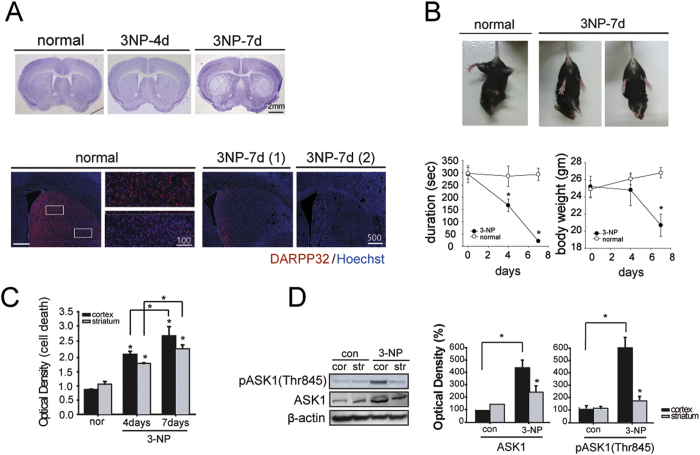
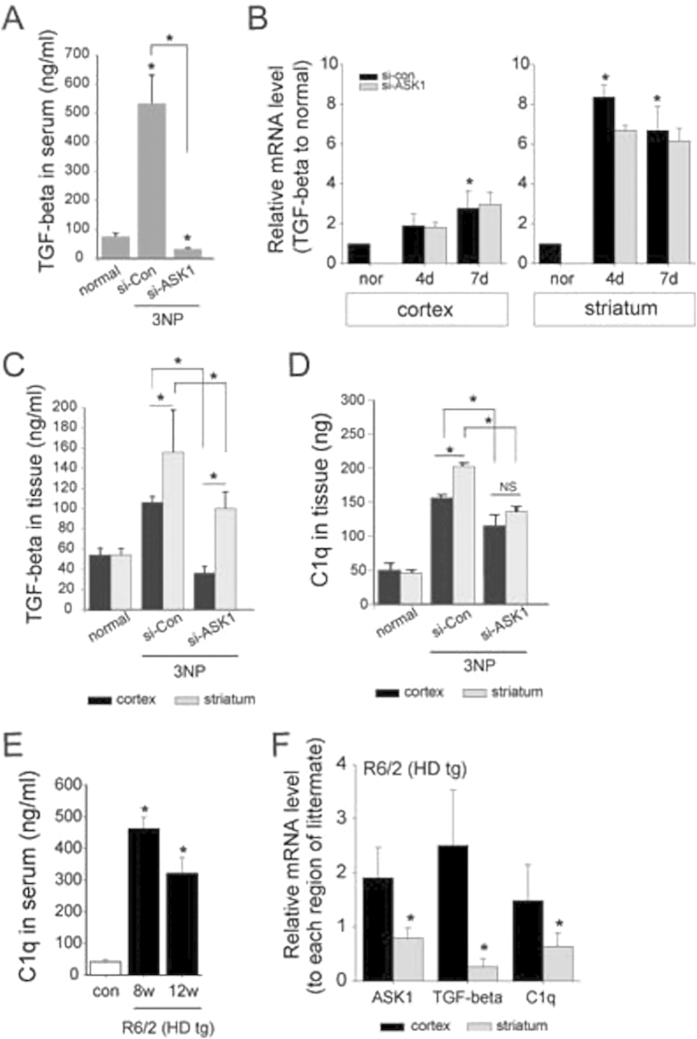
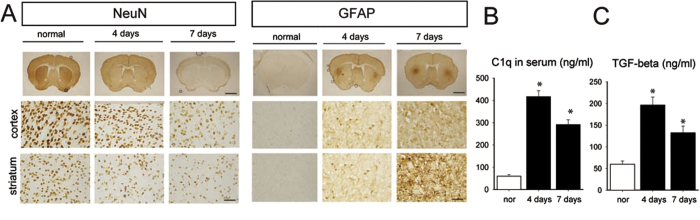
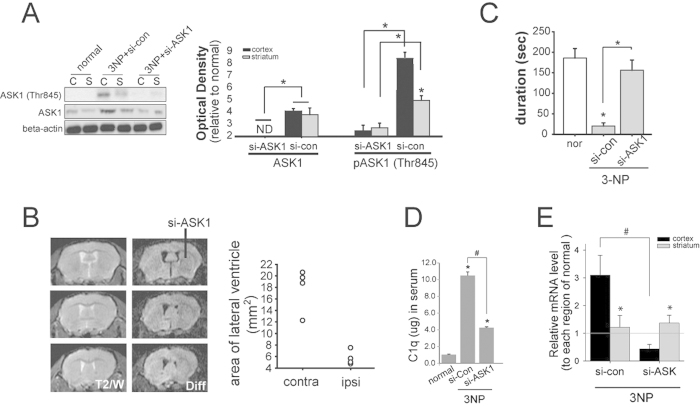
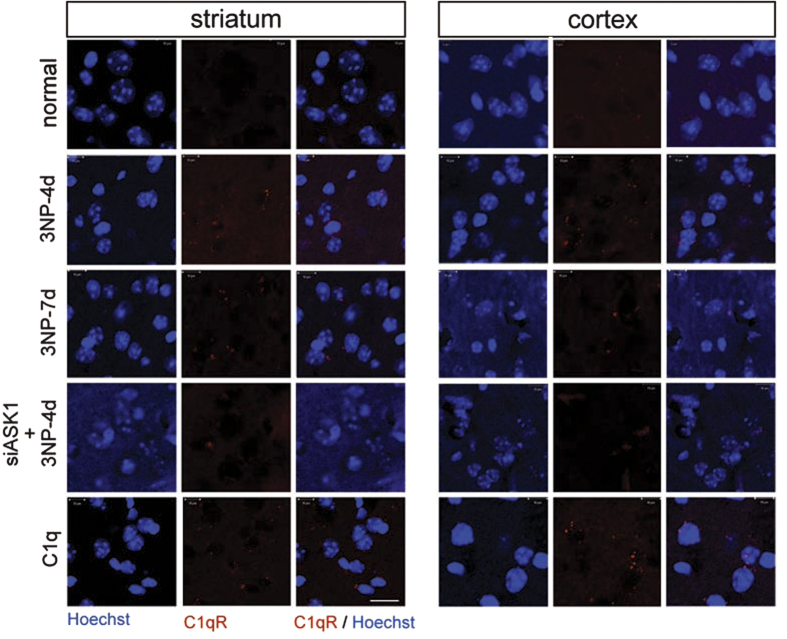
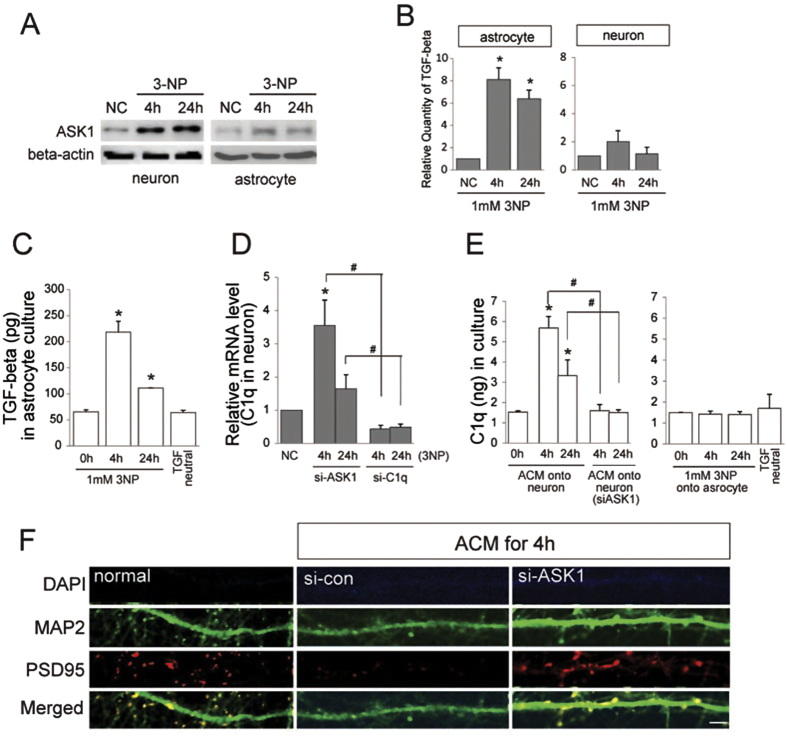
Apoptosis signal-regulating kinase-1 (ASK1), an early signaling element in the cell death pathway, has been hypothesized to participate in the pathology of neurodegenerative diseases. The systemic administration of 3-nitropropionic acid (3-NP) facilitates the development of selective striatal lesions. However, it remains unclear whether specific neurons are selectively targeted in 3-NP-infused striatal degeneration. Recently, it has been proposed that complement-mediated synapse elimination may be reactivated aberrantly in the pathology of neurodegenerative diseases. We hypothesized that ASK1 is involved in striatal astrocyte reactivation; reactive astrocyte secretes molecules detrimental to neuron; and striatal neurons are more susceptible to these factors. Our results indicate that striatal astrocyte is reactivated and ASK1 level increases after 3-NP general and chronic infusion. Reactive striatal astrocyte increases TGF-beta differentially to cortex and striatum. ASK1 may be involved in regulation of astrocyte TGF-beta and it is linked to the C1q level in spatial and temporal, and moreover in the earlier stage of progressing striatal neuronal loss. Conclusively the present study suggests that ASK1 mediates 3-NP toxicity and regulates C1q level through the astrocyte TGF-beta. And also it may suggest that C1q level may be a surrogate of prediction marker representing neurodegenerative disease progress before developing behavioral impairment.
凋亡信号调节激酶1(ASK1)是细胞死亡途径中的早期信号元件,据推测其参与神经退行性疾病的病理过程。全身给予3-硝基丙酸(3-NP)可促进选择性纹状体损伤的发展。然而,在3-NP注入导致的纹状体变性中,特定神经元是否被选择性靶向仍不清楚。最近,有人提出补体介导的突触消除可能在神经退行性疾病的病理过程中异常重新激活。我们假设ASK1参与纹状体星形胶质细胞的重新激活;反应性星形胶质细胞分泌对神经元有害的分子;并且纹状体神经元对这些因素更敏感。我们的结果表明,在3-NP全身慢性注入后,纹状体星形胶质细胞被重新激活且ASK1水平升高。反应性纹状体星形胶质细胞对皮质和纹状体的转化生长因子-β(TGF-β)的分泌存在差异。ASK1可能参与星形胶质细胞TGF-β的调节,并且在空间和时间上与C1q水平相关,而且在纹状体神经元损失进展的早期阶段也是如此。总之,本研究表明ASK1介导3-NP毒性并通过星形胶质细胞TGF-β调节C1q水平。并且这也可能表明C1q水平可能是在出现行为障碍之前代表神经退行性疾病进展的预测标志物的替代物。