Salinas-Gamboa Rigel, Johnson Susan D, Sánchez-León Nidia, Koltunow Anna M G, Vielle-Calzada Jean-Philippe
Grupo de Desarrollo Reproductivo y Apomixis, Laboratorio Nacional de Genómica para la Biodiversidad, CINVESTAV Irapuato, CP 36821, Guanajuato, Mexico.
Agriculture Flagship, Commonwealth Scientific and Industrial Research Organization, Private Bag 2, Glen Osmond, SA, 5064, Australia.
Plant Reprod. 2016 Jun;29(1-2):165-77. doi: 10.1007/s00497-015-0273-3. Epub 2016 Jan 4.
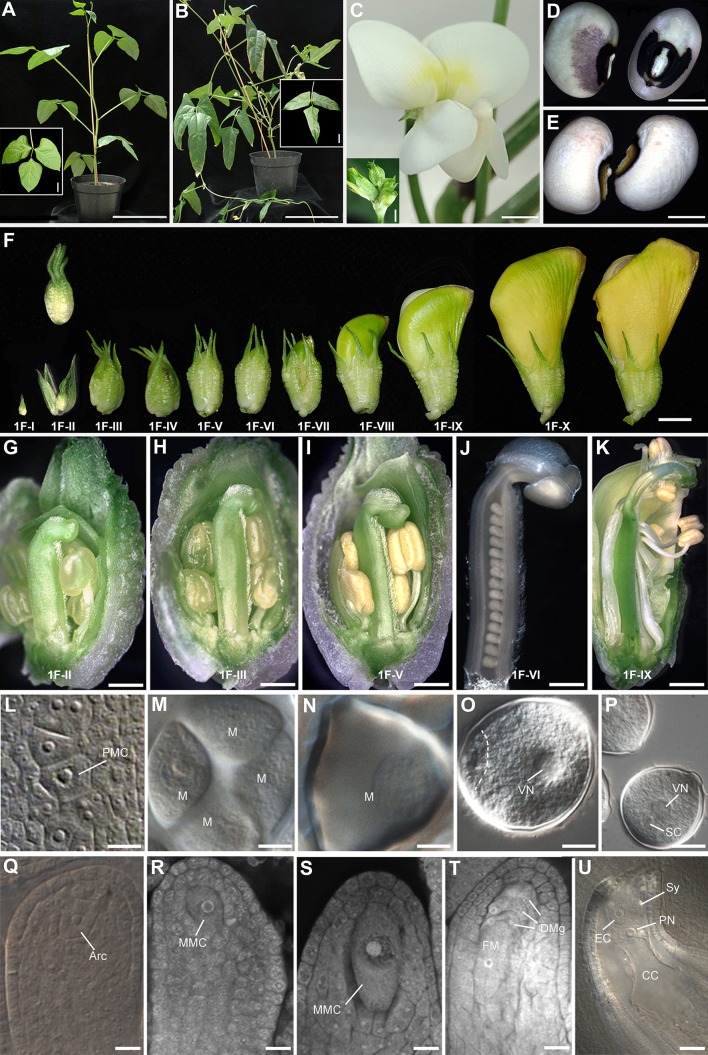
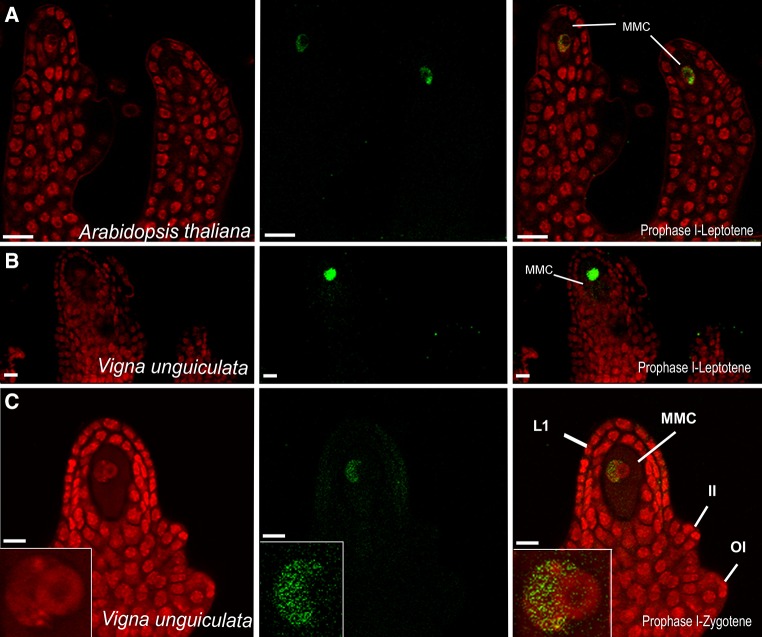
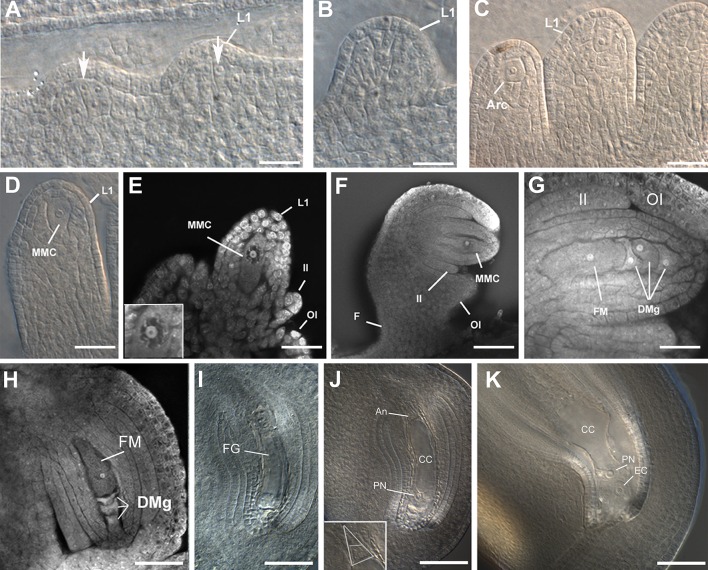
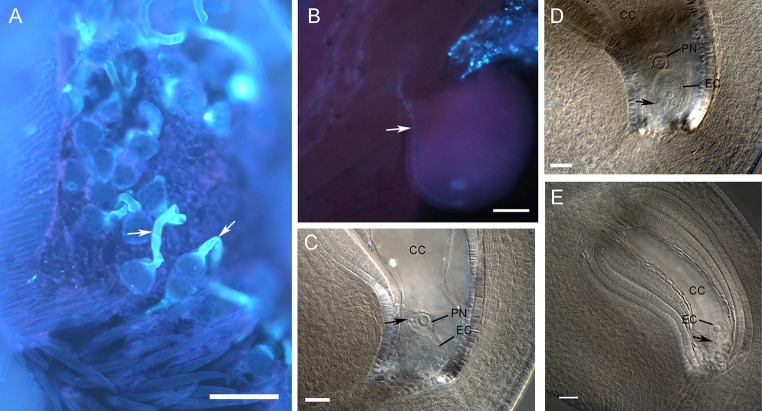
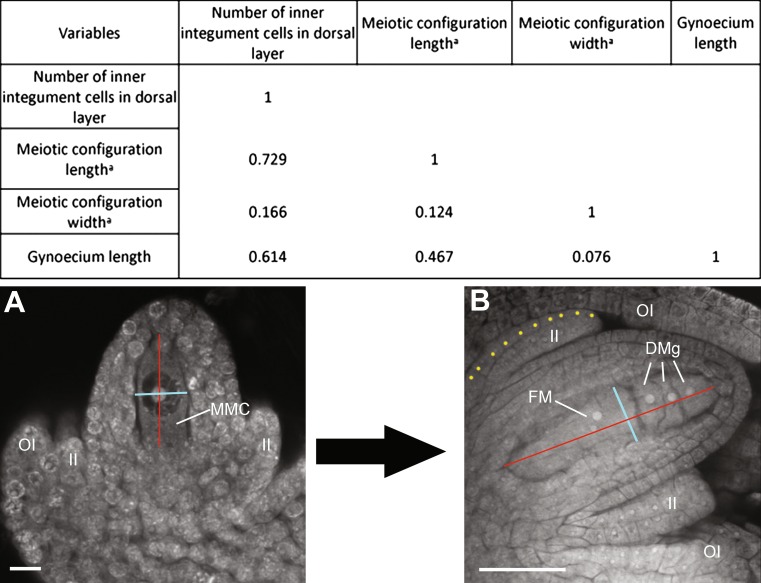
Cowpea reproductive tools. Vigna unguiculata L. Walp. (cowpea) is recognized as a major legume food crop in Africa, but seed yields remain low in most varieties adapted to local conditions. The development of hybrid cowpea seed that could be saved after each generation, enabling significant yield increases, will require manipulation of reproductive development from a sexual to an asexual mode. To develop new technologies that could support the biotechnological manipulation of reproductive development in cowpea, we examined gametogenesis and seed formation in two transformable, African-adapted, day-length-insensitive varieties. Here, we show that these two varieties exhibit distinct morphological and phenological traits but share a common developmental sequence in terms of ovule formation and gametogenesis. We present a reproductive calendar that allows prediction of male and female gametogenesis on the basis of sporophytic parameters related to floral bud size and reproductive organ development, determining that gametogenesis occurs more rapidly in the anther than in the ovule. We also show that the mode of megagametogenesis is of the Polygonum-type and not Oenothera-type, as previously reported. Finally, we developed a whole-mount immunolocalization protocol and applied it to detect meiotic proteins in the cowpea megaspore mother cell, opening opportunities for comparing the dynamics of protein localization during male and female meiosis, as well as other reproductive events in this emerging legume model system.
豇豆生殖工具。豇豆(Vigna unguiculata L. Walp.)被认为是非洲一种主要的豆类粮食作物,但在大多数适应当地条件的品种中,种子产量仍然很低。若要培育出每代都能留种且能大幅增产的杂交豇豆种子,就需要将生殖发育从有性模式转变为无性模式。为了开发能够支持对豇豆生殖发育进行生物技术操作的新技术,我们研究了两个可转化的、适应非洲环境且对日长不敏感的品种的配子发生和种子形成过程。在此,我们表明这两个品种表现出不同的形态和物候特征,但在胚珠形成和配子发生方面具有共同的发育顺序。我们提出了一个生殖日历,可根据与花芽大小和生殖器官发育相关的孢子体参数预测雄配子和雌配子的发生,确定雄配子发生在花药中比在胚珠中更快。我们还表明,大孢子发生的模式是蓼型,而非此前报道的月见草型。最后,我们开发了一种整装免疫定位方法,并将其应用于检测豇豆大孢子母细胞中的减数分裂蛋白,为比较雄配子和雌配子减数分裂期间以及这个新兴豆类模式系统中其他生殖事件的蛋白质定位动态提供了机会。