Novikov Nikita A, Bryzgalov Dmitri V, Chernyshev Boris V
Laboratory of Cognitive Psychophysiology, National Research University Higher School of Economics Moscow, Russia.
Laboratory of Cognitive Psychophysiology, National Research University Higher School of EconomicsMoscow, Russia; Department of Higher Nervous Activity, Lomonosov Moscow State UniversityMoscow, Russia.
Front Hum Neurosci. 2015 Dec 18;9:673. doi: 10.3389/fnhum.2015.00673. eCollection 2015.
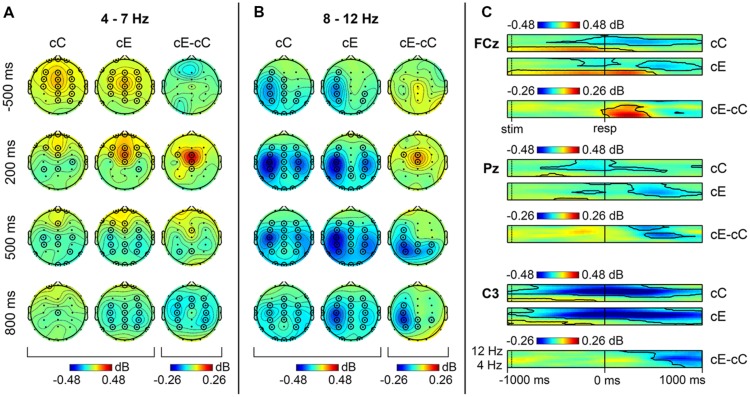
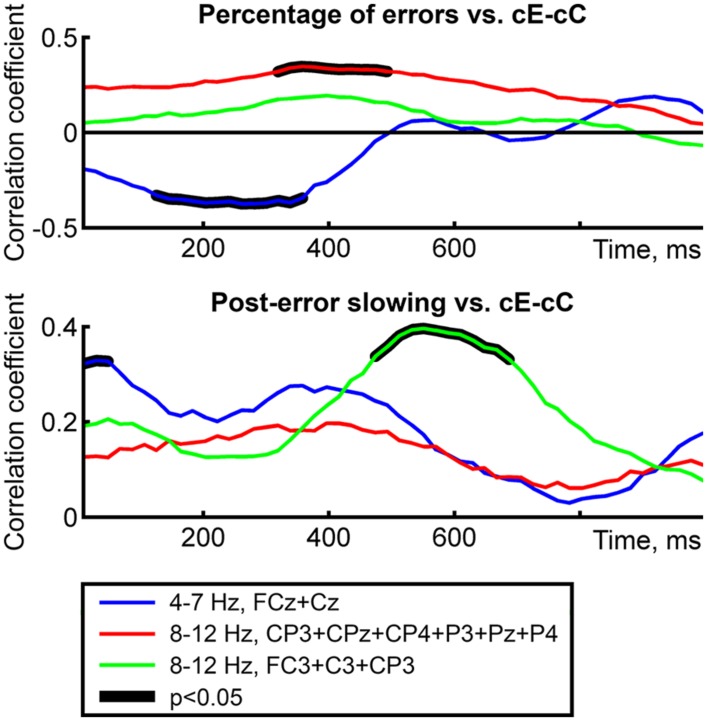
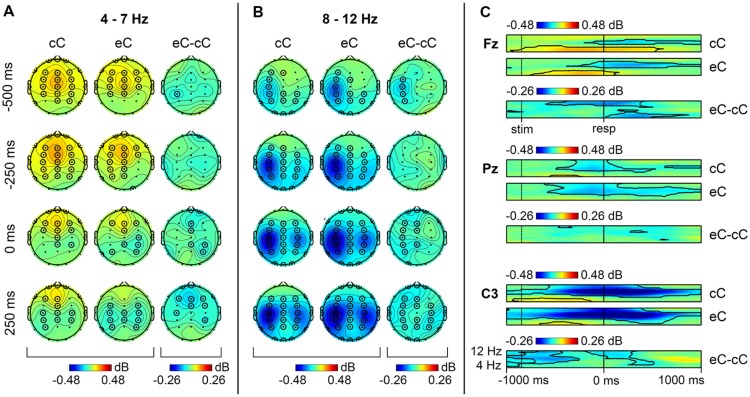
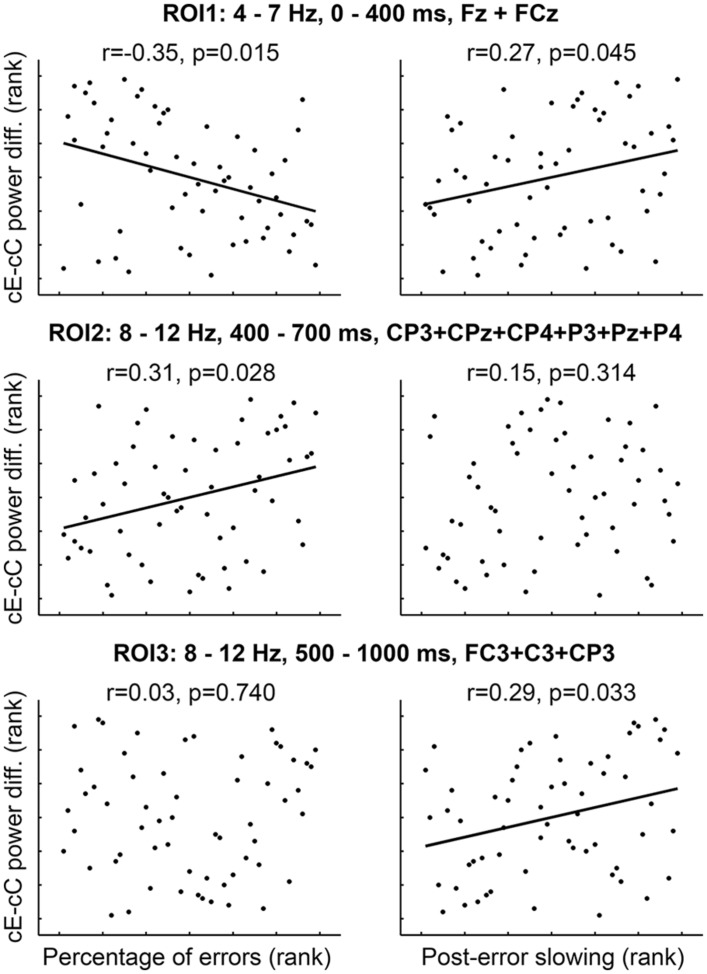
Error commission leads to adaptive adjustments in a number of brain networks that subserve goal-directed behavior, resulting in either enhanced stimulus processing or increased motor threshold depending on the nature of errors committed. Here, we studied these adjustments by analyzing post-error modulations of alpha and theta band activity in the auditory version of the two-choice condensation task, which is highly demanding for sustained attention while involves no inhibition of prepotent responses. Errors were followed by increased frontal midline theta (FMT) activity, as well as by enhanced alpha band suppression in the parietal and the left central regions; parietal alpha suppression correlated with the task performance, left central alpha suppression correlated with the post-error slowing, and FMT increase correlated with both behavioral measures. On post-error correct trials, left-central alpha band suppression started earlier before the response, and the response was followed by weaker FMT activity, as well as by enhanced alpha band suppression distributed over the entire scalp. These findings indicate that several separate neuronal networks are involved in post-error adjustments, including the midfrontal performance monitoring network, the parietal attentional network, and the sensorimotor network. Supposedly, activity within these networks is rapidly modulated after errors, resulting in optimization of their functional state on the subsequent trials, with corresponding changes in behavioral measures.
错误执行会导致一些服务于目标导向行为的脑网络进行适应性调整,根据所犯错误的性质,这会导致刺激处理增强或运动阈值增加。在这里,我们通过分析双选缩合任务听觉版本中错误后α和θ波段活动的调制来研究这些调整,该任务对持续注意力要求很高,且不涉及对优势反应的抑制。错误之后,额中θ(FMT)活动增加,顶叶和左中央区域的α波段抑制增强;顶叶α抑制与任务表现相关,左中央α抑制与错误后反应减慢相关,FMT增加与这两种行为指标都相关。在错误后正确的试验中,左中央α波段抑制在反应前更早开始,反应后FMT活动较弱,整个头皮的α波段抑制增强。这些发现表明,几个独立的神经元网络参与了错误后的调整,包括额中执行监测网络、顶叶注意力网络和感觉运动网络。据推测,这些网络中的活动在错误后会迅速调制,导致其在后续试验中的功能状态优化,行为指标也会相应改变。