Dalla Bella Simone, Berkowska Magdalena, Sowiński Jakub
EuroMov, University of MontpellierMontpellier, France; Institut Universitaire de France (IUF)Paris, France; International Laboratory for Brain, Music, and Sound Research (BRAMS)Montreal, QC, Canada; Department of Cognitive Psychology, University of Finance and Management in WarsawWarsaw, Poland.
Department of Cognitive Psychology, University of Finance and Management in Warsaw Warsaw, Poland.
Front Hum Neurosci. 2015 Dec 18;9:663. doi: 10.3389/fnhum.2015.00663. eCollection 2015.
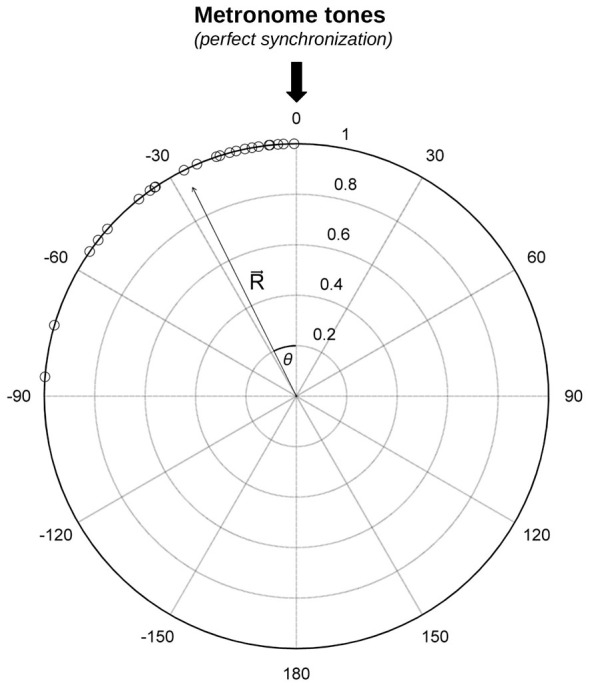
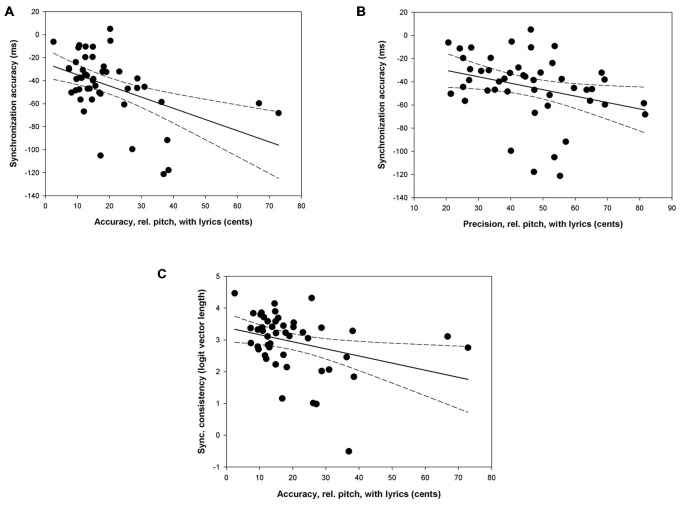
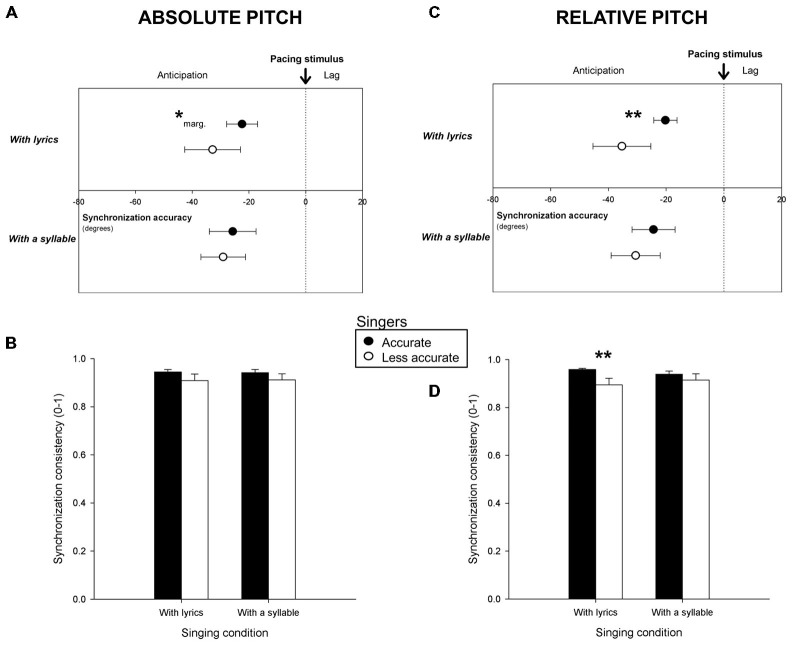
The abilities to sing and to move to the beat of a rhythmic auditory stimulus emerge early during development, and both engage perceptual, motor, and sensorimotor processes. These similarities between singing and synchronization to a beat may be rooted in biology. Patel (2008) has suggested that motor synchronization to auditory rhythms may have emerged during evolution as a byproduct of selection for vocal learning ("vocal learning and synchronization hypothesis"). This view predicts a strong link between vocal performance and synchronization skills in humans. Here, we tested this prediction by asking occasional singers to tap along with auditory pulse trains and to imitate familiar melodies. Both vocal imitation and synchronization skills were measured in terms of accuracy and precision or consistency. Accurate and precise singers tapped more in the vicinity of the pacing stimuli (i.e., they were more accurate) than less accurate and less precise singers. Moreover, accurate singers were more consistent when tapping to the beat. These differences cannot be ascribed to basic motor skills or to motivational factors. Individual differences in terms of singing proficiency and synchronization skills may reflect the variability of a shared sensorimotor translation mechanism.
唱歌以及随着有节奏的听觉刺激的节拍而移动的能力在发育早期就会出现,并且这两者都涉及感知、运动和感觉运动过程。唱歌与跟上节拍之间的这些相似之处可能源于生物学。帕特尔(2008年)提出,对听觉节奏的运动同步可能在进化过程中作为声乐学习选择的副产品而出现(“声乐学习与同步假说”)。这一观点预测了人类声乐表现与同步技能之间存在紧密联系。在这里,我们通过要求偶尔唱歌的人跟着听觉脉冲序列打节拍并模仿熟悉的旋律来检验这一预测。声乐模仿和同步技能都从准确性、精确性或一致性方面进行了测量。与不太准确和不太精确的歌手相比,准确且精确的歌手在节奏刺激附近敲击的次数更多(即他们更准确)。此外,准确的歌手在跟着节拍敲击时更加一致。这些差异不能归因于基本运动技能或动机因素。在唱歌熟练度和同步技能方面的个体差异可能反映了一种共享的感觉运动转换机制的变异性。