Watson Christopher M, Crinnion Laura A, Murphy Helen, Newbould Melanie, Harrison Sally M, Lascelles Carolina, Antanaviciute Agne, Carr Ian M, Sheridan Eamonn, Bonthron David T, Smith Audrey
Yorkshire Regional Genetics Service, St. James's University Hospital, Leeds, UK School of Medicine, University of Leeds, St. James's University Hospital, Leeds, UK.
Genomic Medicine, Manchester Academic Health Science Centre, The University of Manchester, St Mary's Hospital, Manchester, UK.
J Med Genet. 2016 Apr;53(4):264-9. doi: 10.1136/jmedgenet-2015-103620. Epub 2016 Jan 5.
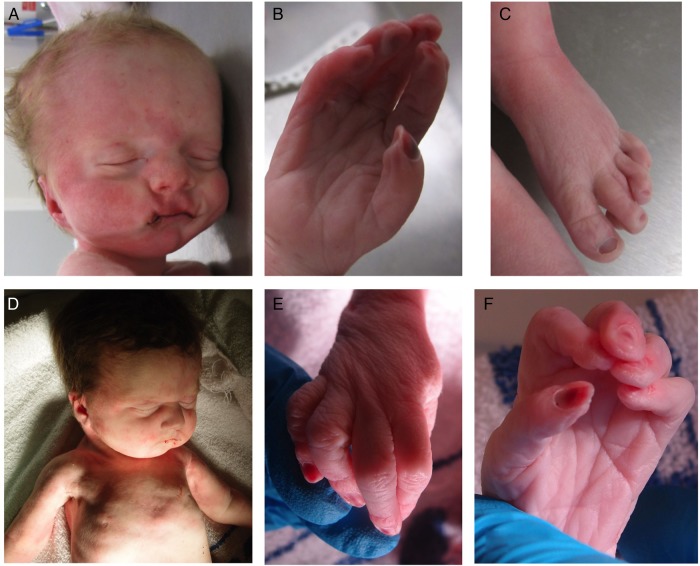
Lethal fetal akinesia deformation sequence (FADS) describes a clinically and genetically heterogeneous phenotype that includes fetal akinesia, intrauterine growth retardation, arthrogryposis and developmental anomalies. Affected babies die as a result of pulmonary hypoplasia. We aimed to identify the underlying genetic cause of this disorder in a family in which there were three affected individuals from two sibships.
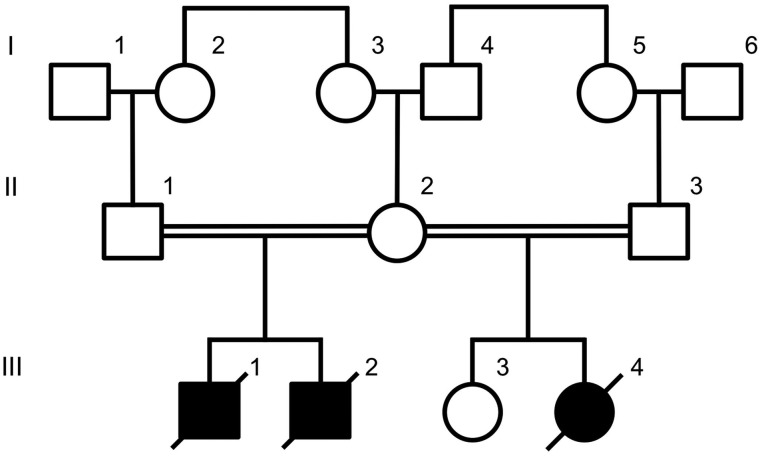
Autosomal-recessive inheritance was suggested by a family history of consanguinity and by recurrence of the phenotype between the two sibships. We performed exome sequencing of the affected individuals and their unaffected mother, followed by autozygosity mapping and variant filtering to identify the causative gene.
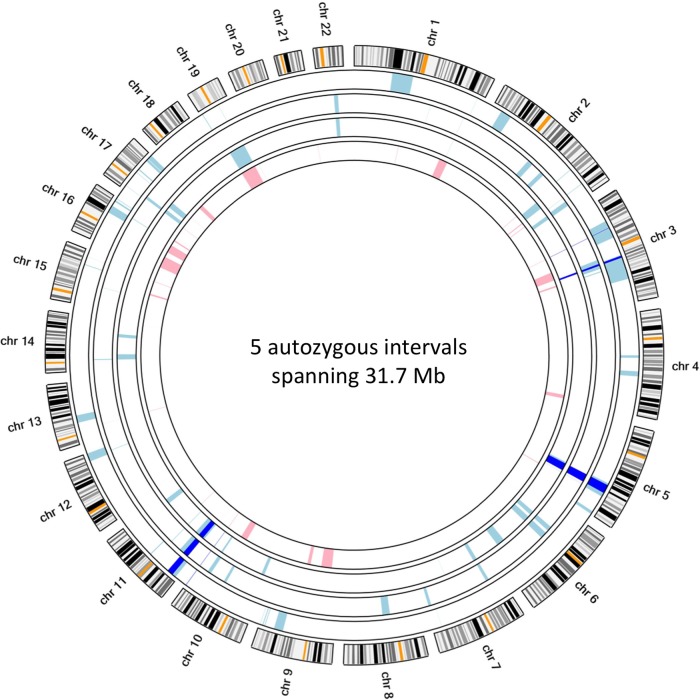
Five autozygous regions were identified, spanning 31.7 Mb of genomic sequence and including 211 genes. Using standard variant filtering criteria, we excluded all variants as being the likely pathogenic cause, apart from a single novel nonsense mutation, c.188C>A p.(Ser63*) (NM_002478.4), in MYOD1. This gene encodes an extensively studied transcription factor involved in muscle development, which has nonetheless not hitherto been associated with a hereditary human disease phenotype.
We provide the first description of a human phenotype that appears to result from MYOD1 mutation. The presentation with FADS is consistent with a large body of data demonstrating that in the mouse, MyoD is a major controller of precursor cell commitment to the myogenic differentiation programme.
致死性胎儿运动不能变形序列征(FADS)描述了一种临床和遗传异质性的表型,包括胎儿运动不能、宫内生长迟缓、关节挛缩和发育异常。受影响的婴儿因肺发育不全而死亡。我们旨在确定一个家族中这种疾病的潜在遗传原因,该家族中有来自两个同胞关系的三名受影响个体。
近亲结婚家族史以及两个同胞关系中该表型的复发提示为常染色体隐性遗传。我们对受影响个体及其未受影响的母亲进行了外显子组测序,随后进行纯合性定位和变异筛选以确定致病基因。
确定了五个纯合区域,跨越31.7 Mb的基因组序列,包括211个基因。使用标准变异筛选标准,我们排除了所有可能作为致病原因的变异,除了MYOD1基因中的一个单一的新型无义突变,即c.188C>A p.(Ser63*)(NM_002478.4)。该基因编码一种广泛研究的参与肌肉发育的转录因子,然而迄今为止尚未与遗传性人类疾病表型相关联。
我们首次描述了一种似乎由MYOD1突变导致的人类表型。FADS的表现与大量数据一致,这些数据表明在小鼠中,MyoD是前体细胞向肌源性分化程序定向的主要控制者。