Szymańska-Chargot Monika, Chylińska Monika, Pieczywek Piotr M, Rösch Petra, Schmitt Michael, Popp Jürgen, Zdunek Artur
Institute of Agrophysics, Polish Academy of Sciences, ul. Doswiadczalna 4, 20-290, Lublin 27, Poland.
Institute of Physical Chemistry and Abbe Center of Photonics, Friedrich Schiller University Jena, 07743, Jena, Germany.
Planta. 2016 Apr;243(4):935-45. doi: 10.1007/s00425-015-2456-4. Epub 2016 Jan 5.
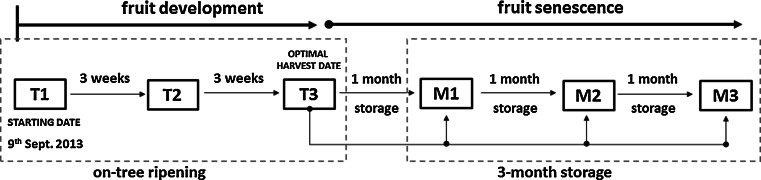
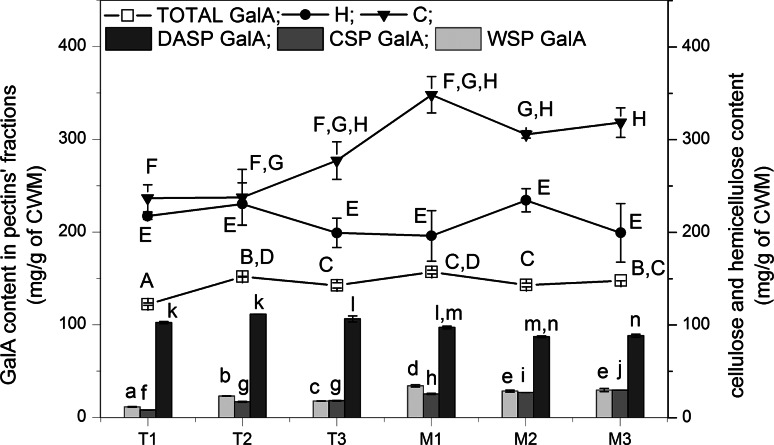
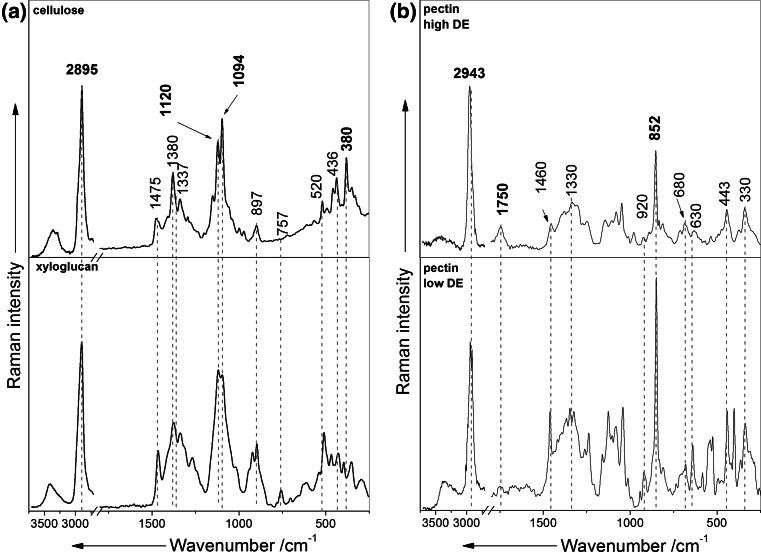
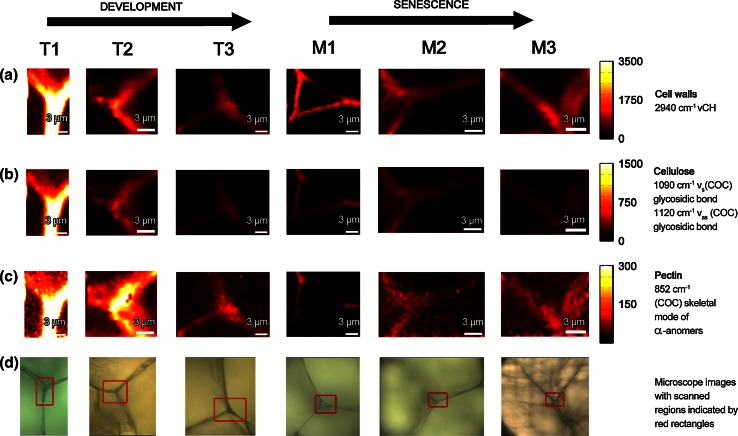
Du ring on-tree ripening, the pectin distribution changed from polydispersed in cell wall to cumulated in cell wall corners. During apple storage, the pectin distribution returned to evenly dispersed along the cell wall. The plant cell wall influences the texture properties of fruit tissue for example apples become softer during ripening and postharvest storage. This softening process is believed to be mainly connected with changes in the cell wall composition due to polysaccharides undergoing an enzymatic degradation. These changes in polysaccharides are currently mainly investigated via chemical analysis or monoclonal labeling. Here, we propose the application of Raman microscopy for evaluating the changes in the polysaccharide distribution in the cell wall of apples during both ripening and postharvest storage. The apples were harvested 1 month and 2 weeks before optimal harvest date as well as at the optimal harvest date. The apples harvested at optimal harvest date were stored for 3 months. The Raman maps, as well as the chemical analysis were obtained for each harvest date and after 1, 2 and 3 months of storage, respectively. The analysis of the Raman maps showed that the pectins in the middle lamella and primary cell wall undergo a degradation. The changes in cellulose and hemicellulose were less pronounced. These findings were confirmed by the chemical analysis results. During development changes of pectins from a polydispersed form in the cell walls to a cumulated form in cell wall corners could be observed. In contrast after 3 months of apple storage we could observe an substantial pectin decrease. The obtained results demonstrate that Raman chemical imaging might be a very useful tool for a first identification of compositional changes in plant tissue during their development. The great advantage Raman microspectroscopy offers is the simultaneous localization and identification of polysaccharides within the cell wall and plant tissue.
在树上成熟过程中,果胶分布从在细胞壁中多分散状态转变为在细胞壁角落累积。在苹果贮藏期间,果胶分布又恢复为沿细胞壁均匀分散。植物细胞壁影响果实组织的质地特性,例如苹果在成熟和采后贮藏期间会变软。这种软化过程被认为主要与细胞壁成分的变化有关,这是由于多糖经历酶促降解所致。目前主要通过化学分析或单克隆标记来研究这些多糖的变化。在此,我们提出应用拉曼显微镜来评估苹果在成熟和采后贮藏期间细胞壁中多糖分布的变化。在最佳收获日期前1个月和2周以及最佳收获日期收获苹果。在最佳收获日期收获的苹果贮藏3个月。分别在每个收获日期以及贮藏1、2和3个月后获取拉曼图谱以及化学分析结果。拉曼图谱分析表明,胞间层和初生细胞壁中的果胶发生了降解。纤维素和半纤维素的变化不太明显。化学分析结果证实了这些发现。在发育过程中,可以观察到果胶在细胞壁中的分布从多分散形式转变为在细胞壁角落累积的形式。相比之下,苹果贮藏3个月后,我们可以观察到果胶显著减少。所得结果表明,拉曼化学成像可能是初步鉴定植物组织在发育过程中成分变化的非常有用的工具。拉曼显微光谱的一大优势是能够同时在细胞壁和植物组织内定位和鉴定多糖。