Sheu Yi-Jun, Kinney Justin B, Stillman Bruce
Cold Spring Harbor Laboratory, Cold Spring Harbor, New York 11724, USA.
Genome Res. 2016 Mar;26(3):315-30. doi: 10.1101/gr.195248.115. Epub 2016 Jan 5.
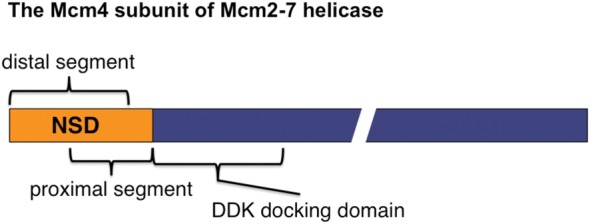
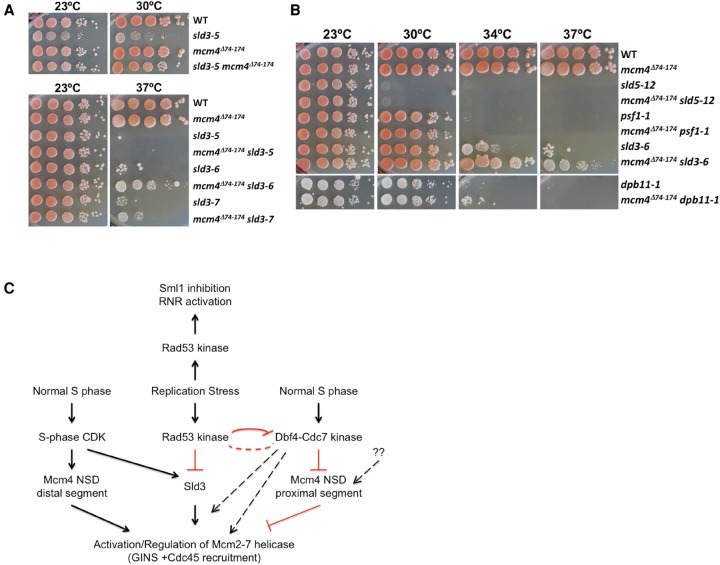
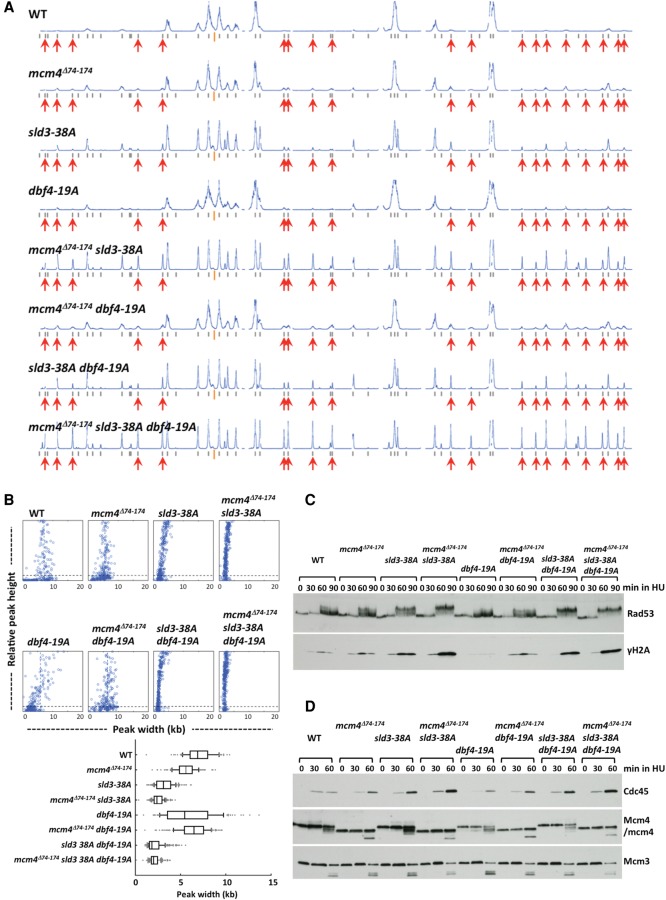
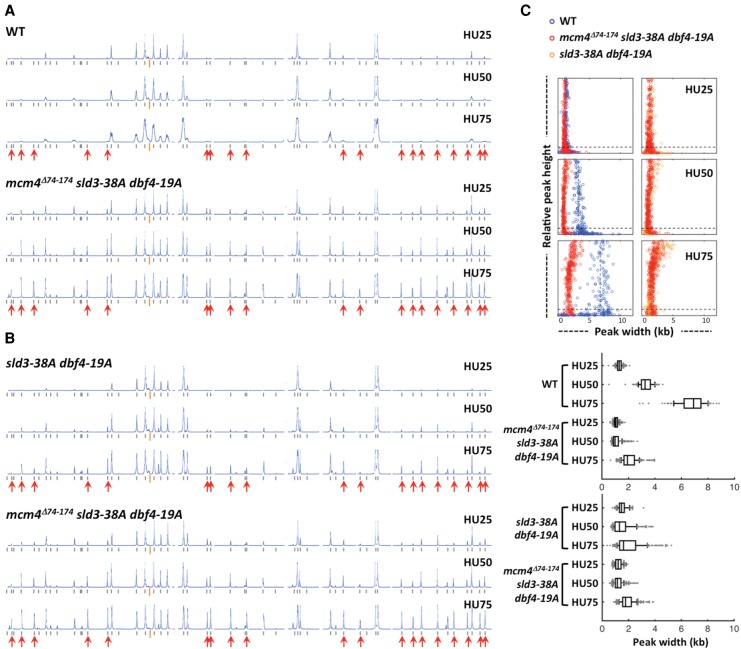
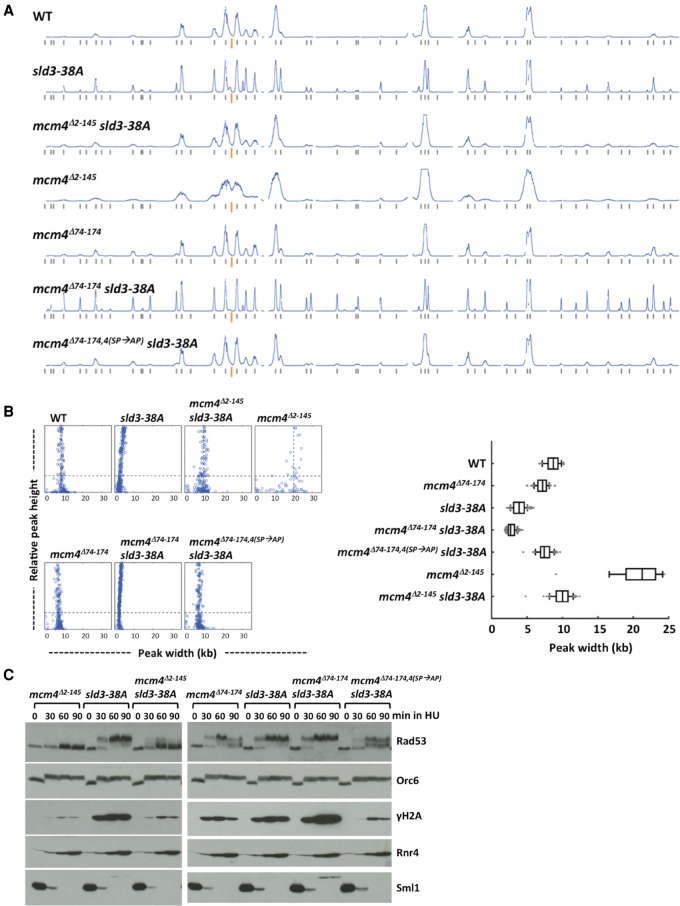
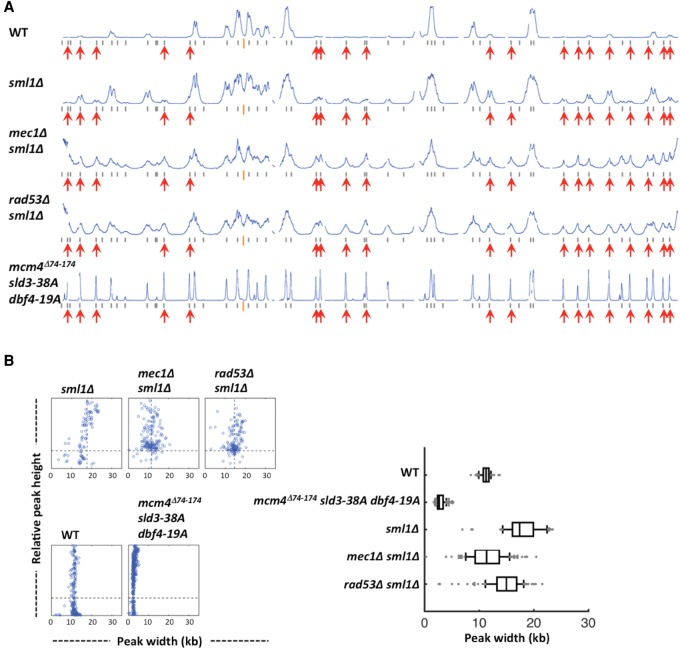
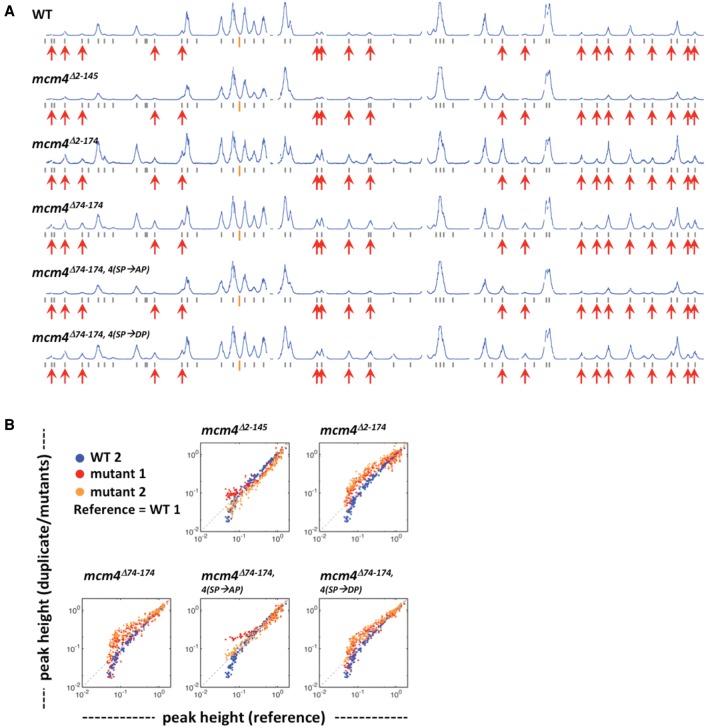
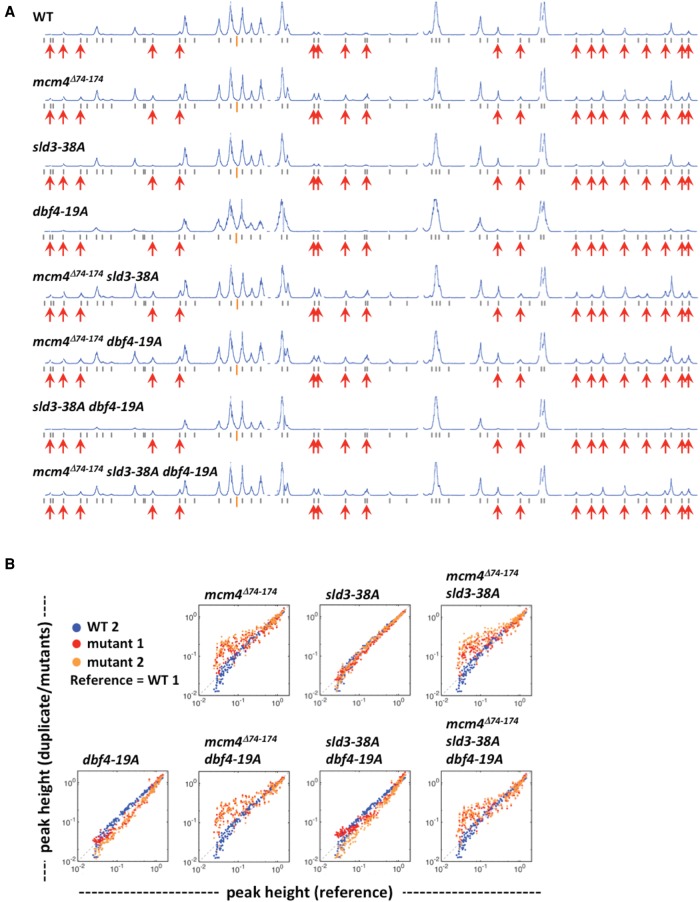
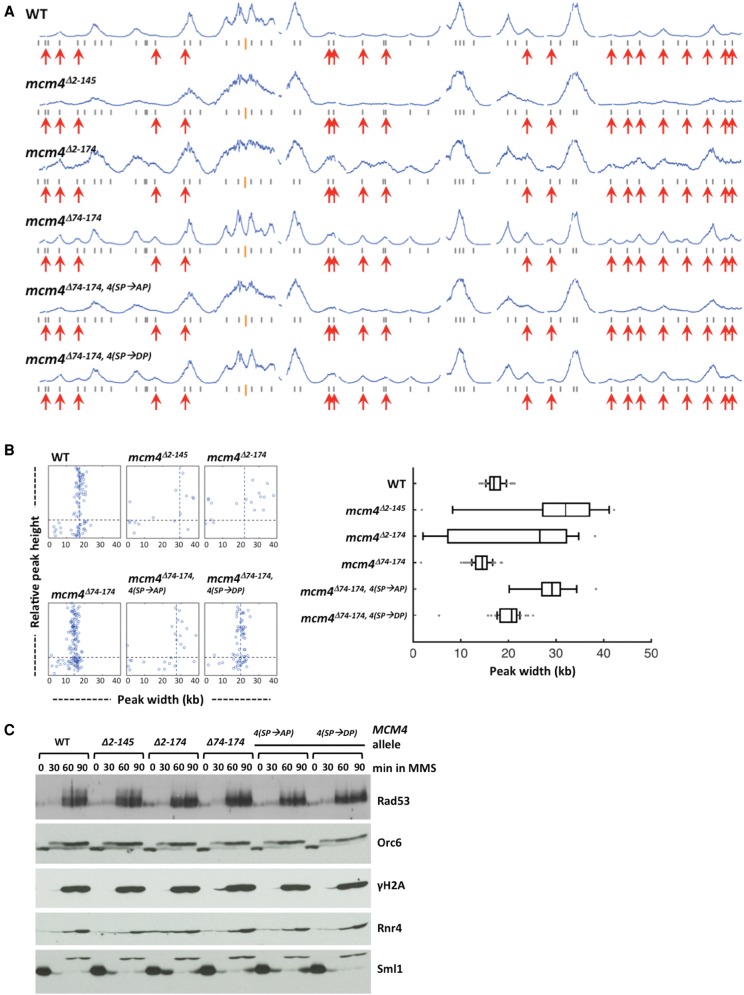
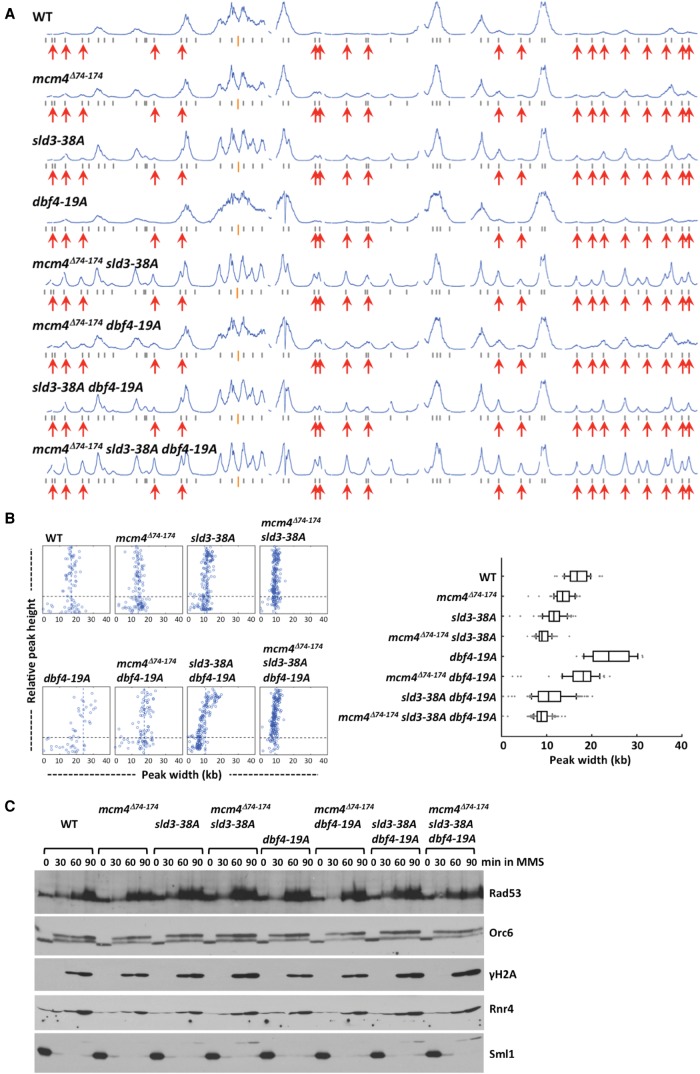
Eukaryotic chromosomes initiate DNA synthesis from multiple replication origins in a temporally specific manner during S phase. The replicative helicase Mcm2-7 functions in both initiation and fork progression and thus is an important target of regulation. Mcm4, a helicase subunit, possesses an unstructured regulatory domain that mediates control from multiple kinase signaling pathways, including the Dbf4-dependent Cdc7 kinase (DDK). Following replication stress in S phase, Dbf4 and Sld3, an initiation factor and essential target of Cyclin-Dependent Kinase (CDK), are targets of the checkpoint kinase Rad53 for inhibition of initiation from origins that have yet to be activated, so-called late origins. Here, whole-genome DNA replication profile analysis is used to access under various conditions the effect of mutations that alter the Mcm4 regulatory domain and the Rad53 targets, Sld3 and Dbf4. Late origin firing occurs under genotoxic stress when the controls on Mcm4, Sld3, and Dbf4 are simultaneously eliminated. The regulatory domain of Mcm4 plays an important role in the timing of late origin firing, both in an unperturbed S phase and in dNTP limitation. Furthermore, checkpoint control of Sld3 impacts fork progression under replication stress. This effect is parallel to the role of the Mcm4 regulatory domain in monitoring fork progression. Hypomorph mutations in sld3 are suppressed by a mcm4 regulatory domain mutation. Thus, in response to cellular conditions, the functions executed by Sld3, Dbf4, and the regulatory domain of Mcm4 intersect to control origin firing and replication fork progression, thereby ensuring genome stability.
真核生物染色体在S期以时间特异性方式从多个复制起点起始DNA合成。复制解旋酶Mcm2 - 7在起始和叉状延伸过程中均发挥作用,因此是一个重要的调控靶点。Mcm4作为解旋酶亚基,拥有一个非结构化的调控结构域,该结构域介导来自多种激酶信号通路的调控,包括依赖Dbf4的Cdc7激酶(DDK)。在S期复制应激后,Dbf4和Sld3(细胞周期蛋白依赖性激酶(CDK)的起始因子和重要靶点)是检查点激酶Rad53的作用靶点,以抑制尚未激活的起点(即所谓的晚期起点)的起始。在此,利用全基因组DNA复制谱分析来研究在各种条件下改变Mcm4调控结构域以及Rad53靶点Sld3和Dbf4的突变所产生的影响。当对Mcm4、Sld3和Dbf4的调控同时被消除时,在基因毒性应激下会发生晚期起点激发。Mcm4的调控结构域在未受干扰的S期和dNTP限制条件下,对晚期起点激发的时间都起着重要作用。此外,对Sld3的检查点调控在复制应激下会影响叉状延伸。这种作用与Mcm4调控结构域在监测叉状延伸中的作用相似。sld3中的亚效突变可被mcm4调控结构域突变所抑制。因此,响应细胞条件时,Sld3、Dbf4和Mcm4调控结构域所执行的功能相互交叉,以控制起点激发和复制叉延伸,从而确保基因组稳定性。