Che Jing, Yamaji Naoki, Shao Ji Feng, Ma Jian Feng, Shen Ren Fang
State Key Laboratory of Soil and Sustainable Agriculture, Institute of Soil Science, Chinese Academy of Sciences, Nanjing 210008, China University of Chinese Academy of Sciences, Beijing 100049, China Institute of Plant Science and Resources, Okayama University, Chuo 2-20-1, Kurashiki 710-0046, Japan.
Institute of Plant Science and Resources, Okayama University, Chuo 2-20-1, Kurashiki 710-0046, Japan.
J Exp Bot. 2016 Mar;67(5):1535-44. doi: 10.1093/jxb/erv545. Epub 2016 Jan 4.
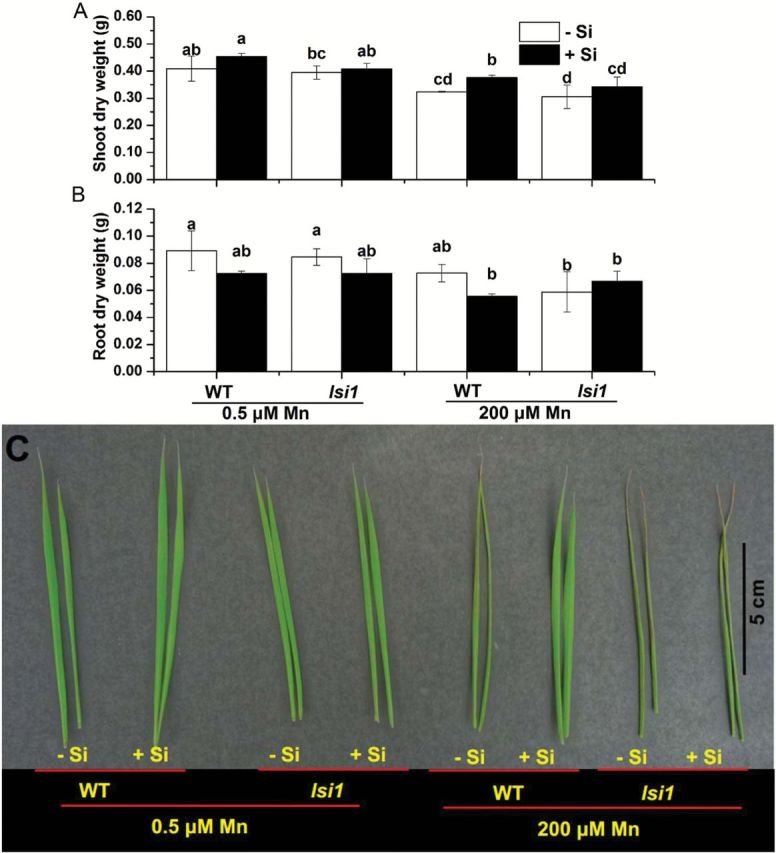
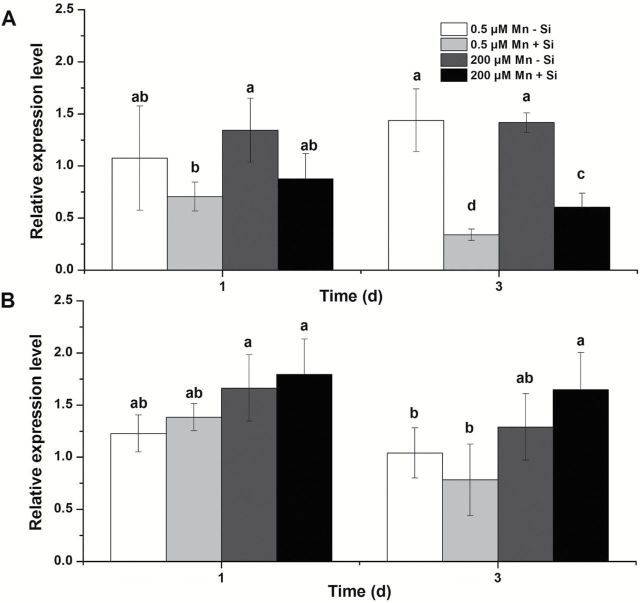
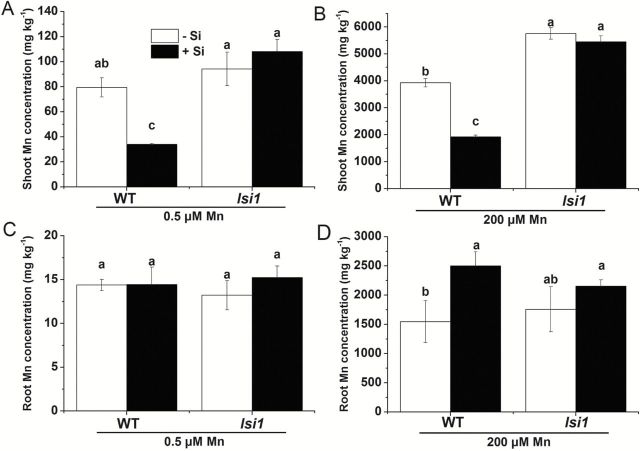
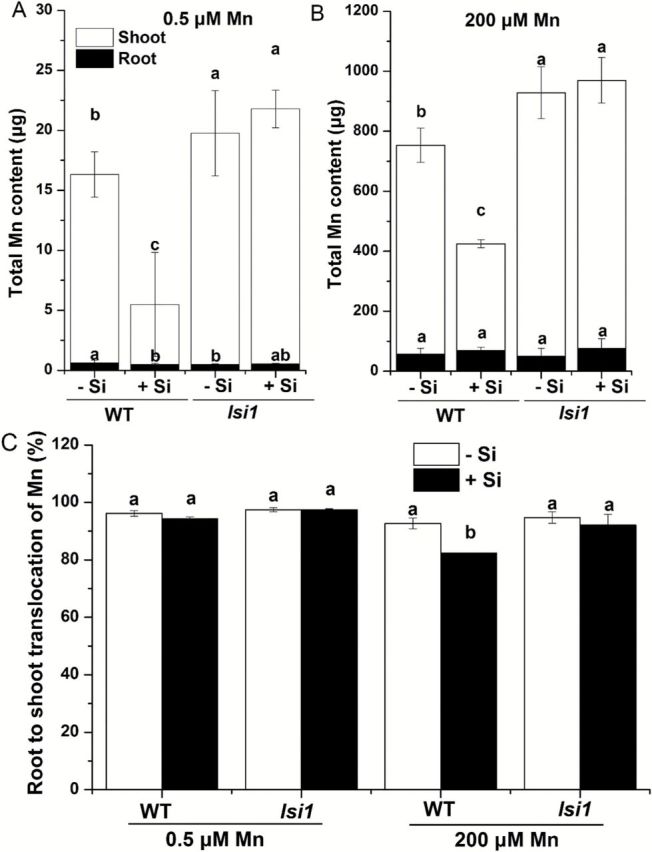
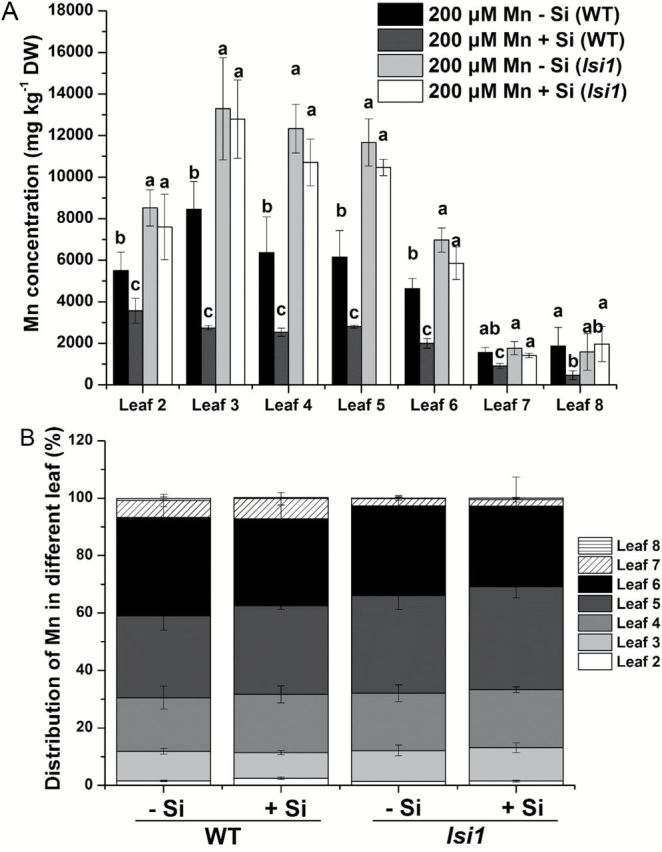
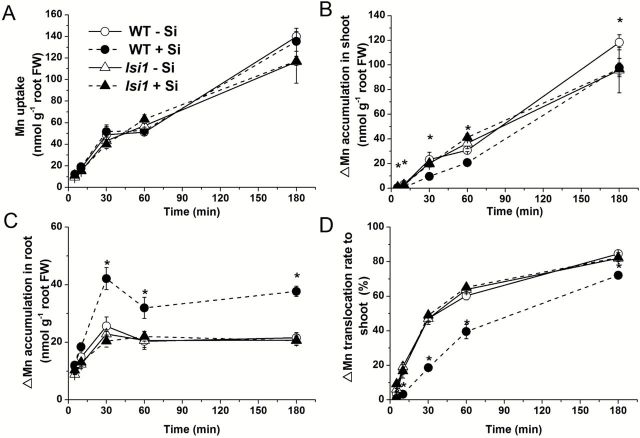
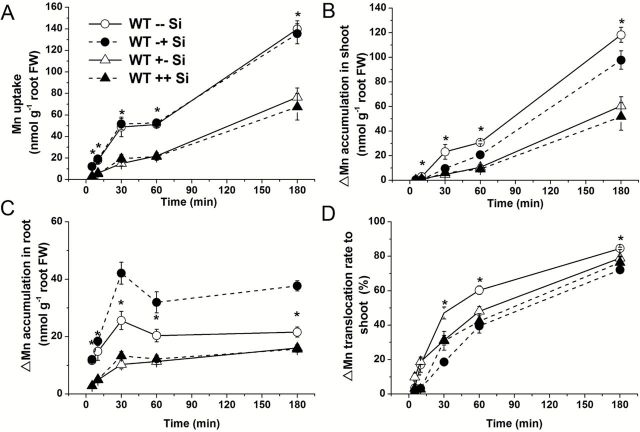
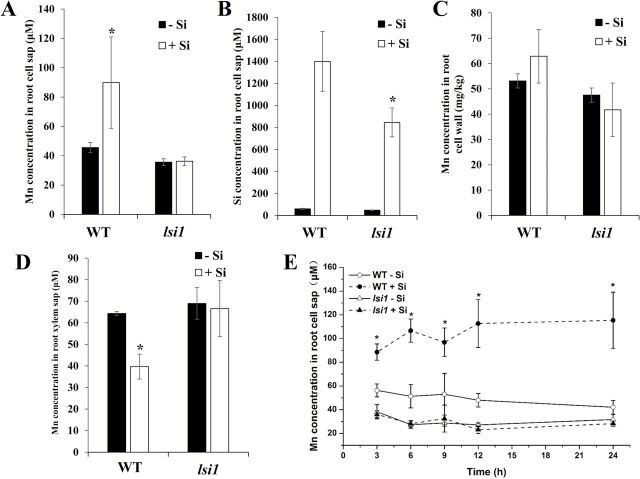
Silicon (Si) is known to alleviate manganese (Mn) toxicity in a number of plant species; however, the mechanisms responsible for this effect are poorly understood. Here, we investigated the interaction between Si and Mn in rice (Oryza sativa) by using a mutant defective in Si uptake. Silicon alleviated Mn toxicity in the wild-type (WT) rice, but not in the mutant exposed to high Mn. The Mn concentration in the shoots was decreased, but that in the roots was increased by Si in the WT. In contrast, the Mn concentration in the roots and shoots was unaffected by Si in the mutant. Furthermore, Si supply resulted in an increased Mn in the root cell sap, decreased Mn in the xylem sap in the WT, but these effects of Si were not observed in the mutant. A short-term labelling experiment with (54)Mn showed that the uptake of Mn was similar between plants with and without Si and between WT and the mutant. However, Si decreased root-to-shoot translocation of Mn in the WT, but not in the mutant. The expression of a Mn transporter gene for uptake, OsNramp5, was unaffected by a short exposure (<1 d) to Si, but down-regulated by relatively long-term exposure to Si in WT. In contrast, the expression of OsNramp5 was unaffected by Si in the mutant. These results indicated that Si-decreased Mn accumulation results from both Si-decreased root-to-shoot translocation of Mn, probably by the formation of Mn-Si complex in root cells, and uptake by down-regulating Mn transporter gene.
已知硅(Si)可减轻多种植物物种中的锰(Mn)毒性;然而,造成这种效应的机制却鲜为人知。在此,我们通过使用一个硅吸收存在缺陷的突变体来研究水稻(Oryza sativa)中硅与锰之间的相互作用。硅减轻了野生型(WT)水稻中的锰毒性,但在暴露于高锰环境的突变体中却没有这种作用。在野生型中,硅降低了地上部的锰浓度,但增加了根部的锰浓度。相比之下,突变体中根部和地上部的锰浓度不受硅的影响。此外,硅的供应导致野生型根细胞液中的锰增加,木质部汁液中的锰减少,但在突变体中未观察到硅的这些效应。一项用(54)Mn进行的短期标记实验表明,有硅和无硅的植物之间以及野生型和突变体之间锰的吸收情况相似。然而,硅降低了野生型中锰从根部到地上部的转运,但在突变体中却没有。一个负责吸收的锰转运蛋白基因OsNramp5的表达,在短期(<1天)暴露于硅时不受影响,但在野生型中相对长期暴露于硅时会下调。相比之下,突变体中OsNramp5的表达不受硅的影响。这些结果表明,硅降低锰积累是由于硅可能通过在根细胞中形成锰 - 硅复合物减少了锰从根部到地上部的转运,以及通过下调锰转运蛋白基因减少了吸收。