De Schryver Maarten, Vindevogel Sofie, Rasmussen Andrew E, Cramer Angélique O J
Department of Experimental-Clinical and Health Psychology, Ghent University Ghent, Belgium.
Department of Experimental-Clinical and Health Psychology, Ghent UniversityGhent, Belgium; Department of Orthopedagogy, Department of Orthopedagogics and Ghent University College, Ghent UniversityGhent, Belgium.
Front Psychol. 2015 Dec 16;6:1896. doi: 10.3389/fpsyg.2015.01896. eCollection 2015.
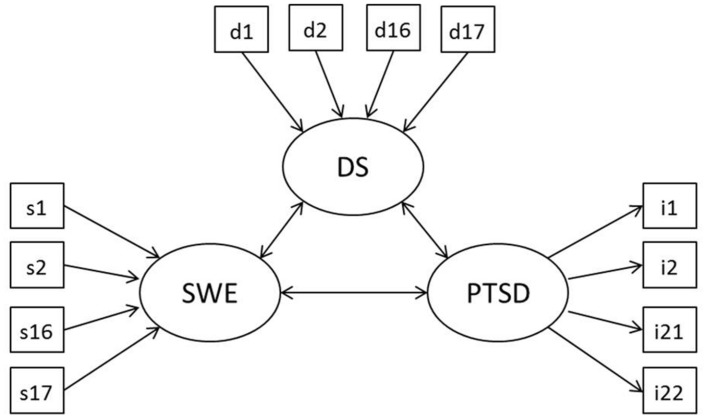
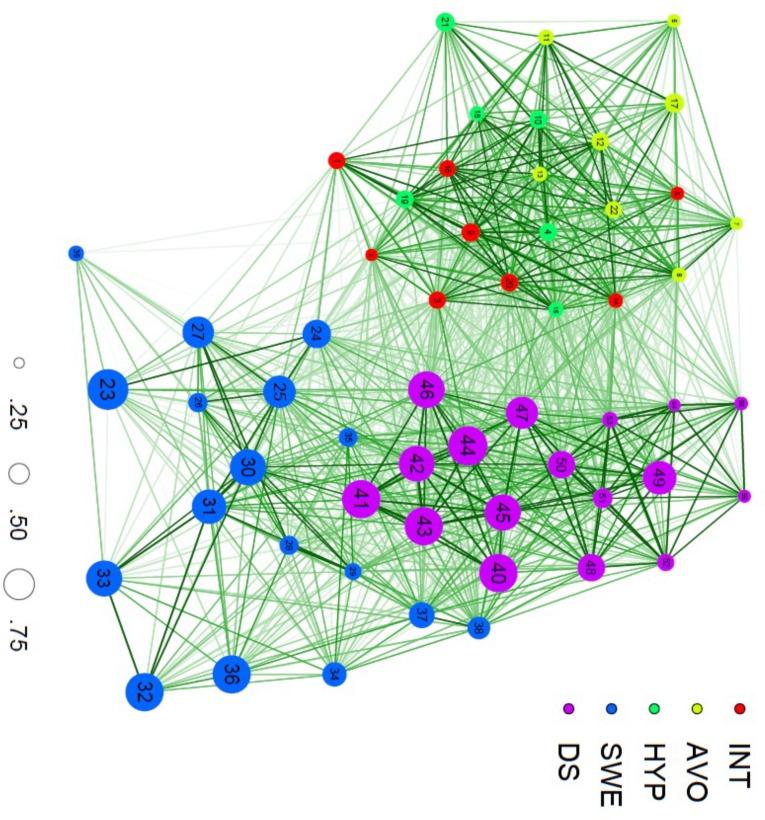
Conflict-affected populations are exposed to stressful events during and after war, and it is well established that both take a substantial toll on individuals' mental health. Exactly how exposure to events during and after war affect mental health is a topic of considerable debate. Various hypotheses have been put forward on the relation between stressful war exposure (SWE), daily stressors (DS) and the development of post-traumatic stress disorder (PTSD). This paper seeks to contribute to this debate by critically reflecting upon conventional modeling approaches and by advancing an alternative model to studying interrelationships between SWE, DS, and PTSD variables. The network model is proposed as an innovative and comprehensive modeling approach in the field of mental health in the context of war. It involves a conceptualization and representation of variables and relationships that better approach reality, hence improving methodological rigor. It also promises utility in programming and delivering mental health support for war-affected populations.
受冲突影响的人群在战争期间及战后会遭遇压力事件,而且众所周知,这两者都会对个人心理健康造成巨大损害。战争期间及战后接触这些事件究竟如何影响心理健康,是一个备受争议的话题。关于应激性战争暴露(SWE)、日常应激源(DS)与创伤后应激障碍(PTSD)的发展之间的关系,已经提出了各种假说。本文旨在通过批判性地反思传统建模方法,并提出一种研究SWE、DS和PTSD变量之间相互关系的替代模型,为这一辩论做出贡献。网络模型被提议作为战争背景下心理健康领域一种创新且全面的建模方法。它涉及对变量及关系的概念化和表征,能更好地贴近现实,从而提高方法的严谨性。它还有望在为受战争影响人群规划和提供心理健康支持方面发挥作用。