Singer Esther, Chong Lauren S, Heidelberg John F, Edwards Katrina J
Joint Genome Institute, Walnut Creek CA, USA.
Department of Earth Sciences, University of Southern California, Los Angeles CA, USA.
Front Microbiol. 2015 Dec 16;6:1409. doi: 10.3389/fmicb.2015.01409. eCollection 2015.
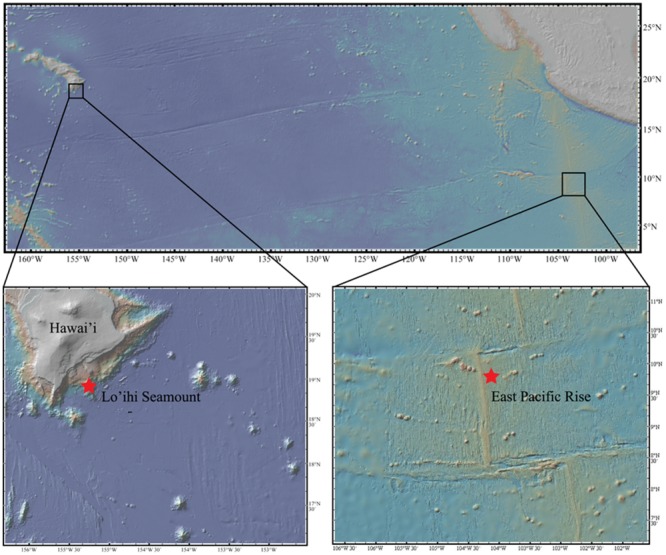
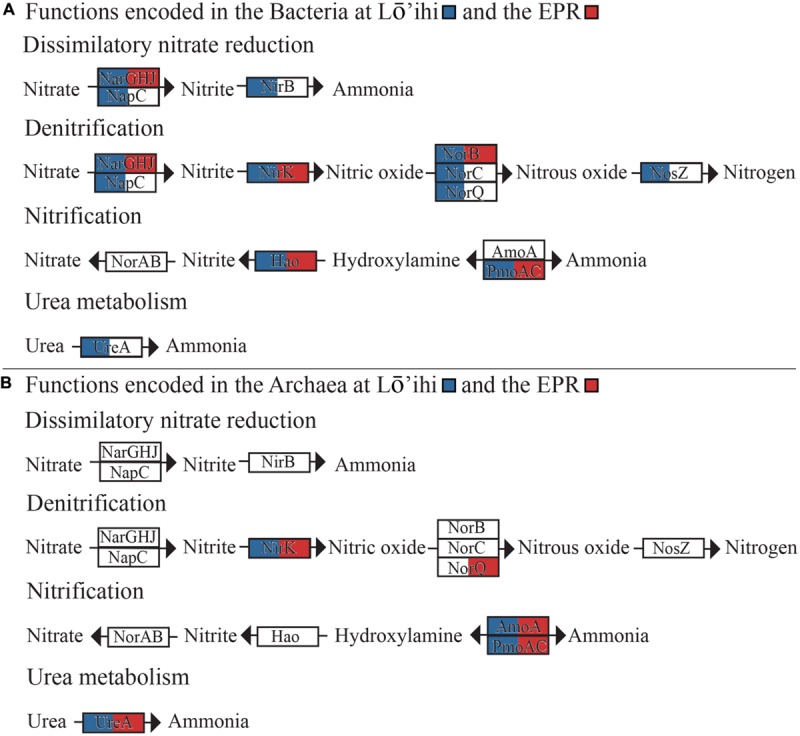
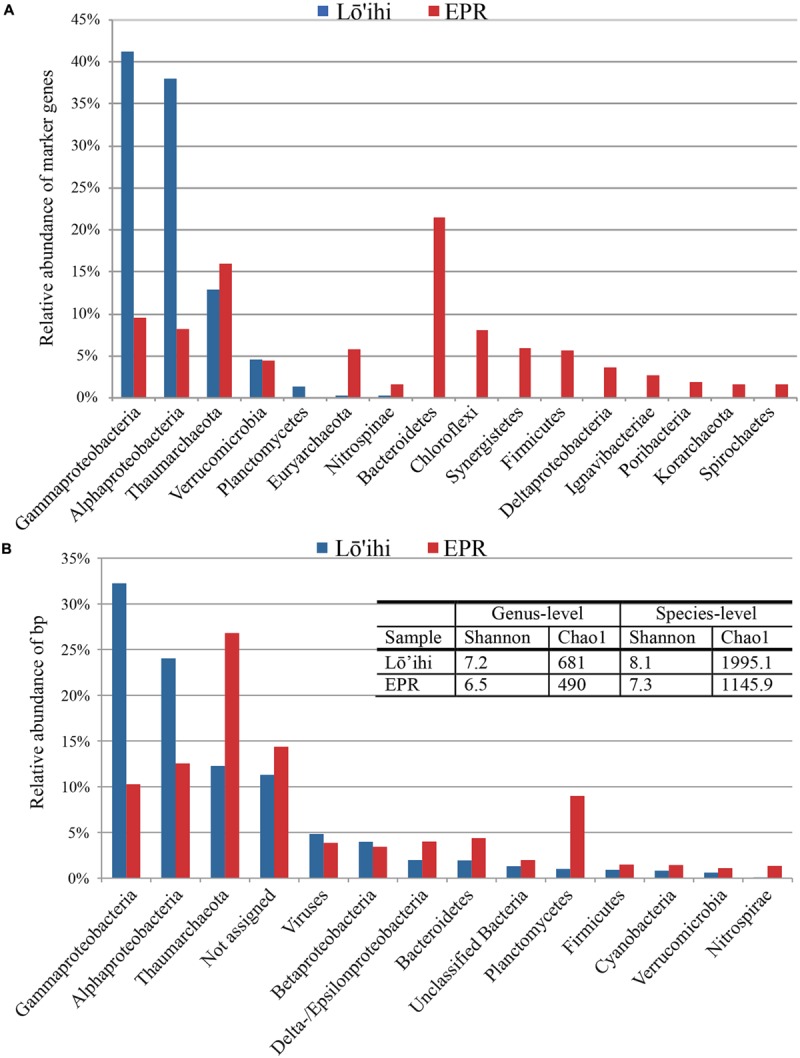
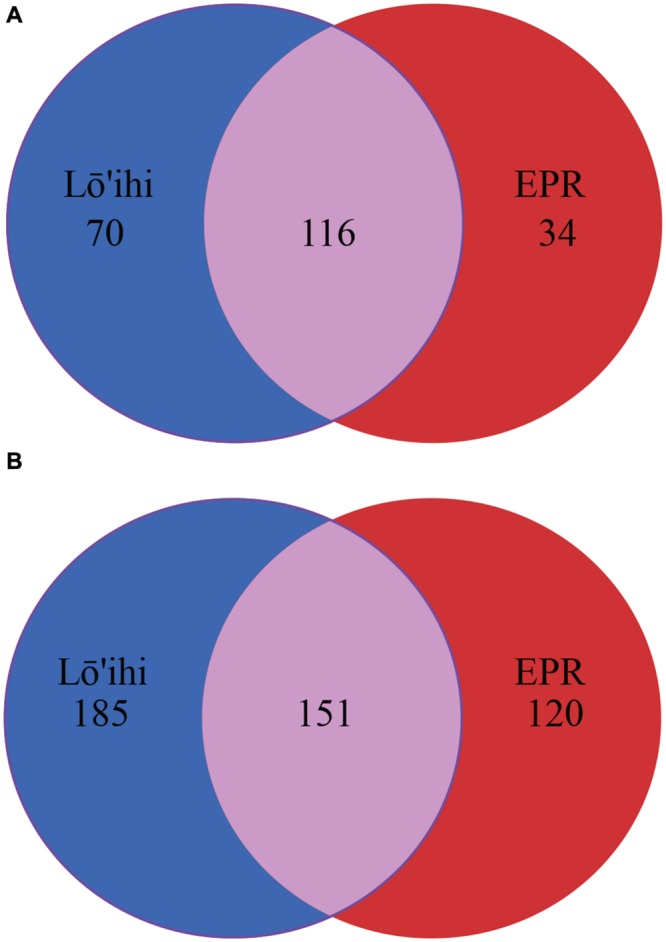
The oceanic crust forms two thirds of the Earth's surface and hosts a large phylogenetic and functional diversity of microorganisms. While advances have been made in the sedimentary realm, our understanding of the igneous rock portion as a microbial habitat has remained limited. We present the first comparative metagenomic microbial community analysis from ocean floor basalt environments at the Lō'ihi Seamount, Hawai'i, and the East Pacific Rise (EPR; 9°N). Phylogenetic analysis indicates the presence of a total of 43 bacterial and archaeal mono-phyletic groups, dominated by Alpha- and Gammaproteobacteria, as well as Thaumarchaeota. Functional gene analysis suggests that these Thaumarchaeota play an important role in ammonium oxidation on seafloor basalts. In addition to ammonium oxidation, the seafloor basalt habitat reveals a wide spectrum of other metabolic potentials, including CO2 fixation, denitrification, dissimilatory sulfate reduction, and sulfur oxidation. Basalt communities from Lō'ihi and the EPR show considerable metabolic and phylogenetic overlap down to the genus level despite geographic distance and slightly different seafloor basalt mineralogy.
大洋地壳构成了地球表面的三分之二,是多种微生物的家园,这些微生物在系统发育和功能上具有高度多样性。尽管在沉积领域已经取得了进展,但我们对火成岩部分作为微生物栖息地的了解仍然有限。我们首次对夏威夷罗伊希海山和东太平洋海隆(EPR;北纬9°)的海底玄武岩环境进行了比较宏基因组微生物群落分析。系统发育分析表明,总共存在43个细菌和古菌单系群,以α-和γ-变形菌以及奇古菌门为主。功能基因分析表明,这些奇古菌门在海底玄武岩上的铵氧化过程中发挥着重要作用。除了铵氧化外,海底玄武岩栖息地还展现出广泛的其他代谢潜力,包括二氧化碳固定、反硝化作用、异化硫酸盐还原和硫氧化。尽管地理位置遥远且海底玄武岩矿物学略有不同,但罗伊希海山和东太平洋海隆的玄武岩群落从属水平上显示出相当大的代谢和系统发育重叠。