Heise Ruth, Amann Philipp M, Ensslen Silke, Marquardt Yvonne, Czaja Katharina, Joussen Sylvia, Beer Daniel, Abele Rupert, Plewnia Gabriele, Tampé Robert, Merk Hans F, Hermanns Heike M, Baron Jens M
Department of Dermatology and Allergology, RWTH Aachen University, Aachen, Germany.
IZKF, RWTH Aachen University, Aachen, Germany.
PLoS One. 2016 Jan 6;11(1):e0146325. doi: 10.1371/journal.pone.0146325. eCollection 2016.
Interferon alpha (IFNα) is routinely used in the clinical practice for adjuvant systemic melanoma therapy. Understanding the molecular mechanism of IFNα effects and prediction of response in the IFNα therapy regime allows initiation and continuation of IFNα treatment for responder and exclusion of non-responder to avoid therapy inefficacy and side-effects. The transporter protein associated with antigen processing-1 (TAP1) is part of the MHC class I peptide-loading complex, and important for antigen presentation in tumor and antigen presenting cells. In the context of personalized medicine, we address this potential biomarker TAP1 as a target of IFNα signalling.
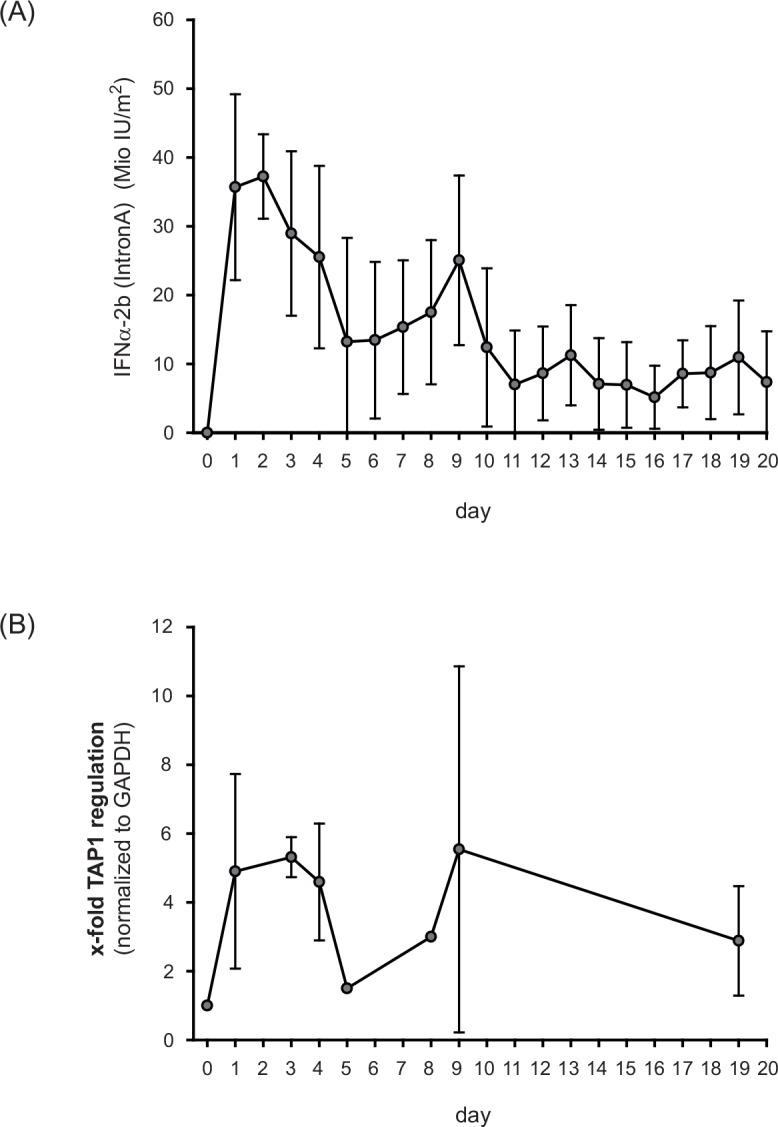
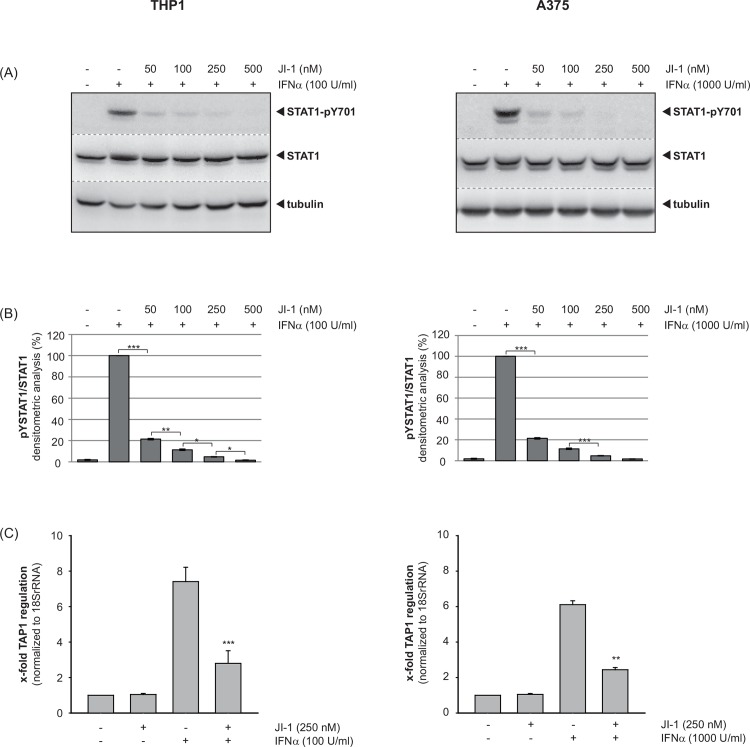
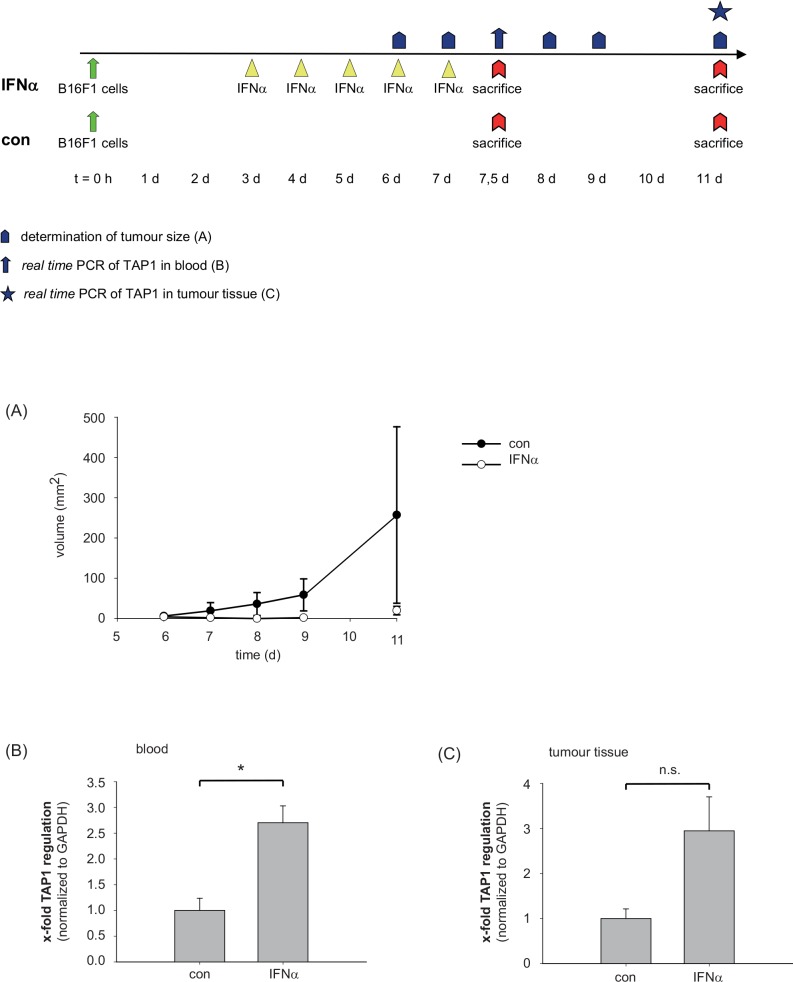
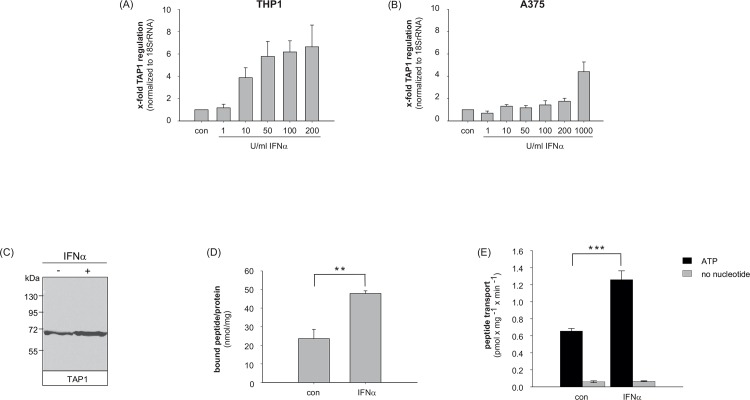
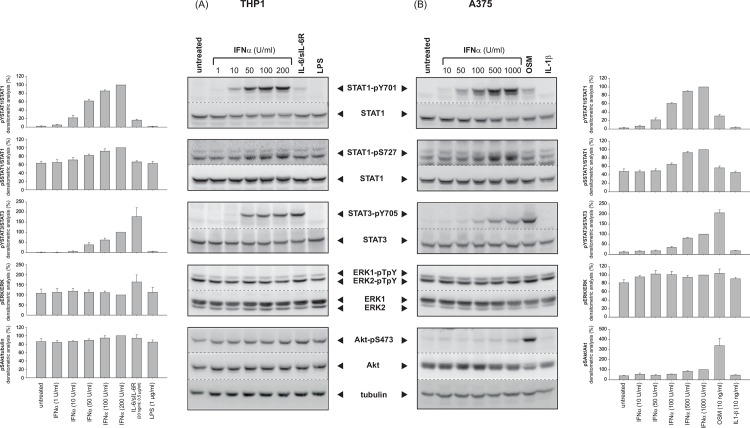
We could show that IFNα upregulates TAP1 expression in peripheral blood mononuclear cells (PBMCs) of patients with malignant melanoma receiving adjuvant high-dose immunotherapy. IFNα also induced expression of TAP1 in mouse blood and tumor tissue and suppressed the formation of melanoma metastasis in an in vivo B16 tumor model. Besides its expression, TAP binding affinity and transport activity is induced by IFNα in human monocytic THP1 cells. Furthermore, our data revealed that IFNα clearly activates phosphorylation of STAT1 and STAT3 in THP1 and A375 melanoma cells. Inhibition of Janus kinases abrogates the IFNα-induced TAP1 expression. These results suggest that the JAK/STAT pathway is a crucial mediator for TAP1 expression elicited by IFNα treatment.
We suppose that silencing of TAP1 expression provides tumor cells with a mechanism to escape cytotoxic T-lymphocyte recognition. The observed benefit of IFNα treatment could be mediated by the shown dual effect of TAP1 upregulation in antigen presenting cells on the one hand, and of TAP1 upregulation in 'silent' metastatic melanoma cells on the other hand. In conclusion, this work contributes to a better understanding of the mode of action of IFNα which is essential to identify markers to predict, assess and monitor therapeutic response of IFNα treatment in the future.
干扰素α(IFNα)在临床实践中常用于黑色素瘤的辅助全身治疗。了解IFNα作用的分子机制以及预测IFNα治疗方案中的反应,有助于对有反应者开始并持续进行IFNα治疗,同时排除无反应者,以避免治疗无效和副作用。与抗原加工相关的转运蛋白1(TAP1)是MHC I类肽负载复合物的一部分,对肿瘤和抗原呈递细胞中的抗原呈递很重要。在个性化医疗的背景下,我们将这种潜在的生物标志物TAP1作为IFNα信号传导的靶点进行研究。
我们发现,IFNα可上调接受辅助性高剂量免疫治疗的恶性黑色素瘤患者外周血单核细胞(PBMC)中TAP1的表达。IFNα还可诱导小鼠血液和肿瘤组织中TAP1的表达,并在体内B16肿瘤模型中抑制黑色素瘤转移的形成。除了诱导表达外,IFNα还可在人单核细胞THP1细胞中诱导TAP结合亲和力和转运活性。此外,我们的数据显示,IFNα可明显激活THP1和A375黑色素瘤细胞中STAT1和STAT3的磷酸化。抑制Janus激酶可消除IFNα诱导的TAP1表达。这些结果表明,JAK/STAT途径是IFNα治疗诱导TAP1表达的关键介质。
我们推测,TAP1表达的沉默为肿瘤细胞提供了一种逃避细胞毒性T淋巴细胞识别的机制。观察到的IFNα治疗的益处可能一方面是由抗原呈递细胞中TAP1上调的双重作用介导的,另一方面是由“沉默”的转移性黑色素瘤细胞中TAP1上调介导的。总之,这项工作有助于更好地理解IFNα的作用模式,这对于未来识别预测、评估和监测IFNα治疗反应的标志物至关重要。