Liberante Fabio Giuseppe, Pouryahya Tara, McMullin Mary-Frances, Zhang Shu-Dong, Mills Kenneth Ian
Centre for Cancer Research and Cell Biology (CCRCB), Queen's University Belfast, Belfast, United Kingdom.
Oncotarget. 2016 Feb 9;7(6):6609-19. doi: 10.18632/oncotarget.6773.
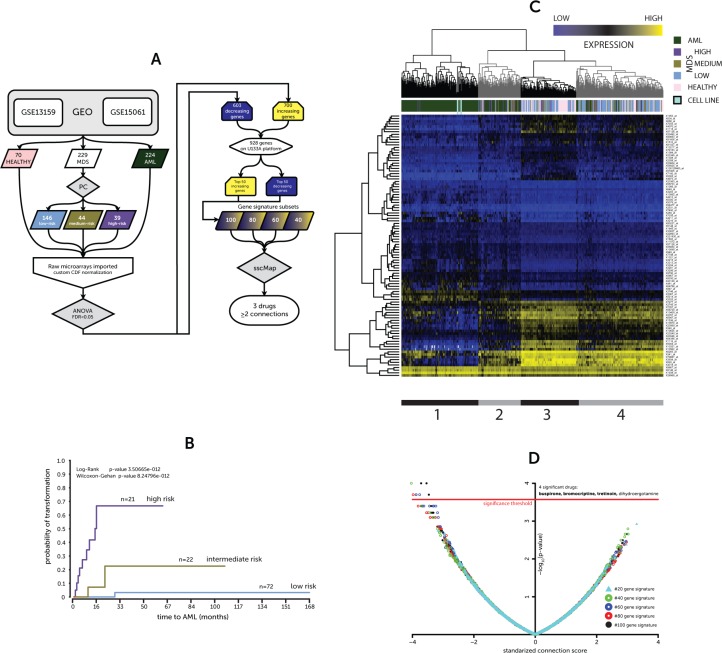
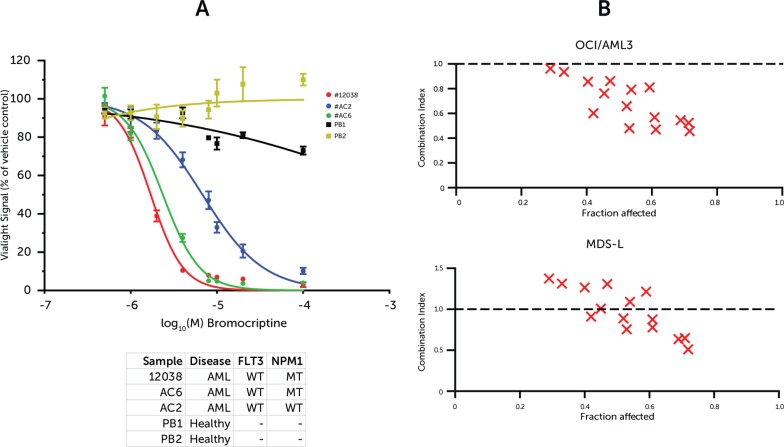
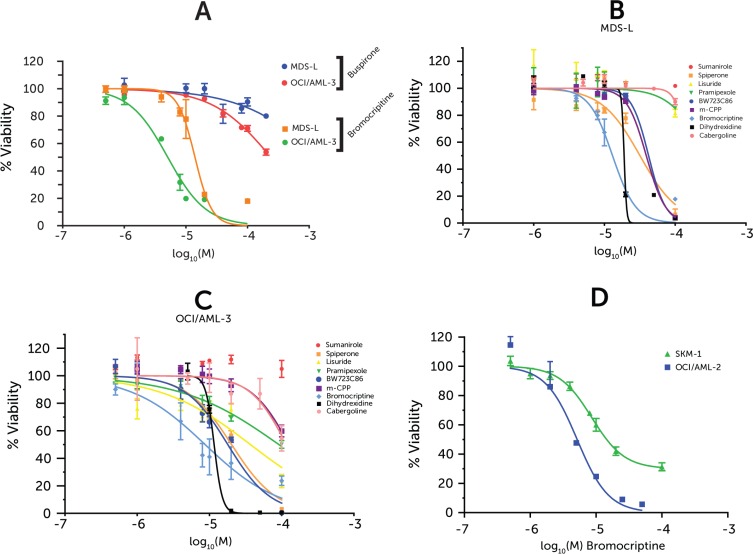
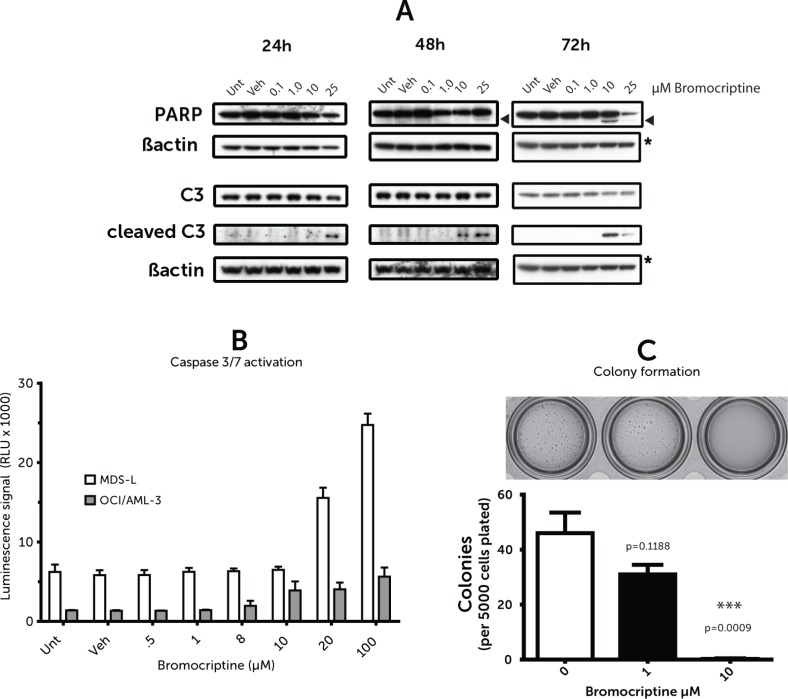
Myelodysplastic syndromes (MDS) represent a broad spectrum of diseases characterized by their clinical manifestation as one or more cytopenias, or a reduction in circulating blood cells. MDS is predominantly a disease of the elderly, with a median age in the UK of around 75. Approximately one third of MDS patients will develop secondary acute myeloid leukemia (sAML) that has a very poor prognosis. Unfortunately, most standard cytotoxic agents are often too toxic for older patients. This means there is a pressing unmet need for novel therapies that have fewer side effects to assist this vulnerable group. This challenge was tackled using bioinformatic analysis of available transcriptomic data to establish a gene-based signature of the development and progression of MDS. This signature was then used to identify novel therapeutic compounds via statistically-significant connectivity mapping. This approach suggested re-purposing an existing and widely-prescribed drug, bromocriptine as a novel potential therapy in these disease settings. This drug has shown selectivity for leukemic cells as well as synergy with current therapies.
骨髓增生异常综合征(MDS)是一类广泛的疾病,其临床表现为一种或多种血细胞减少,即循环血细胞数量减少。MDS主要是一种老年疾病,在英国,其发病的中位年龄约为75岁。大约三分之一的MDS患者会发展为继发性急性髓系白血病(sAML),其预后非常差。不幸的是,大多数标准的细胞毒性药物对老年患者来说毒性往往过大。这意味着迫切需要副作用更少的新型疗法来帮助这一弱势群体。通过对现有转录组数据进行生物信息学分析,应对了这一挑战,以建立MDS发生和发展的基于基因的特征。然后,利用这一特征通过具有统计学意义的连通性映射来识别新型治疗化合物。这种方法表明,将现有的、广泛使用的药物溴隐亭重新用于这些疾病的治疗,作为一种新的潜在疗法。这种药物已显示出对白血病细胞的选择性以及与现有疗法的协同作用。