Che Luanqing, Jin Yan, Zhang Chao, Lai Tianwen, Zhou Hongbin, Xia Lixia, Tian Baoping, Zhao Yun, Liu Juan, Wu Yinfang, Wu Yanping, Du Jie, Li Wen, Ying Songmin, Chen Zhihua, Shen Huahao
Department of Respiratory and Critical Care Medicine, Second Affiliated Hospital, Zhejiang University School of Medicine, Hangzhou, Zhejiang 310009, China.
Department of Respiratory Diseases, Taizhou Municipal Hospital, Taizhou, Zhejiang 318000, China.
Sci Rep. 2016 Jan 7;6:18680. doi: 10.1038/srep18680.
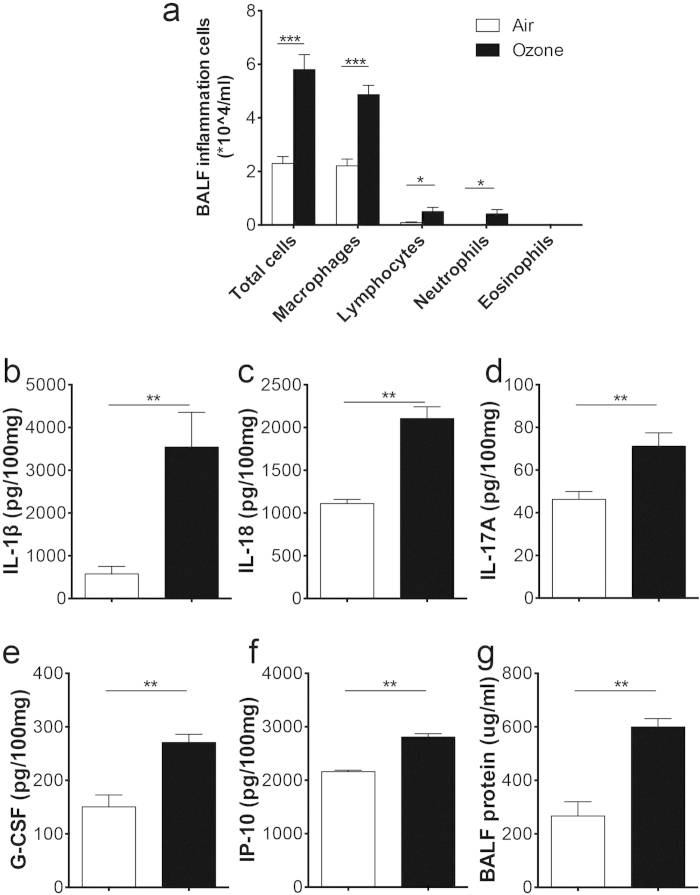
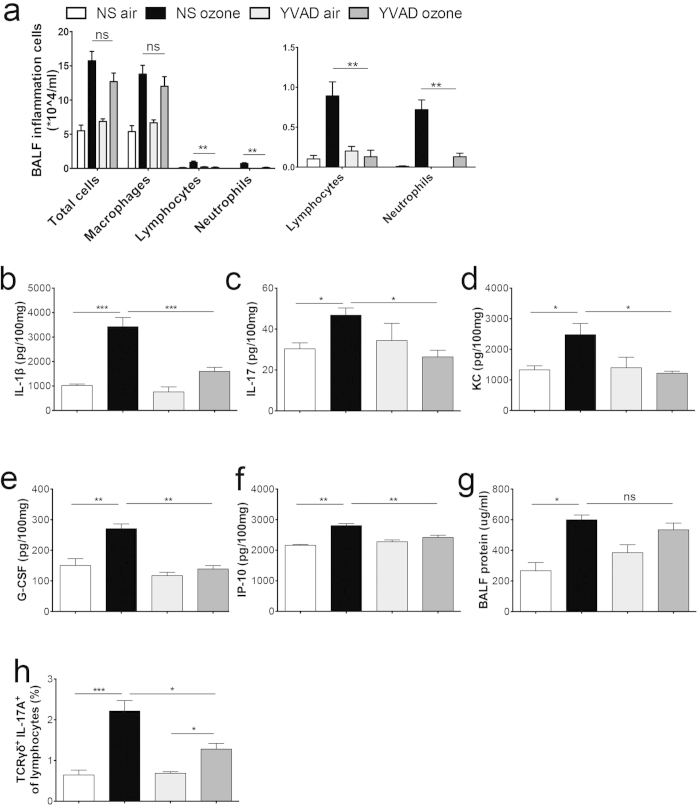
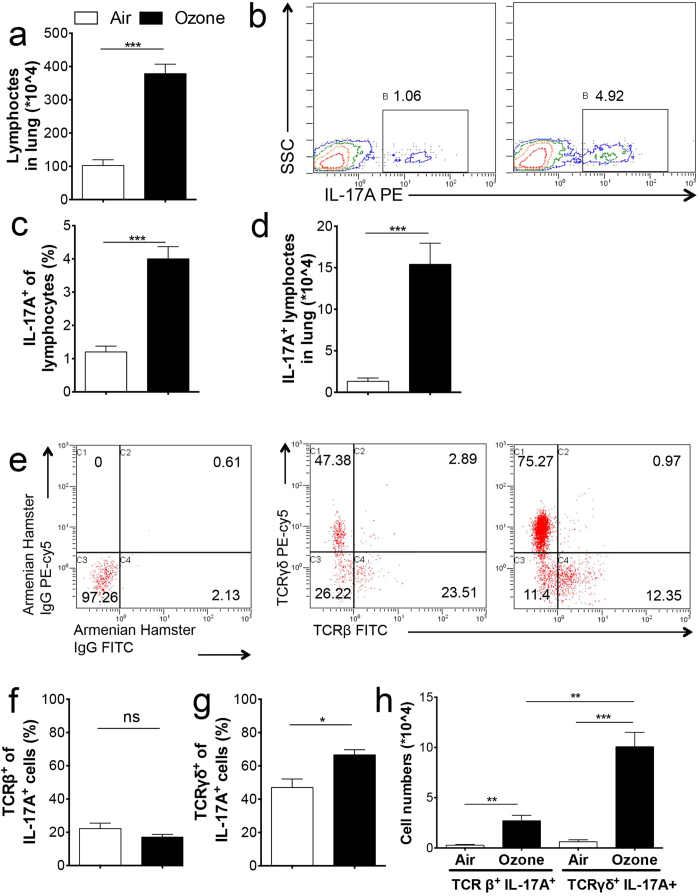
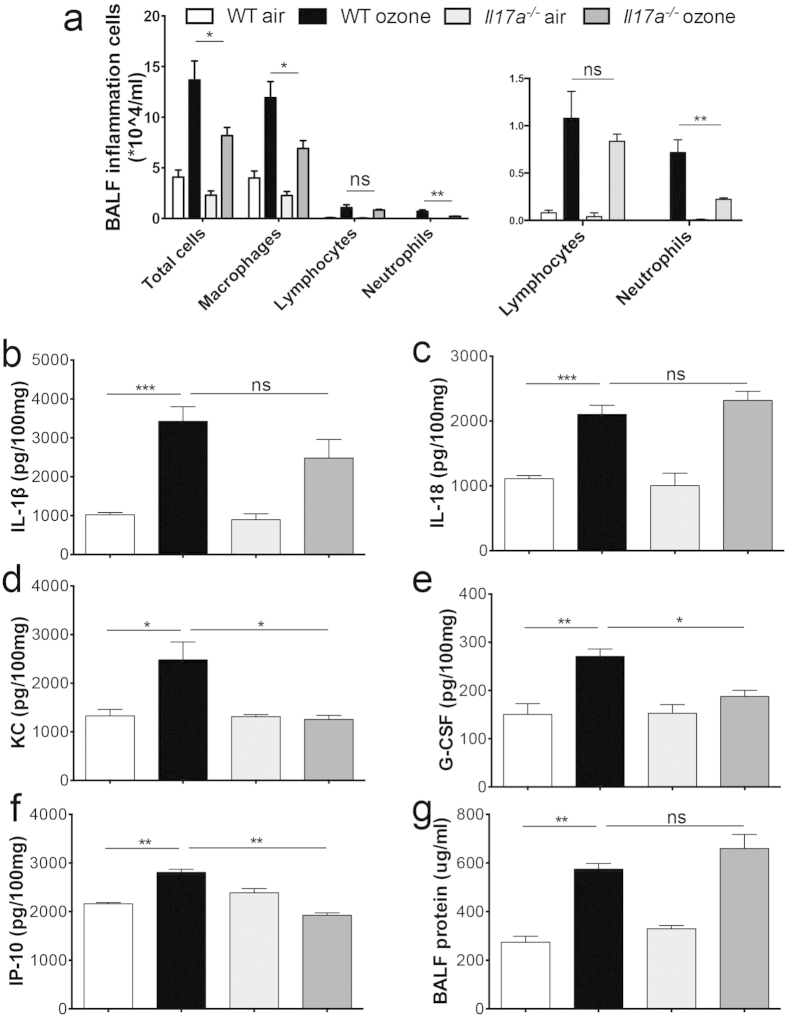
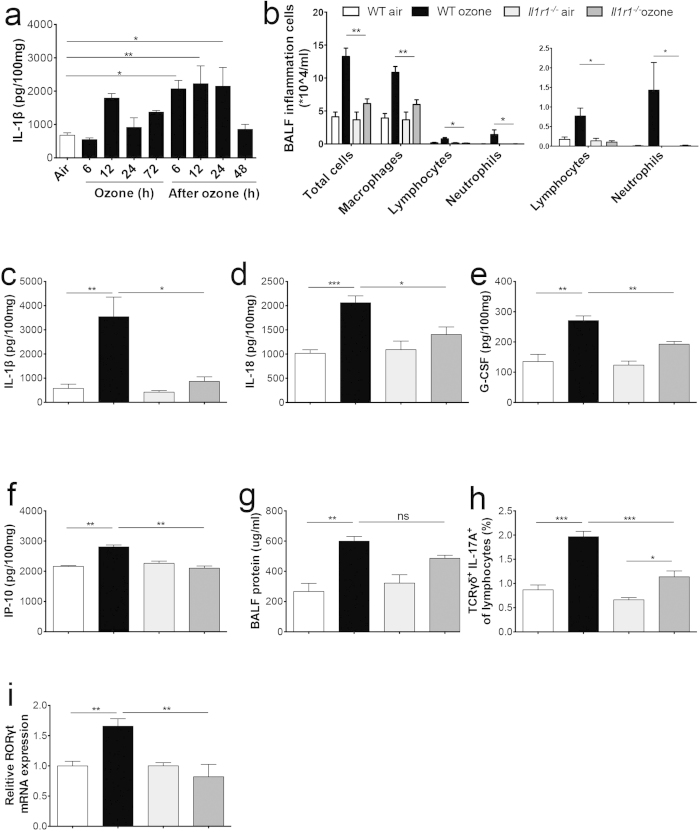
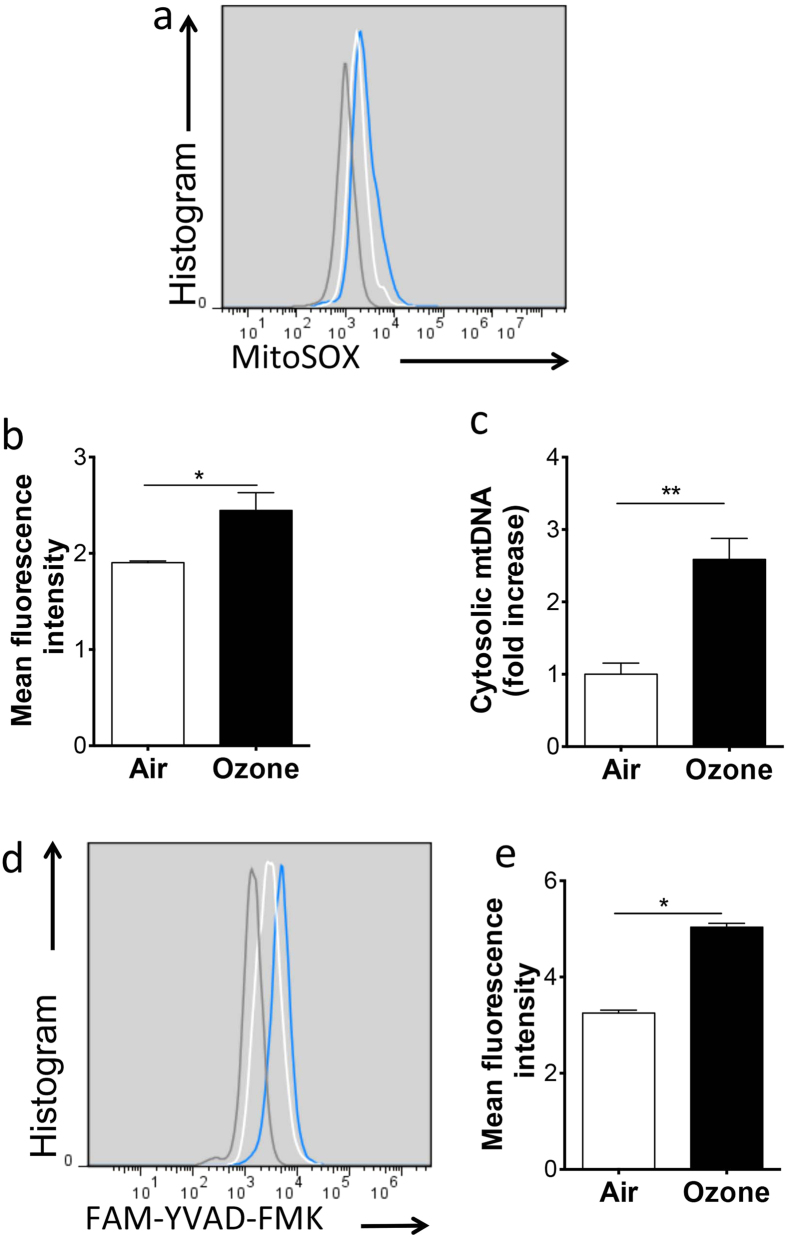
Ozone is a common environmental air pollutant leading to respiratory illness. The mechanisms regulating ozone-induced airway inflammation remain poorly understood. We hypothesize that ozone-triggered inflammasome activation and interleukin (IL)-1 production regulate neutrophilic airway inflammation through IL-17A. Pulmonary neutrophilic inflammation was induced by extended (72 h) low-dose (0.7 ppm) exposure to ozone. IL-1 receptor 1 (Il1r1)(-/-), Il17a(-/-) mice and the caspase-1 inhibitor acetyl-YVAD-chloromethylketone (Ac-YVAD-cmk) were used for in vivo studies. Cellular inflammation and protein levels in bronchial alveolar lavage fluid (BALF), cytokines, and IL-17A-producing γδT-cells, as well as mitochondrial reactive oxygen species (ROS), mitochondrial DNA (mtDNA) release, and inflammasome activation in lung macrophages were analyzed. Ozone-induced neutrophilic airway inflammation, accompanied an increased production of IL-1β, IL-18, IL-17A, Granulocyte-colony stimulating factor (G-CSF), Interferon-γ inducible protein 10 (IP-10) and BALF protein in the lung. Ozone-induced IL-17A production was predominantly in γδT-cells, and Il17a-knockout mice exhibited reduced airway inflammation. Lung macrophages from ozone-exposed mice exhibited higher levels of mitochondrial ROS, enhanced cytosolic mtDNA, increased caspase-1 activation, and higher production of IL-1β. Il1r1-knockout mice or treatment with Ac-YVAD-cmk decreased the IL-17A production and subsequent airway inflammation. Taken together, we demonstrate that ozone-induced IL-17A and neutrophilic airway inflammation is orchestrated by the caspase-1-IL-1 cascade.
臭氧是一种常见的环境空气污染物,可导致呼吸道疾病。目前对调节臭氧诱导的气道炎症的机制仍知之甚少。我们假设,臭氧触发的炎性小体激活和白细胞介素(IL)-1的产生通过IL-17A调节中性粒细胞性气道炎症。通过延长(72小时)低剂量(0.7 ppm)暴露于臭氧来诱导肺部中性粒细胞炎症。使用IL-1受体1(Il1r1)基因敲除(-/-)、Il17a基因敲除(-/-)小鼠和半胱天冬酶-1抑制剂乙酰-YVAD-氯甲基酮(Ac-YVAD-cmk)进行体内研究。分析支气管肺泡灌洗液(BALF)中的细胞炎症和蛋白质水平、细胞因子以及产生IL-17A的γδT细胞,以及肺巨噬细胞中的线粒体活性氧(ROS)、线粒体DNA(mtDNA)释放和炎性小体激活。臭氧诱导的中性粒细胞性气道炎症伴随着肺部IL-1β、IL-18、IL-17A、粒细胞集落刺激因子(G-CSF)、γ干扰素诱导蛋白10(IP-10)和BALF蛋白产生增加。臭氧诱导的IL-17A产生主要在γδT细胞中,Il17a基因敲除小鼠的气道炎症减轻。暴露于臭氧的小鼠的肺巨噬细胞表现出线粒体ROS水平升高、胞质mtDNA增强、半胱天冬酶-1激活增加以及IL-1β产生增加。Il1r1基因敲除小鼠或用Ac-YVAD-cmk治疗可降低IL-17A的产生及随后的气道炎症。综上所述,我们证明臭氧诱导的IL-17A和中性粒细胞性气道炎症是由半胱天冬酶-1-IL-1级联反应所调控的。