Bregenhorn Stephanie, Kallenberger Lia, Artola-Borán Mariela, Peña-Diaz Javier, Jiricny Josef
Institute of Molecular Cancer Research, University of Zurich, Winterthurerstrasse 190, CH-8057 Zurich, Switzerland Department of Biology, Swiss Federal Institute of Technology (ETH) Winterthurerstrasse 190, CH-8057 Zurich, Switzerland.
Institute of Molecular Cancer Research, University of Zurich, Winterthurerstrasse 190, CH-8057 Zurich, Switzerland.
Nucleic Acids Res. 2016 Apr 7;44(6):2691-705. doi: 10.1093/nar/gkv1535. Epub 2016 Jan 6.
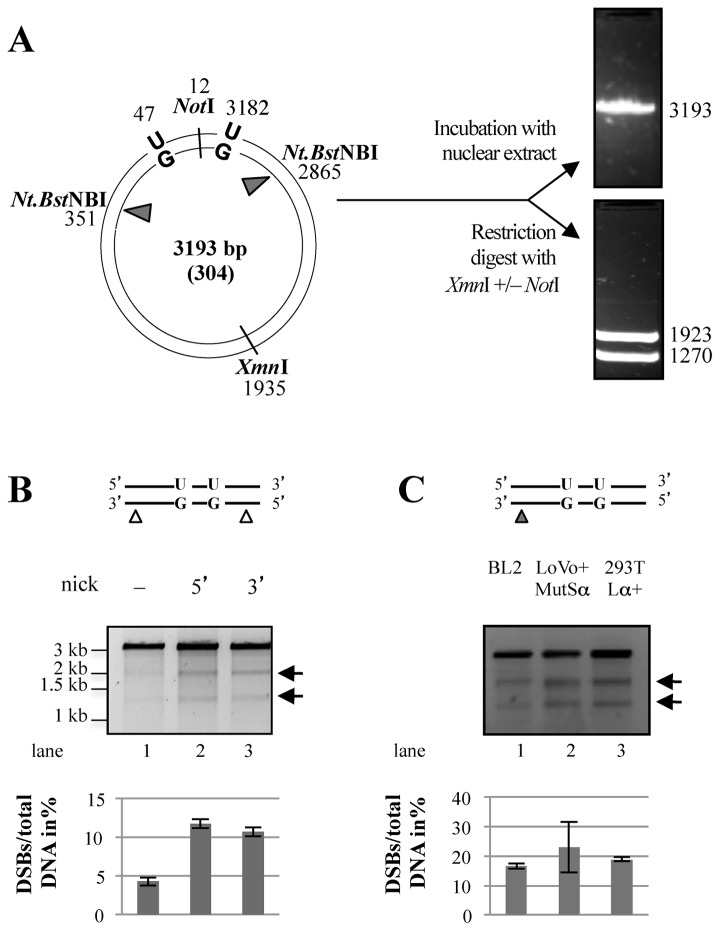
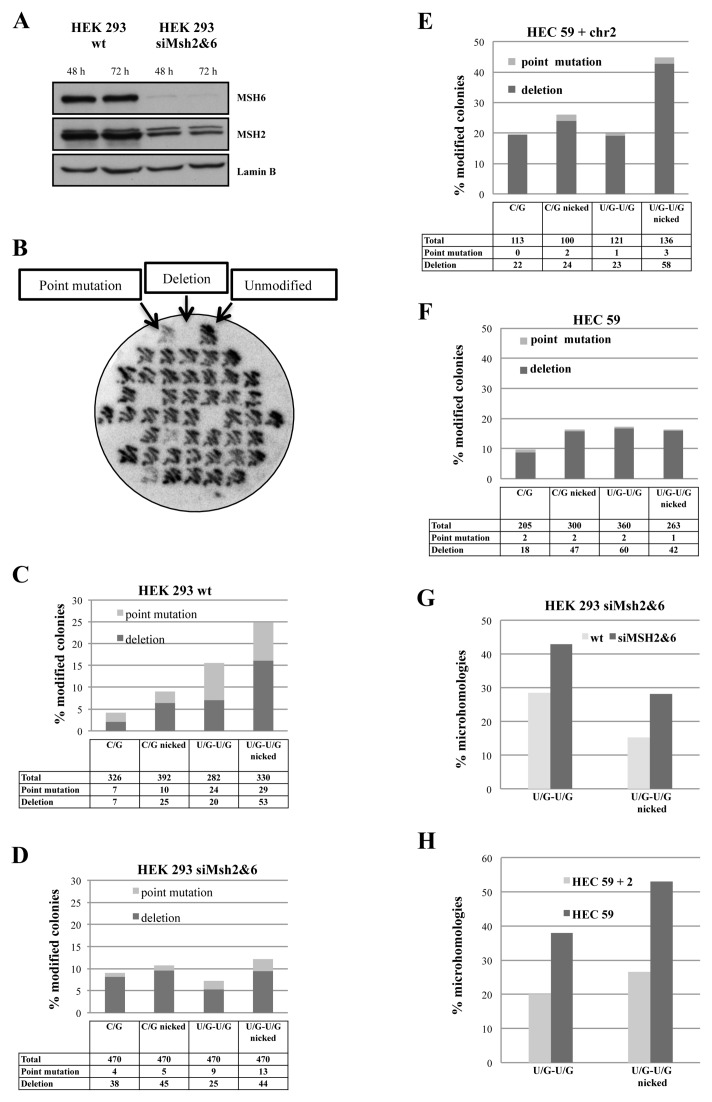
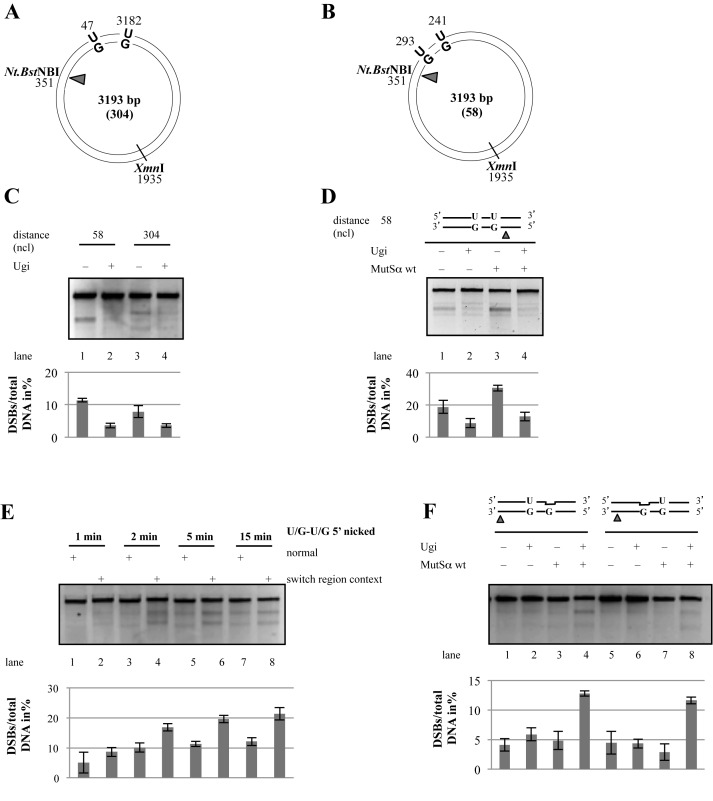
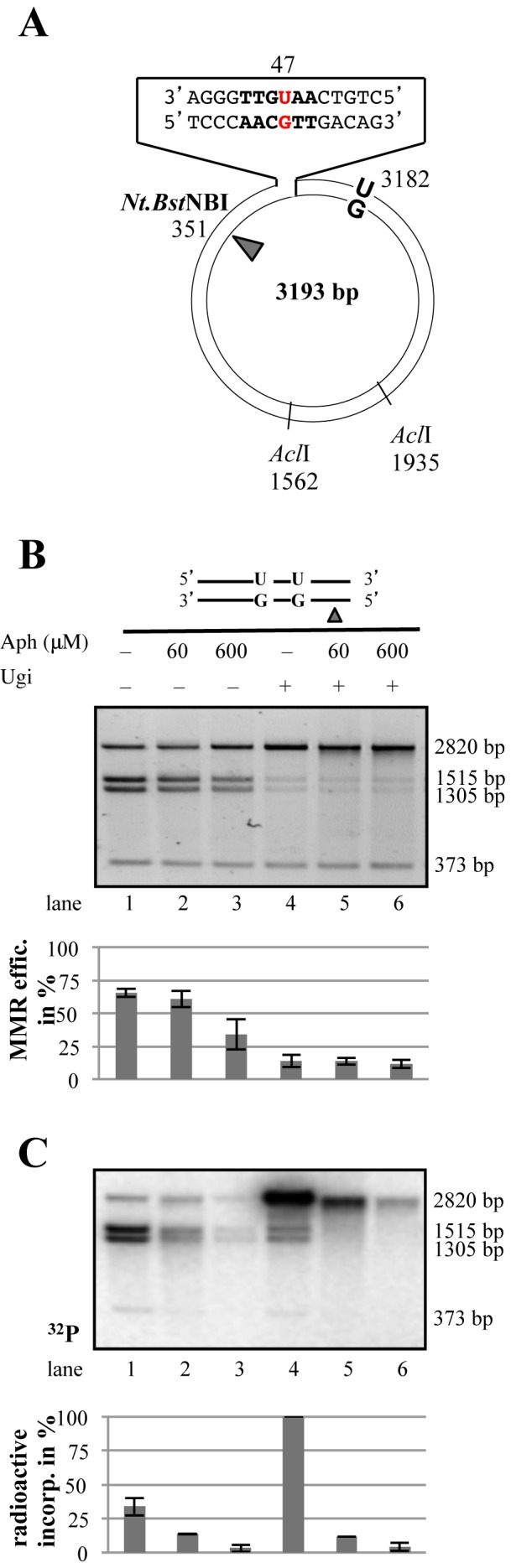
During class switch recombination (CSR), antigen-stimulated B-cells rearrange their immunoglobulin constant heavy chain (CH) loci to generate antibodies with different effector functions. CSR is initiated by activation-induced deaminase (AID), which converts cytosines in switch (S) regions, repetitive sequences flanking the CH loci, to uracils. Although U/G mispairs arising in this way are generally efficiently repaired to C/Gs by uracil DNA glycosylase (UNG)-initiated base excision repair (BER), uracil processing in S-regions of activated B-cells occasionally gives rise to double strand breaks (DSBs), which trigger CSR. Surprisingly, genetic experiments revealed that CSR is dependent not only on AID and UNG, but also on mismatch repair (MMR). To elucidate the role of MMR in CSR, we studied the processing of uracil-containing DNA substrates in extracts of MMR-proficient and -deficient human cells, as well as in a system reconstituted from recombinant BER and MMR proteins. Here, we show that the interplay of these repair systems gives rise to DSBs in vitro and to genomic deletions and mutations in vivo, particularly in an S-region sequence. Our findings further suggest that MMR affects pathway choice in DSB repair. Given its amenability to manipulation, our system represents a powerful tool for the molecular dissection of CSR.
在类别转换重组(CSR)过程中,抗原刺激的B细胞重排其免疫球蛋白恒定重链(CH)基因座,以产生具有不同效应功能的抗体。CSR由激活诱导的脱氨酶(AID)启动,AID将CH基因座侧翼的重复序列——转换区(S)中的胞嘧啶转化为尿嘧啶。虽然以这种方式产生的U/G错配通常通过尿嘧啶DNA糖基化酶(UNG)启动的碱基切除修复(BER)有效地修复为C/G,但活化B细胞S区域中的尿嘧啶处理偶尔会导致双链断裂(DSB),从而引发CSR。令人惊讶的是,遗传学实验表明CSR不仅依赖于AID和UNG,还依赖于错配修复(MMR)。为了阐明MMR在CSR中的作用,我们研究了在MMR功能正常和缺陷的人类细胞提取物中以及在由重组BER和MMR蛋白重构的系统中含尿嘧啶DNA底物的处理情况。在此,我们表明这些修复系统的相互作用在体外产生DSB,在体内导致基因组缺失和突变,特别是在一个S区域序列中。我们的研究结果进一步表明,MMR影响DSB修复中的途径选择。鉴于其易于操作,我们的系统是对CSR进行分子剖析的有力工具。