Kilisch Markus, Lytovchenko Olga, Arakel Eric C, Bertinetti Daniela, Schwappach Blanche
Department of Molecular Biology, Universitätsmedizin Göttingen, Humboldtallee 23, Göttingen 37073, Germany.
Department of Biochemistry, University of Kassel, Kassel 34132, Germany.
J Cell Sci. 2016 Feb 15;129(4):831-42. doi: 10.1242/jcs.180182. Epub 2016 Jan 7.
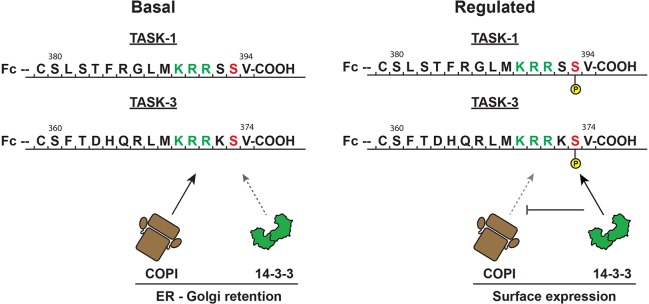
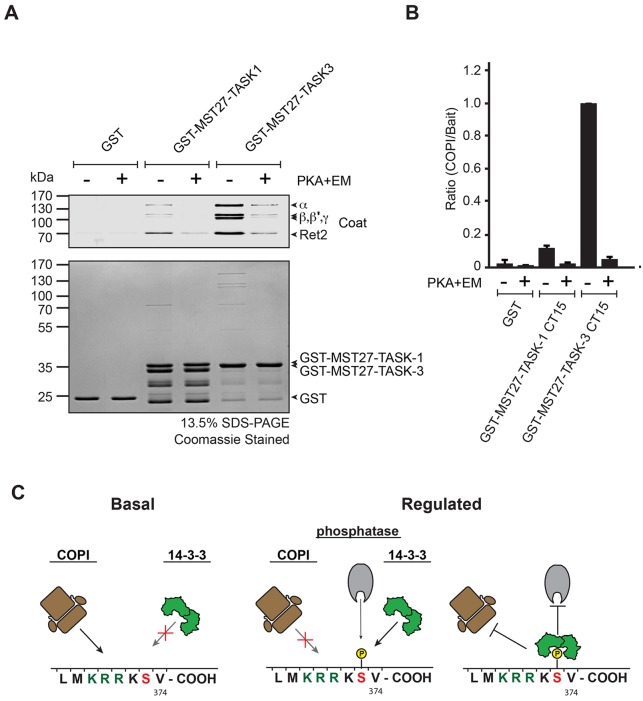
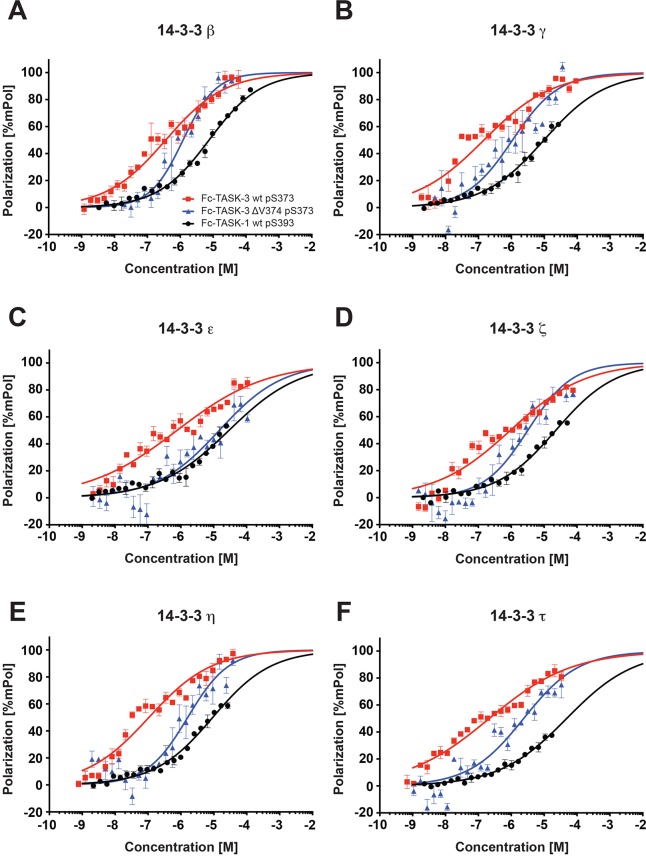
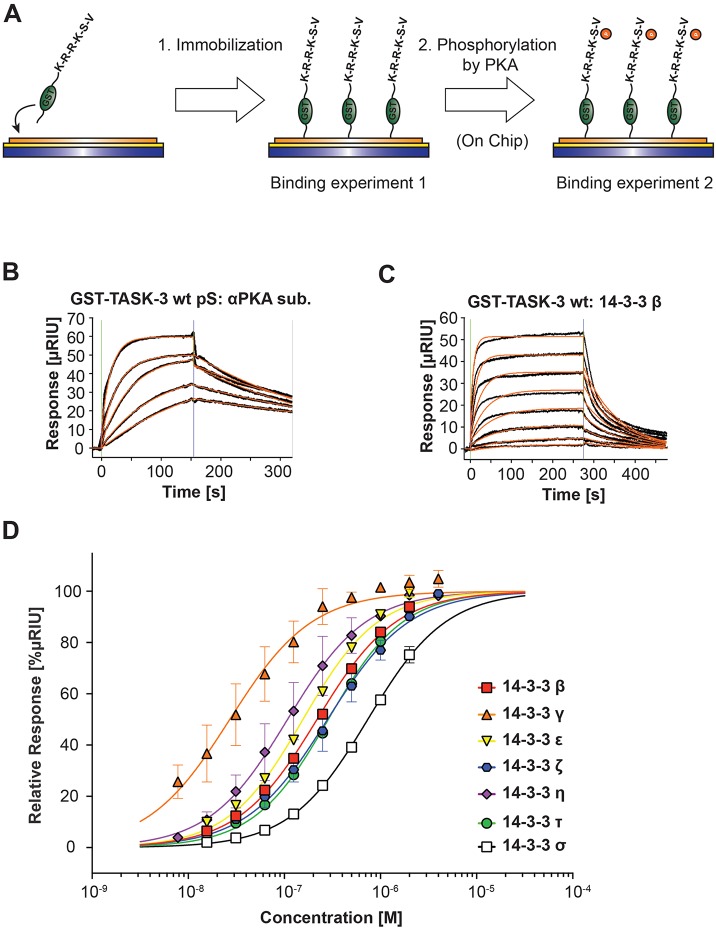
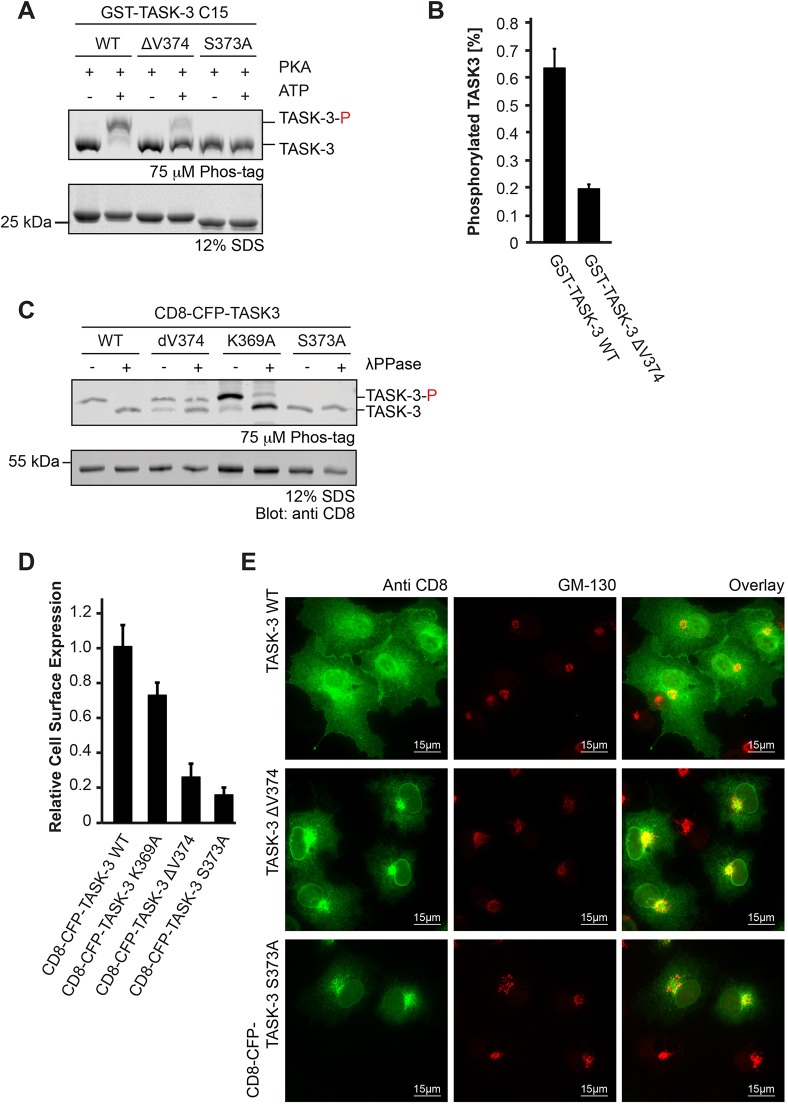
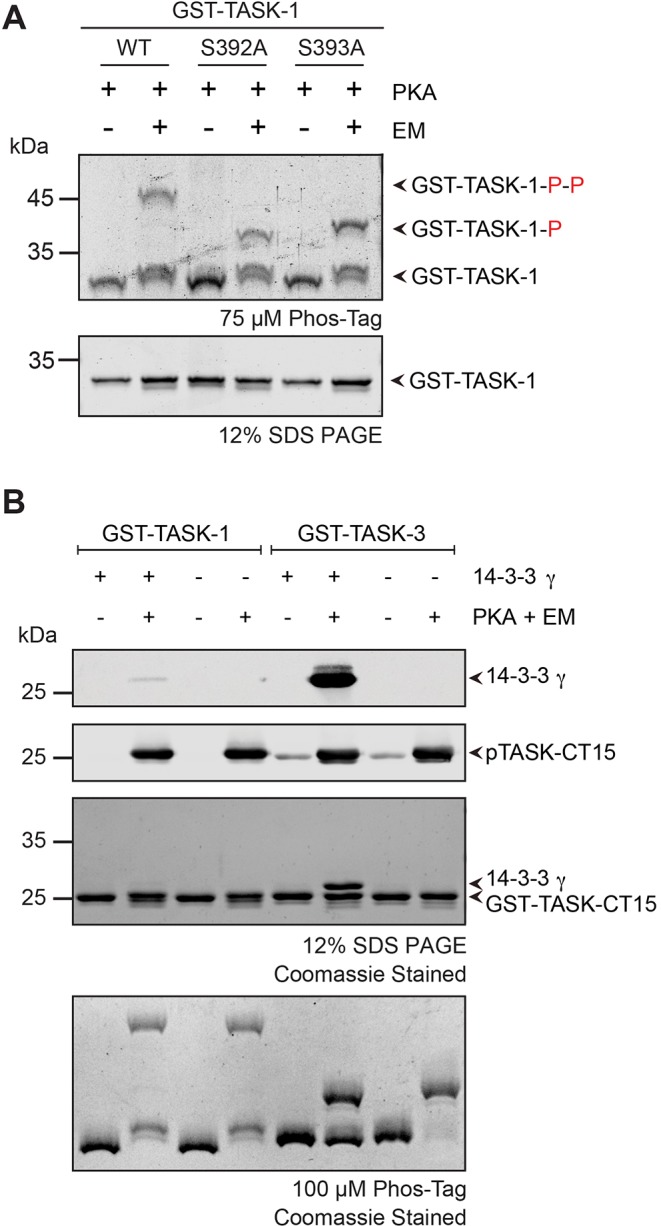
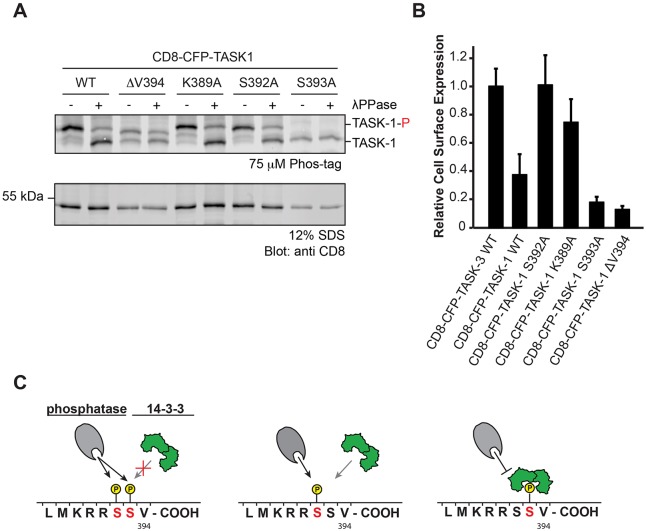
The transport of the K(+) channels TASK-1 and TASK-3 (also known as KCNK3 and KCNK9, respectively) to the cell surface is controlled by the binding of 14-3-3 proteins to a trafficking control region at the extreme C-terminus of the channels. The current model proposes that phosphorylation-dependent binding of 14-3-3 sterically masks a COPI-binding motif. However, the direct effects of phosphorylation on COPI binding and on the binding parameters of 14-3-3 isoforms are still unknown. We find that phosphorylation of the trafficking control region prevents COPI binding even in the absence of 14-3-3, and we present a quantitative analysis of the binding of all human 14-3-3 isoforms to the trafficking control regions of TASK-1 and TASK-3. Surprisingly, the affinities of 14-3-3 proteins for TASK-1 are two orders of magnitude lower than for TASK-3. Furthermore, we find that phosphorylation of a second serine residue in the C-terminus of TASK-1 inhibits 14-3-3 binding. Thus, phosphorylation of the trafficking control region can stimulate or inhibit transport of TASK-1 to the cell surface depending on the target serine residue. Our findings indicate that control of TASK-1 trafficking by COPI, kinases, phosphatases and 14-3-3 proteins is highly dynamic.
钾离子通道TASK-1和TASK-3(分别也被称为KCNK3和KCNK9)向细胞表面的转运受14-3-3蛋白与通道极端C末端的转运控制区域结合的调控。当前模型认为,14-3-3的磷酸化依赖性结合在空间上掩盖了一个COP I结合基序。然而,磷酸化对COP I结合以及对14-3-3亚型结合参数的直接影响仍不清楚。我们发现,即使在没有14-3-3的情况下,转运控制区域的磷酸化也会阻止COP I结合,并且我们对所有人类14-3-3亚型与TASK-1和TASK-3的转运控制区域的结合进行了定量分析。令人惊讶的是,14-3-3蛋白对TASK-1的亲和力比对TASK-3的亲和力低两个数量级。此外,我们发现TASK-1 C末端第二个丝氨酸残基的磷酸化会抑制14-3-3的结合。因此,转运控制区域的磷酸化可以根据目标丝氨酸残基刺激或抑制TASK-1向细胞表面的转运。我们的研究结果表明,COP I、激酶、磷酸酶和14-3-3蛋白对TASK-1转运的调控是高度动态的。