Hong Hao, Brown Christine E, Ostberg Julie R, Priceman Saul J, Chang Wen-Chung, Weng Lihong, Lin Paul, Wakabayashi Mark T, Jensen Michael C, Forman Stephen J
Department of Cancer Immunotherapeutics & Tumor Immunology and Hematology & Hematopoietic Cell Transplantation, Beckman Research Institute, City of Hope National Medical Center, Duarte, California, United States of America.
Department of Gynecologic Oncology, Beckman Research Institute, City of Hope National Medical Center, Duarte, California, United States of America.
PLoS One. 2016 Jan 13;11(1):e0146885. doi: 10.1371/journal.pone.0146885. eCollection 2016.
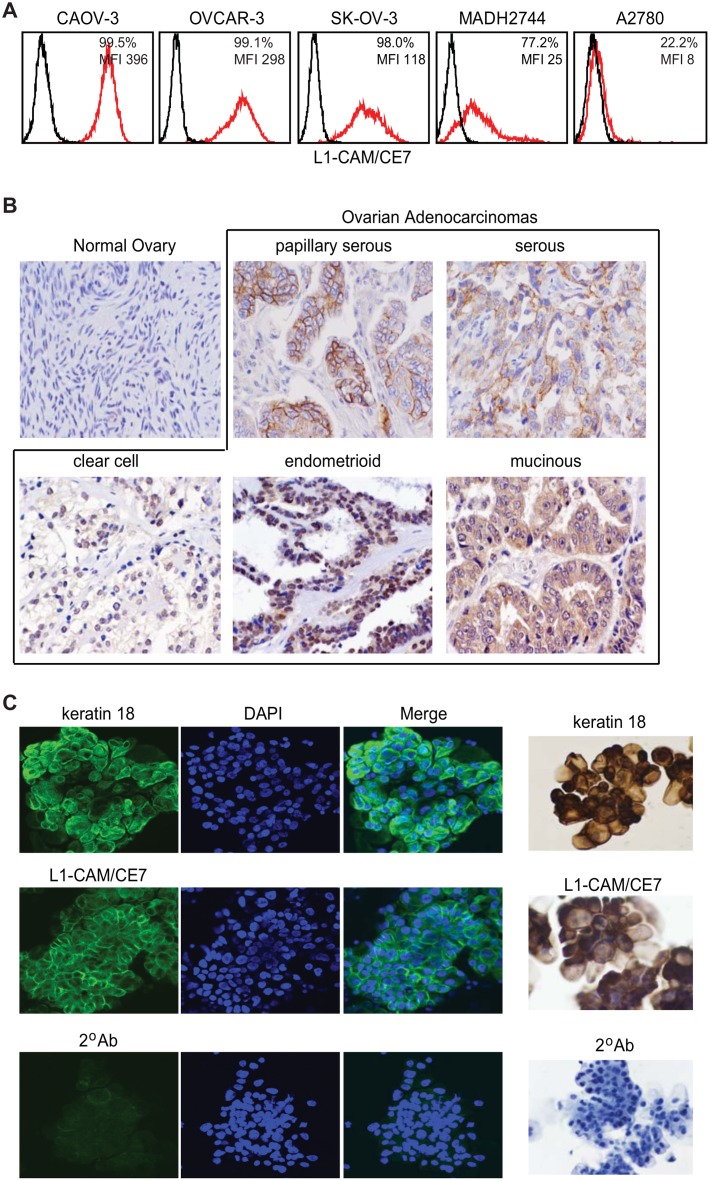
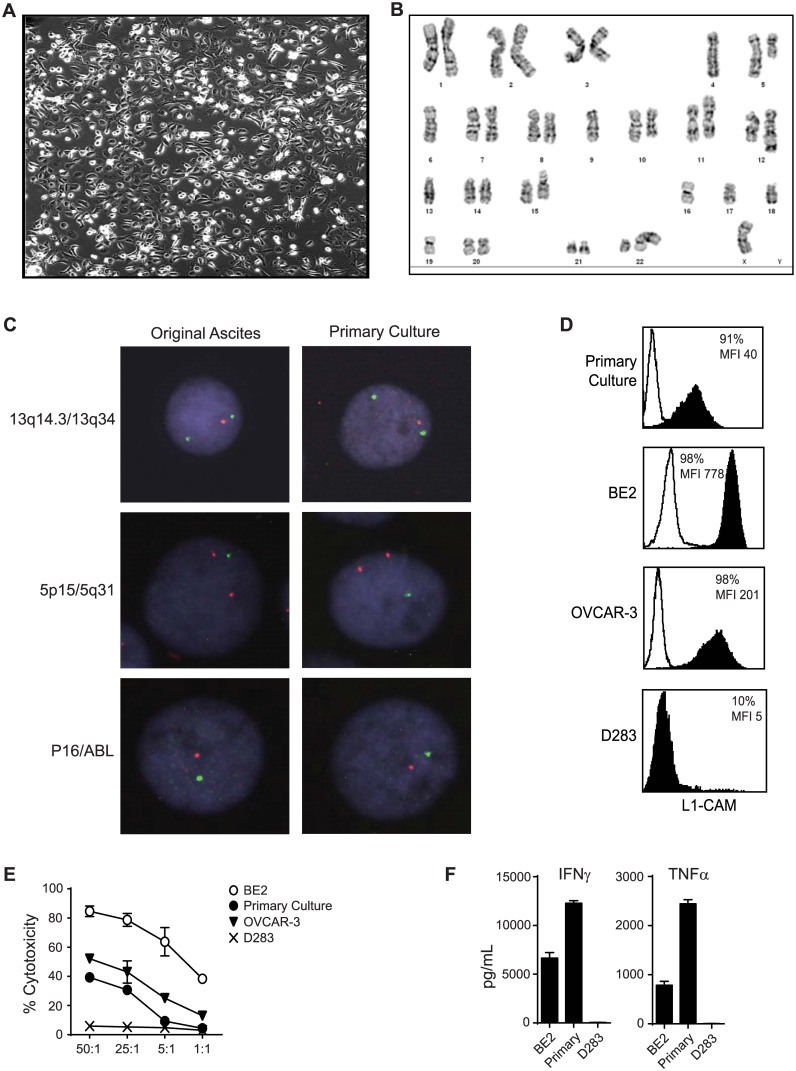
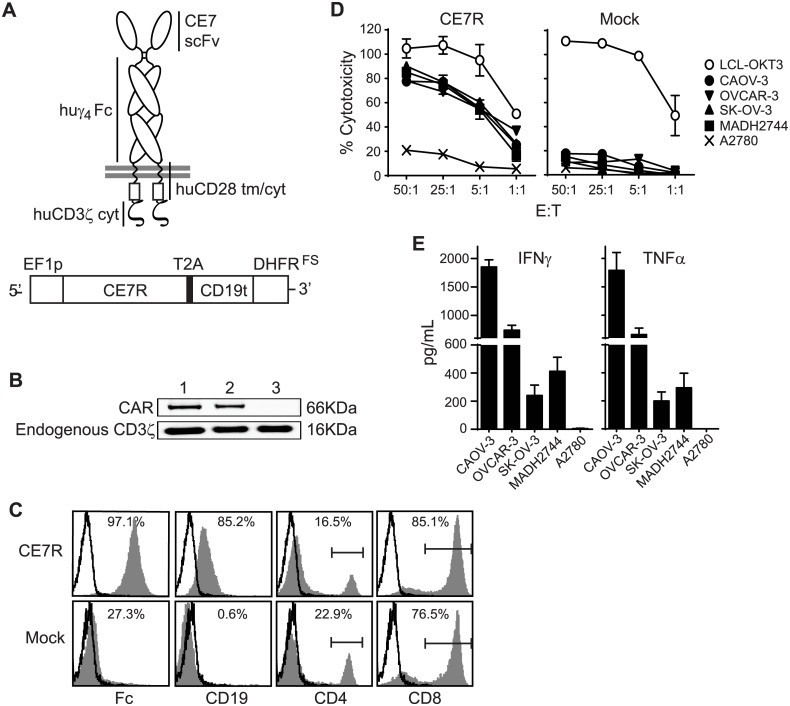
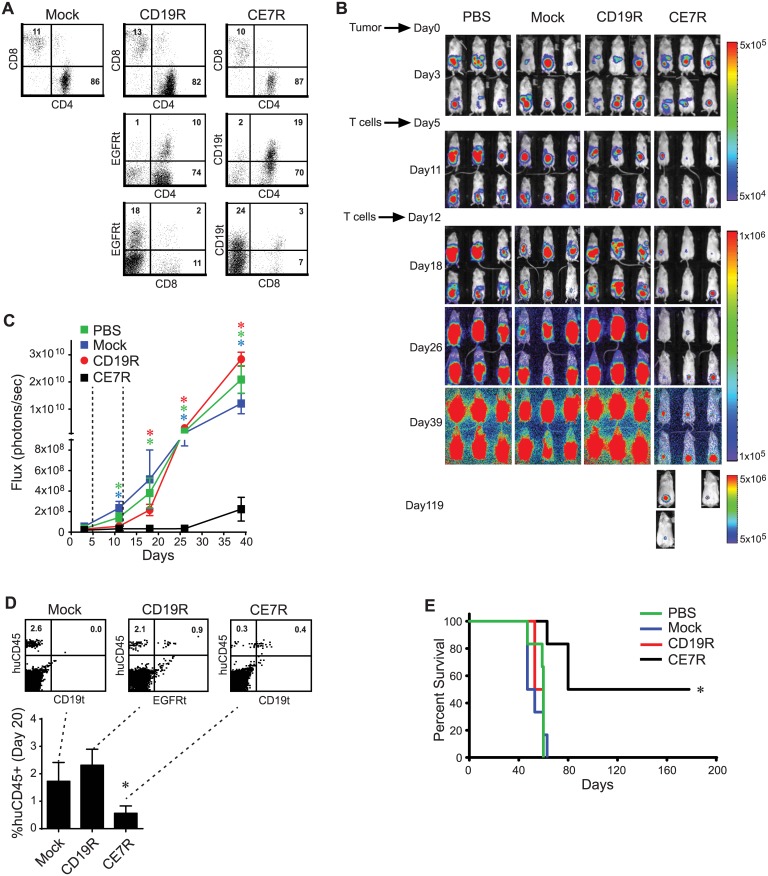
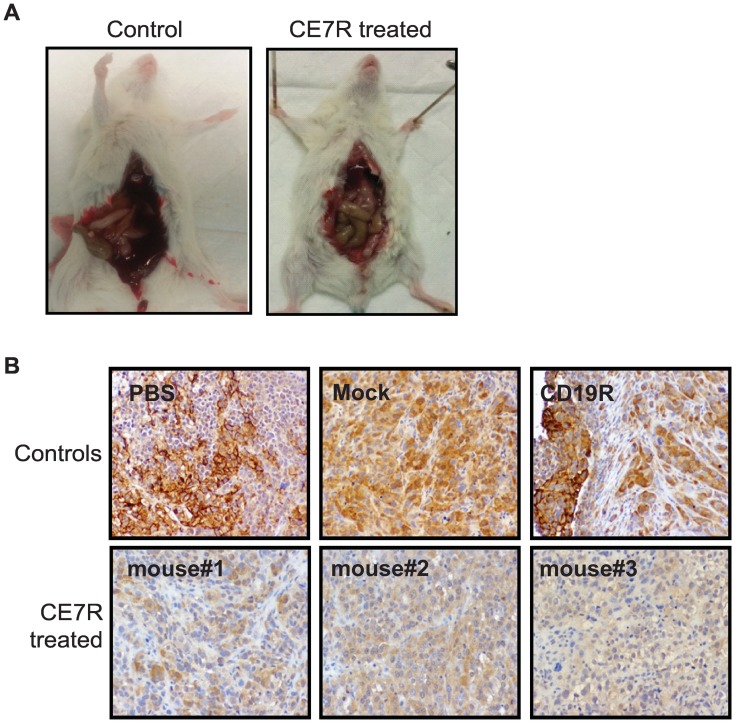
New therapeutic modalities are needed for ovarian cancer, the most lethal gynecologic malignancy. Recent clinical trials have demonstrated the impressive therapeutic potential of adoptive therapy using chimeric antigen receptor (CAR)-redirected T cells to target hematological cancers, and emerging studies suggest a similar impact may be achieved for solid cancers. We sought determine whether genetically-modified T cells targeting the CE7-epitope of L1-CAM, a cell adhesion molecule aberrantly expressed in several cancers, have promise as an immunotherapy for ovarian cancer, first demonstrating that L1-CAM was highly over-expressed on a panel of ovarian cancer cell lines, primary ovarian tumor tissue specimens, and ascites-derived primary cancer cells. Human central memory derived T cells (TCM) were then genetically modified to express an anti-L1-CAM CAR (CE7R), which directed effector function upon tumor antigen stimulation as assessed by in vitro cytokine secretion and cytotoxicity assays. We also found that CE7R+ T cells were able to target primary ovarian cancer cells. Intraperitoneal (i.p.) administration of CE7R+ TCM induced a significant regression of i.p. established SK-OV-3 xenograft tumors in mice, inhibited ascites formation, and conferred a significant survival advantage compared with control-treated animals. Taken together, these studies indicate that adoptive transfer of L1-CAM-specific CE7R+ T cells may offer a novel and effective immunotherapy strategy for advanced ovarian cancer.
卵巢癌是最致命的妇科恶性肿瘤,需要新的治疗方法。最近的临床试验已经证明,使用嵌合抗原受体(CAR)重定向T细胞的过继性疗法对血液系统癌症具有令人瞩目的治疗潜力,并且新出现的研究表明,对实体癌可能也会有类似的效果。我们试图确定,靶向L1-CAM的CE7表位(一种在多种癌症中异常表达的细胞粘附分子)的基因改造T细胞是否有望成为卵巢癌的免疫疗法,首先证明L1-CAM在一组卵巢癌细胞系、原发性卵巢肿瘤组织标本和腹水来源的原发性癌细胞上高度过表达。然后对人中枢记忆来源的T细胞(TCM)进行基因改造,使其表达抗L1-CAM CAR(CE7R),通过体外细胞因子分泌和细胞毒性试验评估,该CAR在肿瘤抗原刺激时可引导效应器功能。我们还发现CE7R + T细胞能够靶向原发性卵巢癌细胞。腹腔内(i.p.)注射CE7R + TCM可使小鼠腹腔内已建立的SK-OV-3异种移植瘤显著消退,抑制腹水形成,与对照处理的动物相比,具有显著的生存优势。综上所述,这些研究表明,过继性转移L1-CAM特异性CE7R + T细胞可能为晚期卵巢癌提供一种新的有效免疫治疗策略。