Unité Biologie Moléculaire Du Gène Chez Les Extrêmophiles, Department of Microbiology, Institut Pasteur, Paris, France
National Library of Medicine, National Center for Biotechnology Information, National Institutes of Health, Bethesda, Maryland Skolkovo Institute of Science and Technology, Skolkovo, Russia.
Genome Biol Evol. 2016 Jan 13;8(2):375-86. doi: 10.1093/gbe/evw006.
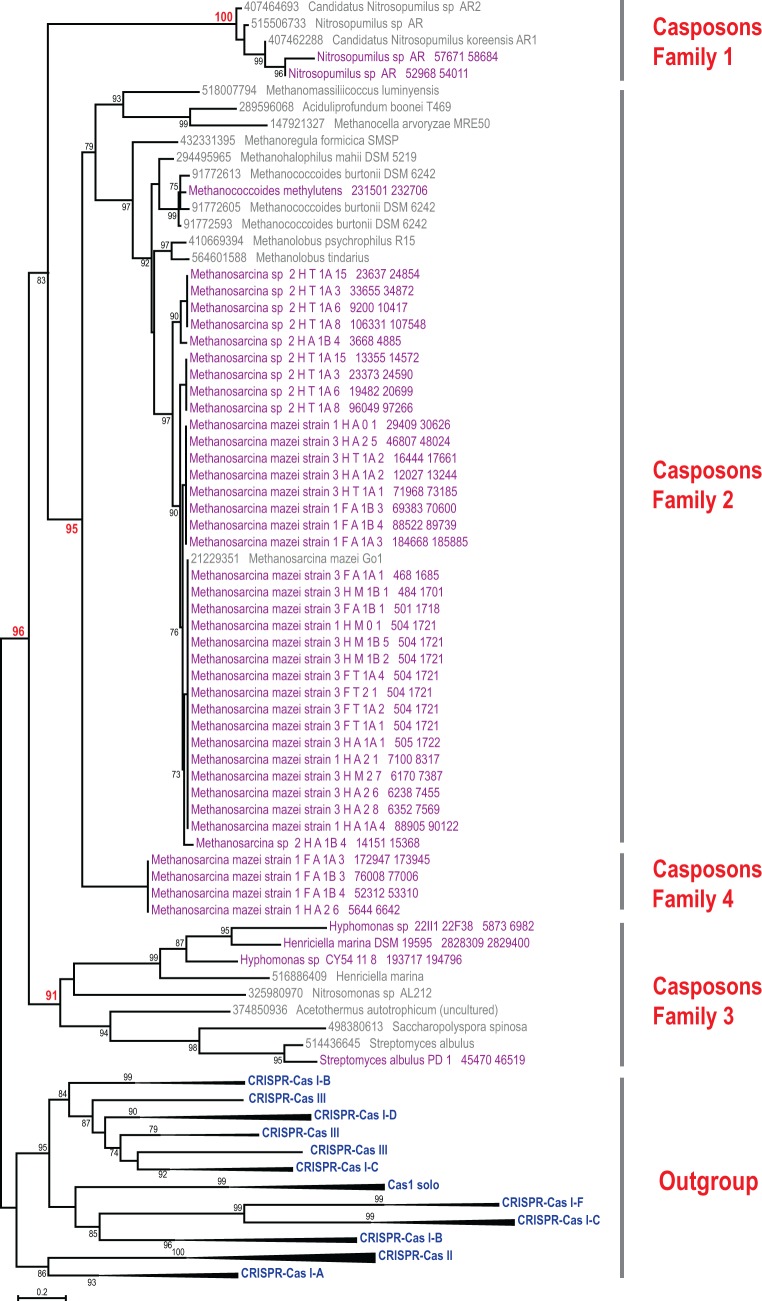
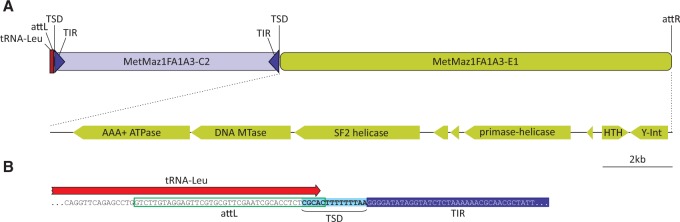
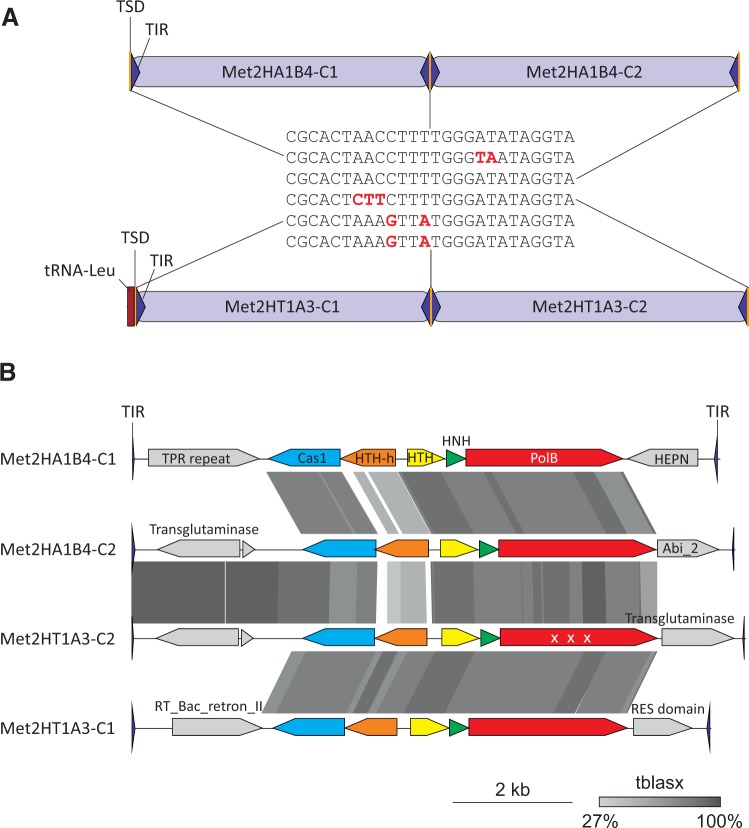
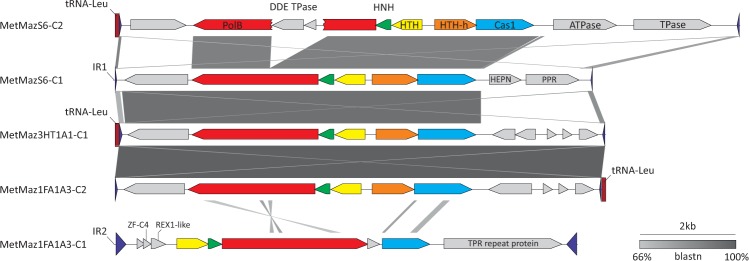
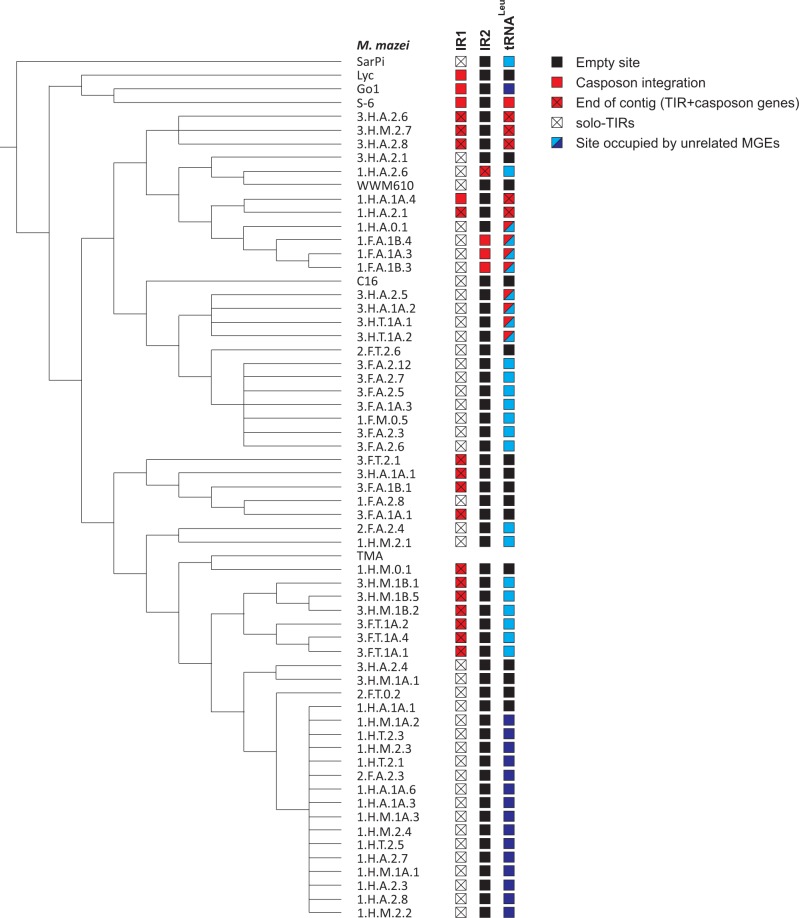
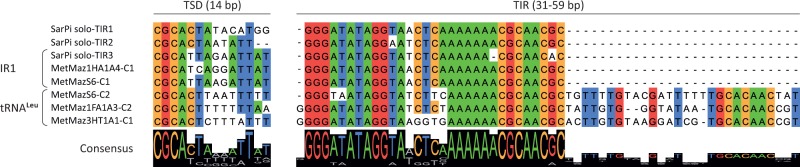
Casposons are a superfamily of putative self-synthesizing transposable elements that are predicted to employ a homolog of Cas1 protein as a recombinase and could have contributed to the origin of the CRISPR-Cas adaptive immunity systems in archaea and bacteria. Casposons remain uncharacterized experimentally, except for the recent demonstration of the integrase activity of the Cas1 homolog, and given their relative rarity in archaea and bacteria, original comparative genomic analysis has not provided direct indications of their mobility. Here, we report evidence of casposon mobility obtained by comparison of the genomes of 62 strains of the archaeon Methanosarcina mazei. In these genomes, casposons are variably inserted in three distinct sites indicative of multiple, recent gains, and losses. Some casposons are inserted into other mobile genetic elements that might provide vehicles for horizontal transfer of the casposons. Additionally, many M. mazei genomes contain previously undetected solo terminal inverted repeats that apparently are derived from casposons and could resemble intermediates in CRISPR evolution. We further demonstrate the sequence specificity of casposon insertion and note clear parallels with the adaptation mechanism of CRISPR-Cas. Finally, besides identifying additional representatives in each of the three originally defined families, we describe a new, fourth, family of casposons.
类 Casposons 是一类假定的自我合成转座元件超家族,据预测,它们利用 Cas1 蛋白的同源物作为重组酶,可能促成了古菌和细菌中 CRISPR-Cas 适应性免疫系统的起源。除了最近证明 Cas1 同源物的整合酶活性外,类 Casposons 在实验上仍然没有得到特征描述,并且由于它们在古菌和细菌中的相对稀有性,原始的比较基因组分析并没有直接表明它们的可移动性。在这里,我们通过比较 62 株 Methanosarcina mazei 古菌的基因组,报告了获得的类 Casposons 可移动性的证据。在这些基因组中,Casposons 可变地插入三个不同的位点,表明有多个最近的获得和丢失。一些 Casposons 插入到其他可移动的遗传元件中,这些元件可能为 Casposons 的水平转移提供了载体。此外,许多 M. mazei 基因组包含以前未检测到的单独末端反向重复序列,这些序列显然来自 Casposons,并且可能类似于 CRISPR 进化中的中间体。我们进一步证明了 Casposons 插入的序列特异性,并注意到与 CRISPR-Cas 的适应机制明显相似。最后,除了在最初定义的三个家族中的每个家族中识别出其他代表外,我们还描述了一种新的、第四个 Casposons 家族。