Department of Functional and Evolutionary Ecology, Archaea Biology and Ecogenomics Unit, University of Vienna, 1090 Vienna, Austria.
Biomolecules. 2020 Nov 6;10(11):1523. doi: 10.3390/biom10111523.
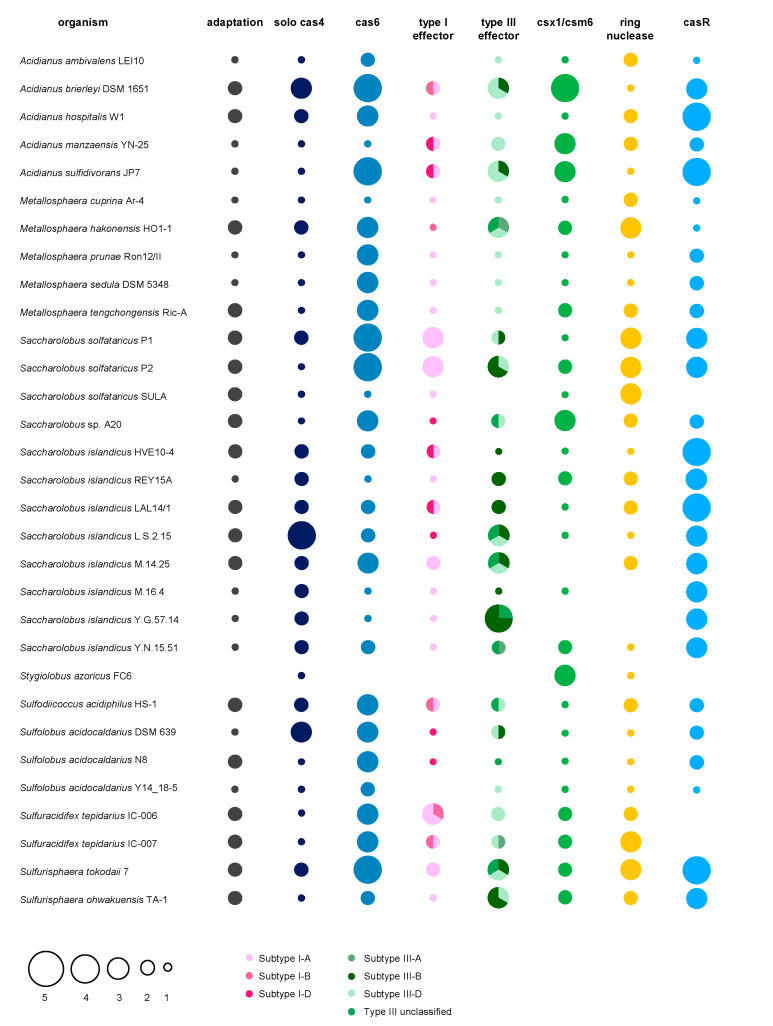
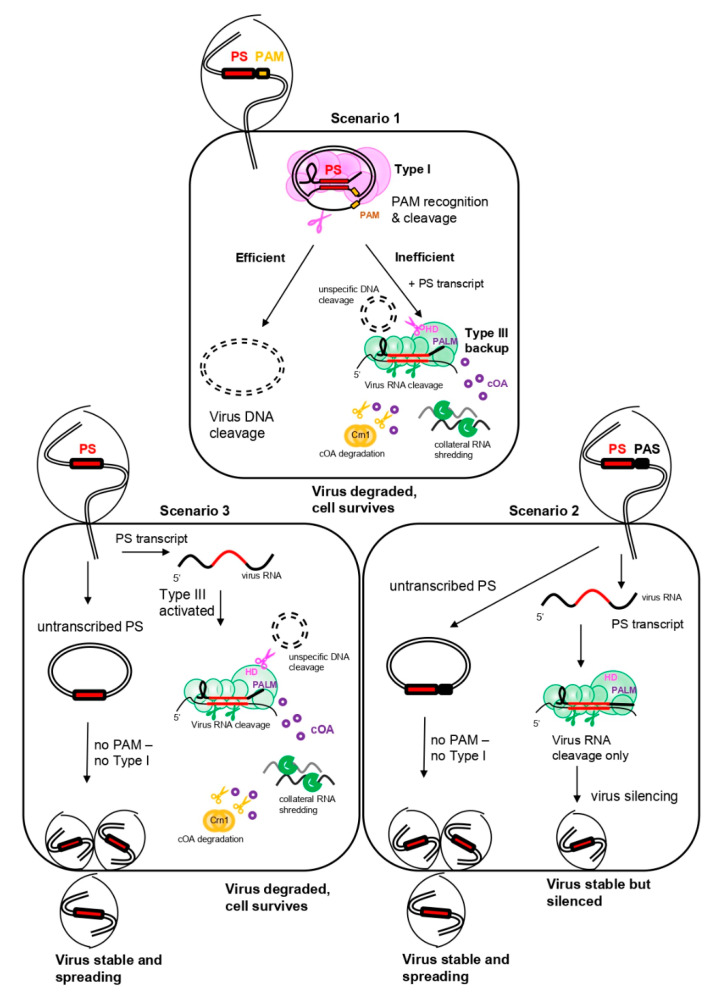
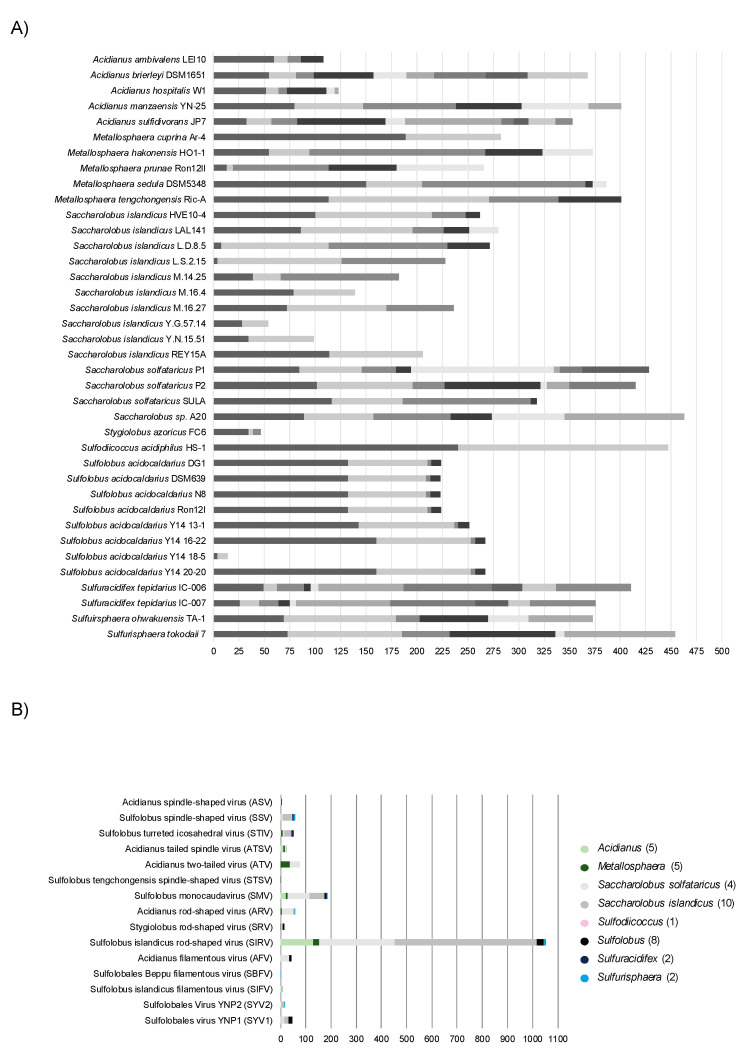
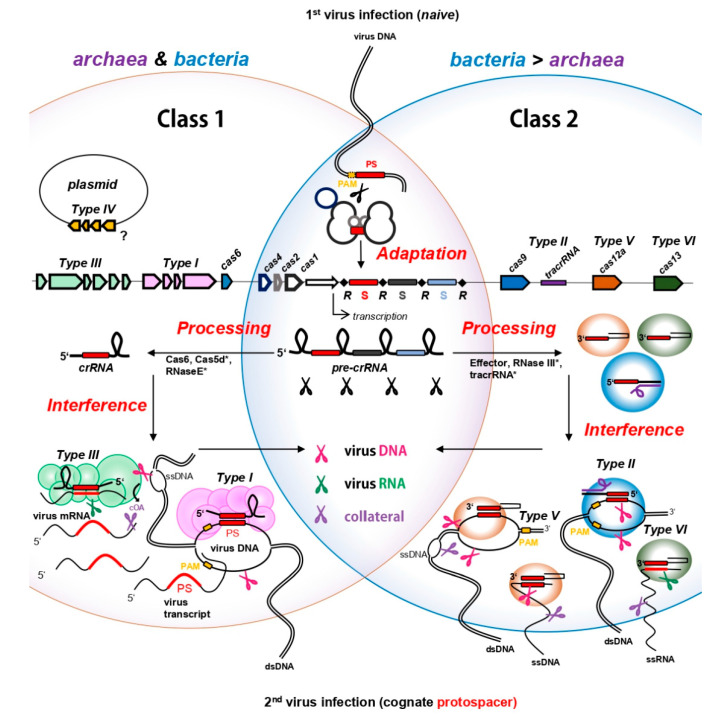
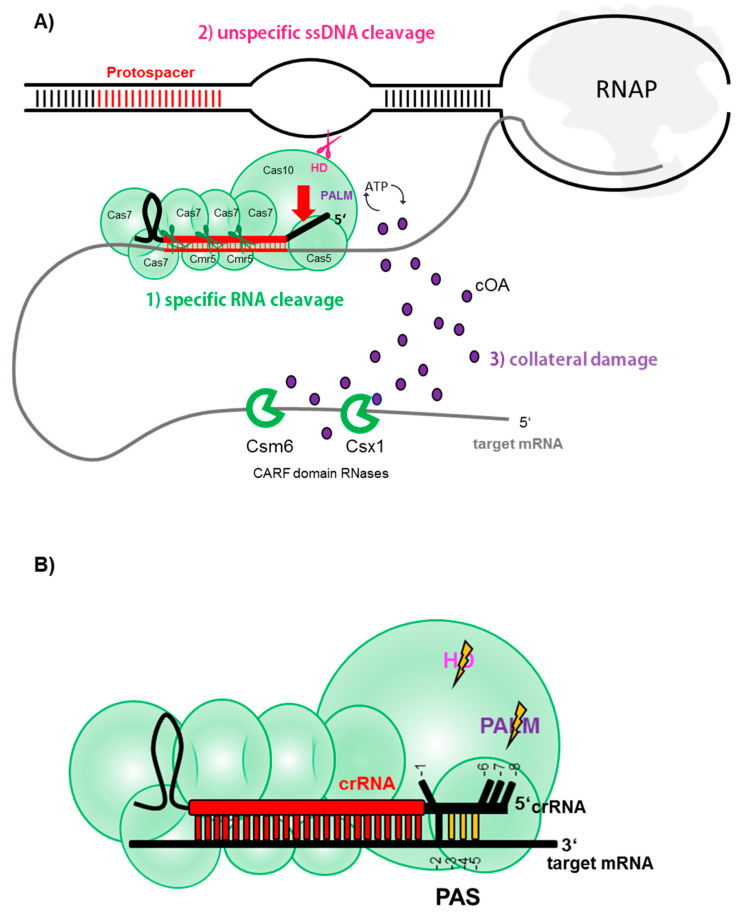
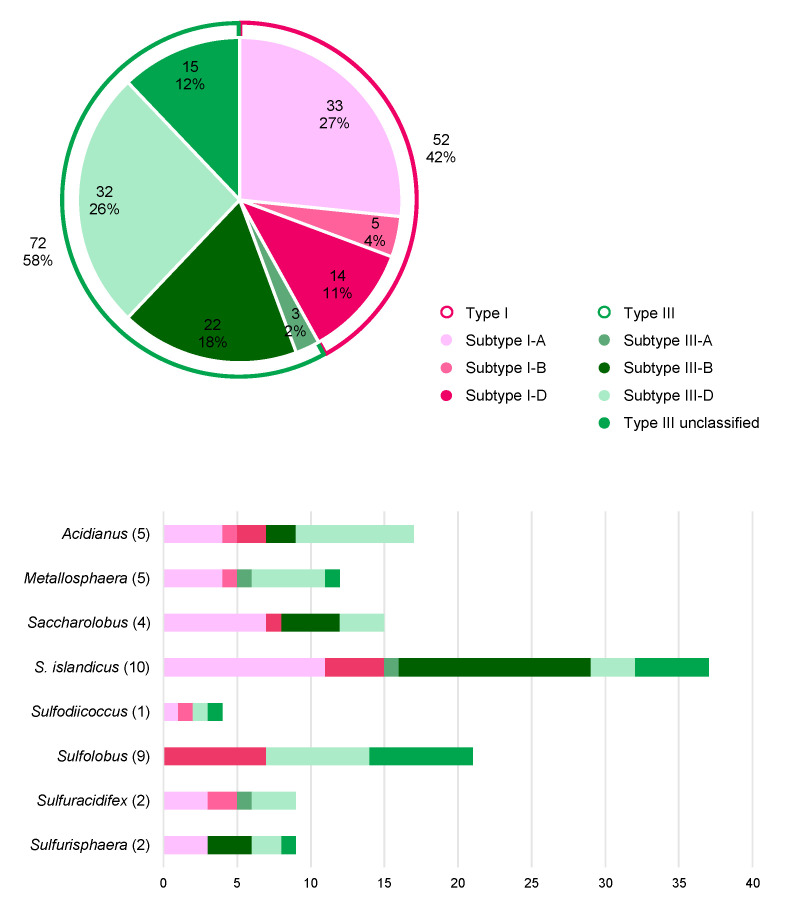
Prokaryotes are constantly coping with attacks by viruses in their natural environments and therefore have evolved an impressive array of defense systems. Clustered Regularly Interspaced Short Palindromic Repeats (CRISPR) is an adaptive immune system found in the majority of archaea and about half of bacteria which stores pieces of infecting viral DNA as spacers in genomic CRISPR arrays to reuse them for specific virus destruction upon a second wave of infection. In detail, small CRISPR RNAs (crRNAs) are transcribed from CRISPR arrays and incorporated into type-specific CRISPR effector complexes which further degrade foreign nucleic acids complementary to the crRNA. This review gives an overview of CRISPR immunity to newcomers in the field and an update on CRISPR literature in archaea by comparing the functional mechanisms and abundances of the diverse CRISPR types. A bigger fraction is dedicated to the versatile and prevalent CRISPR type III systems, as tremendous progress has been made recently using archaeal models in discerning the controlled molecular mechanisms of their unique tripartite mode of action including RNA interference, DNA interference and the unique cyclic-oligoadenylate signaling that induces promiscuous RNA shredding by CARF-domain ribonucleases. The second half of the review spotlights CRISPR in archaea outlining seminal in vivo and in vitro studies in model organisms of the euryarchaeal and crenarchaeal phyla, including the application of CRISPR-Cas for genome editing and gene silencing. In the last section, a special focus is laid on members of the crenarchaeal hyperthermophilic order Sulfolobales by presenting a thorough comparative analysis about the distribution and abundance of CRISPR-Cas systems, including arrays and spacers as well as CRISPR-accessory proteins in all 53 genomes available to date. Interestingly, we find that CRISPR type III and the DNA-degrading CRISPR type I complexes co-exist in more than two thirds of these genomes. Furthermore, we identified ring nuclease candidates in all but two genomes and found that they generally co-exist with the above-mentioned CARF domain ribonucleases Csx1/Csm6. These observations, together with published literature allowed us to draft a working model of how CRISPR-Cas systems and accessory proteins cross talk to establish native CRISPR anti-virus immunity in a Sulfolobales cell.
原核生物在其自然环境中不断应对病毒的攻击,因此进化出了一系列令人印象深刻的防御系统。成簇规律间隔短回文重复序列(CRISPR)是一种适应性免疫系统,存在于大多数古菌和约一半的细菌中,它将感染病毒的 DNA 片段作为间隔物储存在基因组 CRISPR 阵列中,以便在第二次感染时用于特定病毒的破坏。具体来说,小的 CRISPR RNA(crRNA)从 CRISPR 阵列转录,并整合到特定类型的 CRISPR 效应复合物中,该复合物进一步降解与 crRNA 互补的外来核酸。本综述概述了 CRISPR 免疫对该领域的新成员,并通过比较不同 CRISPR 类型的功能机制和丰度,更新了古菌中的 CRISPR 文献。更大的部分致力于多功能且普遍存在的 CRISPR III 系统,因为最近使用古菌模型在识别其独特的三部分作用模式的受控分子机制方面取得了巨大进展,包括 RNA 干扰、DNA 干扰和独特的环状寡腺苷酸信号,该信号通过 CARF 结构域核糖核酸酶诱导 RNA 的随意片段化。综述的后半部分重点介绍了古菌中的 CRISPR,概述了真核生物和古菌门模型生物中的开创性体内和体外研究,包括 CRISPR-Cas 用于基因组编辑和基因沉默的应用。在最后一节中,特别关注了嗜热古菌 Sulfolobales 目中的成员,通过对迄今为止所有 53 个可用基因组中的 CRISPR-Cas 系统、包括阵列和间隔物以及 CRISPR 辅助蛋白的分布和丰度进行彻底的比较分析,提出了一个全面的分析。有趣的是,我们发现 CRISPR III 型和 DNA 降解型 CRISPR I 复合物在这些基因组中的三分之二以上共存。此外,我们在除两个基因组之外的所有基因组中都鉴定出了环核酶候选物,并发现它们通常与上述 CARF 结构域核糖核酸酶 Csx1/Csm6 共存。这些观察结果以及已发表的文献使我们能够制定出 Sulfolobales 细胞中 CRISPR-Cas 系统和辅助蛋白相互作用建立天然 CRISPR 抗病毒免疫的工作模型。