Pinazza M, Borga C, Agnusdei V, Minuzzo S, Fossati G, Paganin M, Michielotto B, De Paoli A, Basso G, Amadori A, te Kronnie G, Indraccolo S
Department of Surgery, Oncology and Gastroenterology, University of Padova, Padova, Italy.
Oncohematology Laboratory, Department of Woman and Child Health, University of Padova, Padova, Italy.
Cell Death Dis. 2016 Jan 14;6(1):e2047. doi: 10.1038/cddis.2015.394.
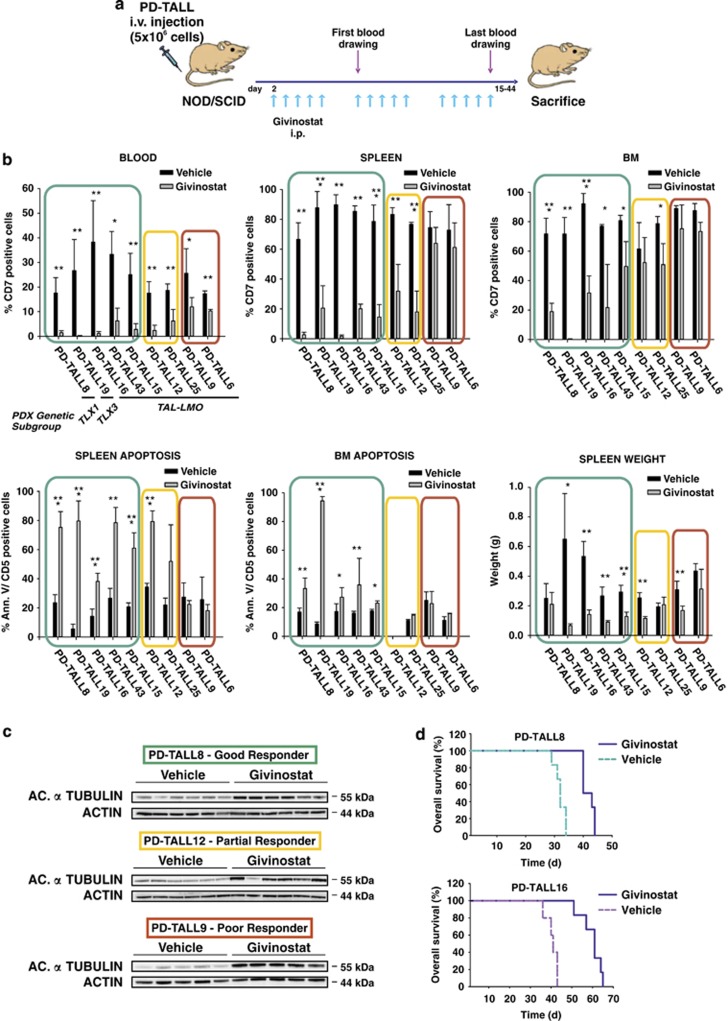
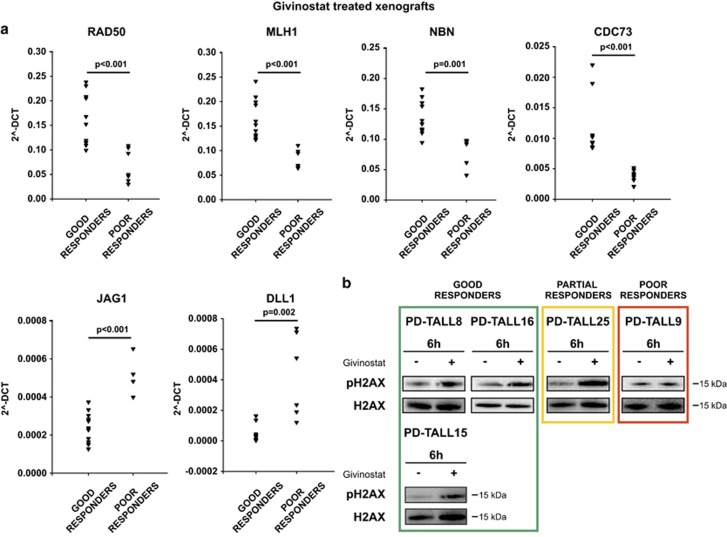
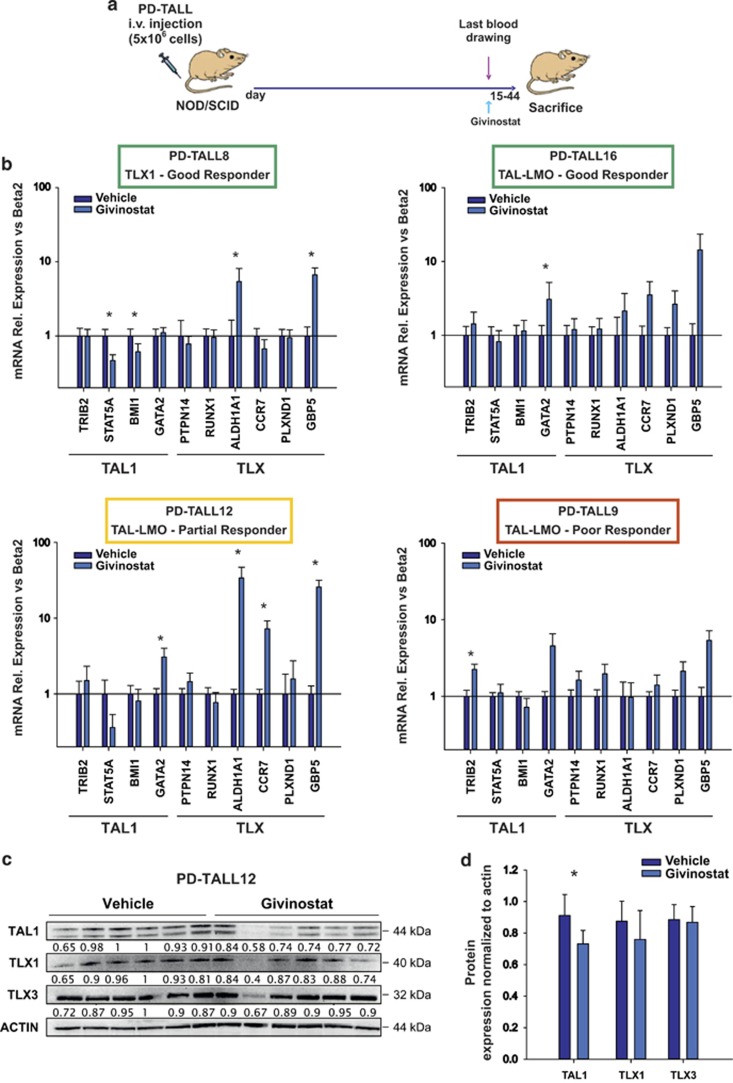
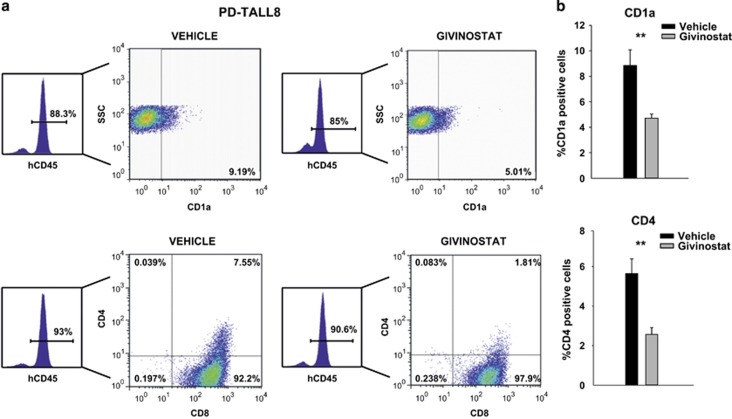
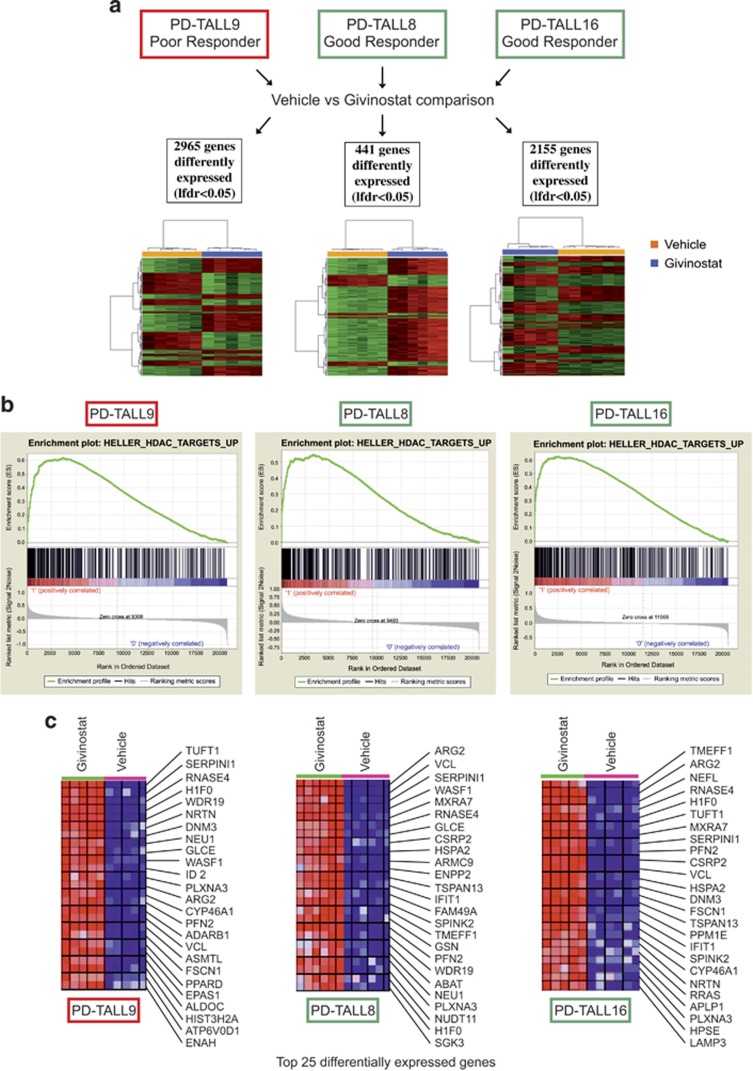
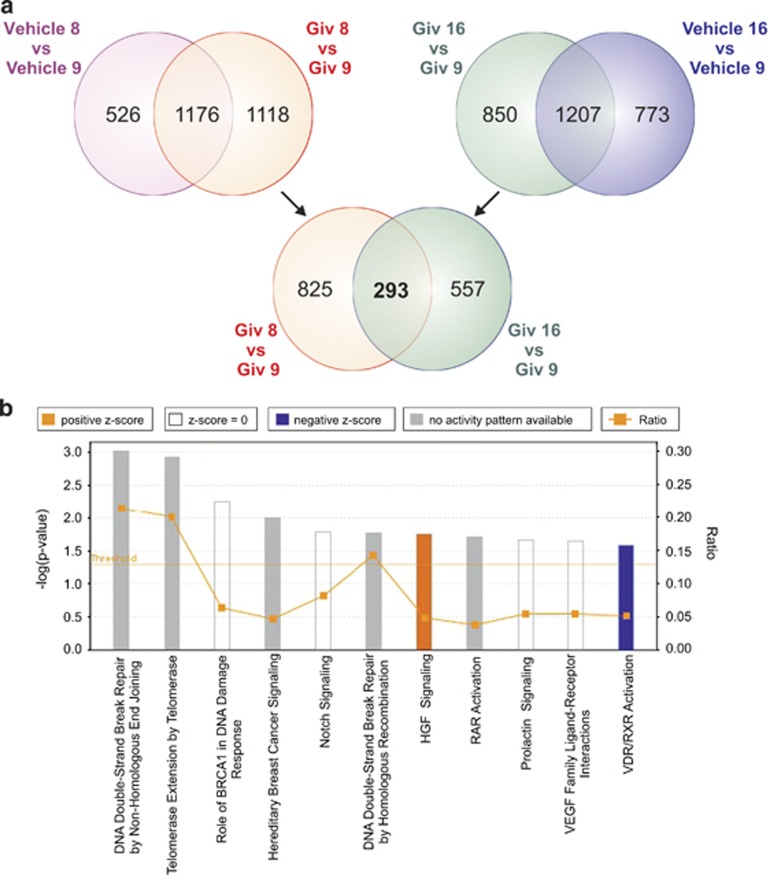
Despite some success with certain hematological malignancies and in contrast with the strong pro-apoptotic effects measured in vitro, the overall response rate of acute lymphoblastic leukemia (ALL) to histone deacetylase inhibitors (HDACis) is low. With the aim to improve the understanding of how HDACis work in vivo, we investigated the therapeutic efficacy of the clinically approved HDACi Givinostat in a collection of nine pediatric human T-ALL engrafted systemically in NOD/SCID mice. We observed highly heterogeneous antileukemia responses to Givinostat, associated with reduction of the percentage of infiltrating blasts in target organs, induction of apoptosis and differentiation. These effects were not associated with the T-ALL cytogenetic subgroup. Transcriptome analysis disclosed an immediate transcriptional signature enriched in genes involved in cell-cycle regulation and DNA repair, which was validated by quantitative RT-PCR and was associated with in vivo response to this HDACi. Increased phospho-H2AX levels, a marker of DNA damage, were measured in T-ALL cells from Givinostat responders. These results indicate that the induction of the DNA damage response could be an early biomarker of the therapeutic effects of Givinostat in T-ALL models. This information should be considered in the design of future clinical trials with HDACis in acute leukemia.
尽管在某些血液系统恶性肿瘤方面取得了一些成功,并且与体外测得的强烈促凋亡作用相反,但急性淋巴细胞白血病(ALL)对组蛋白去乙酰化酶抑制剂(HDACis)的总体缓解率较低。为了更好地理解HDACis在体内的作用机制,我们研究了临床批准的HDACi吉维司他在9例系统性植入NOD/SCID小鼠的儿童人T-ALL模型中的治疗效果。我们观察到吉维司他的抗白血病反应高度异质性,与靶器官中浸润性原始细胞百分比的降低、凋亡诱导和分化相关。这些效应与T-ALL细胞遗传学亚组无关。转录组分析揭示了一个立即转录特征,该特征在参与细胞周期调控和DNA修复的基因中富集,通过定量RT-PCR得到验证,并与对该HDACi的体内反应相关。在吉维司他反应者的T-ALL细胞中检测到DNA损伤标志物磷酸化H2AX水平升高。这些结果表明,DNA损伤反应的诱导可能是吉维司他在T-ALL模型中治疗效果的早期生物标志物。在未来针对急性白血病的HDACis临床试验设计中应考虑这些信息。