Velasquez Juan C, Goeden Nick, Herod Skyla M, Bonnin Alexandre
Department of Biology and Chemistry, Azusa Pacific University , Azusa, California 91702, United States.
ACS Chem Neurosci. 2016 Mar 16;7(3):327-38. doi: 10.1021/acschemneuro.5b00287. Epub 2016 Jan 30.
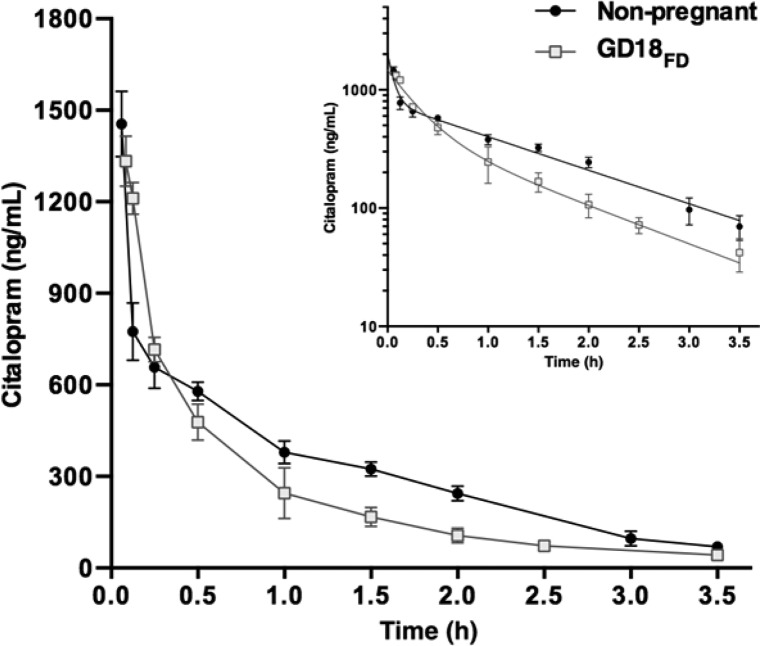
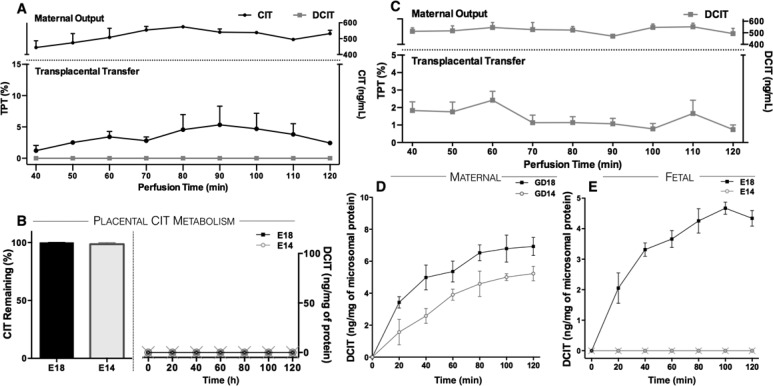
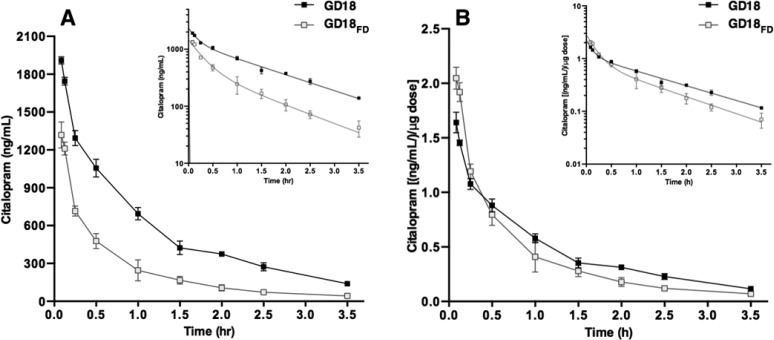
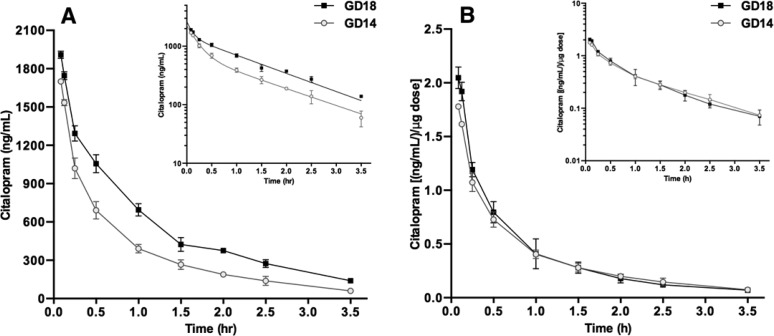
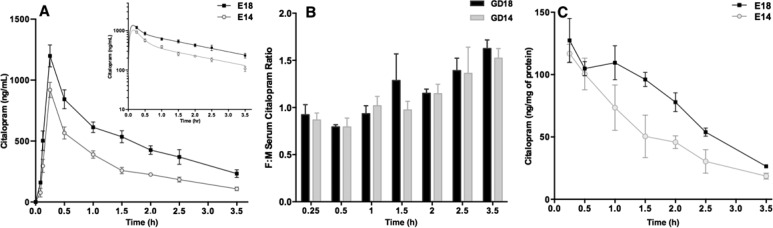
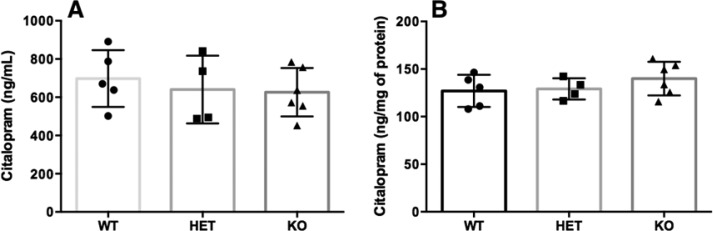
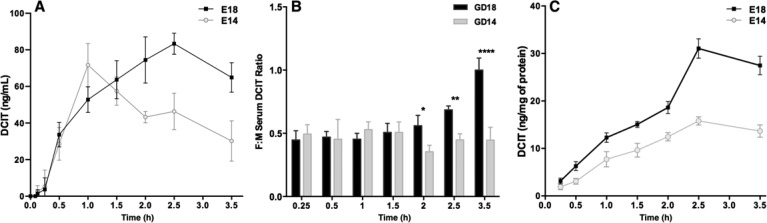
While selective-serotonin reuptake inhibitor (SSRI) antidepressants are commonly prescribed in the treatment of depression, their use during pregnancy leads to fetal drug exposures. According to recent reports, such exposures could affect fetal development and long-term offspring health. A central question is how pregnancy-induced physical and physiological changes in mothers, fetuses, and the placenta influence fetal SSRI exposures during gestation. In this study, we examined the effects of gestational stage on the maternal pharmacokinetics and fetal disposition of the SSRI (±)-citalopram (CIT) in a mouse model. We determined the maternal and fetal CIT serum concentration-time profiles following acute maternal administration on gestational days (GD)14 and GD18, as well as the fetal brain drug disposition. The results show that pregnancy affects the pharmacokinetics of CIT and that maternal drug clearance increases as gestation progresses. The data further show that CIT and its primary metabolite desmethylcitalopram (DCIT) readily cross the placenta into the fetal compartment, and fetal exposure to CIT exceeds that of the mother during gestation 2 h after maternal administration. Enzymatic activity assays revealed that fetal drug metabolic capacity develops in late gestation, resulting in elevated circulating and brain concentrations of DCIT at embryonic day (E)18. Fetal exposure to the SSRI CIT in murine pregnancy is therefore influenced by both maternal gestational stage and embryonic development, suggesting potential time-dependent effects on fetal brain development.
虽然选择性5-羟色胺再摄取抑制剂(SSRI)类抗抑郁药常用于治疗抑郁症,但在孕期使用会导致胎儿接触药物。根据最近的报告,这种药物接触可能会影响胎儿发育和子代的长期健康。一个核心问题是,母亲、胎儿和胎盘在孕期发生的生理和物理变化如何影响孕期胎儿对SSRI的接触。在本研究中,我们在小鼠模型中研究了孕期阶段对SSRI(±)-西酞普兰(CIT)的母体药代动力学和胎儿处置的影响。我们测定了在妊娠第14天(GD14)和第18天(GD18)对母体进行急性给药后母体和胎儿的CIT血清浓度-时间曲线,以及胎儿脑内的药物处置情况。结果表明,妊娠会影响CIT的药代动力学,并且母体药物清除率会随着孕期进展而增加。数据还进一步表明,CIT及其主要代谢产物去甲基西酞普兰(DCIT)能够轻易穿过胎盘进入胎儿体内,并且在母体给药后2小时的孕期内,胎儿接触CIT的量超过母体。酶活性测定显示,胎儿药物代谢能力在孕期后期发育,导致在胚胎第18天(E18)时DCIT的循环浓度和脑内浓度升高。因此,在小鼠孕期,胎儿对SSRI CIT的接触受母体孕期阶段和胚胎发育两者的影响,这表明对胎儿脑发育可能存在时间依赖性效应。