McLaren Paul J, Raisaro Jean Louis, Aouri Manel, Rotger Margalida, Ayday Erman, Bartha István, Delgado Maria B, Vallet Yannick, Günthard Huldrych F, Cavassini Matthias, Furrer Hansjakob, Doco-Lecompte Thanh, Marzolini Catia, Schmid Patrick, Di Benedetto Caroline, Decosterd Laurent A, Fellay Jacques, Hubaux Jean-Pierre, Telenti Amalio
School of Life Sciences, École Polytechnique Fédérale de Lausanne, Lausanne, Switzerland.
Swiss Institute of Bioinformatics, Lausanne, Switzerland.
Genet Med. 2016 Aug;18(8):814-22. doi: 10.1038/gim.2015.167. Epub 2016 Jan 14.
The implementation of genomic-based medicine is hindered by unresolved questions regarding data privacy and delivery of interpreted results to health-care practitioners. We used DNA-based prediction of HIV-related outcomes as a model to explore critical issues in clinical genomics.
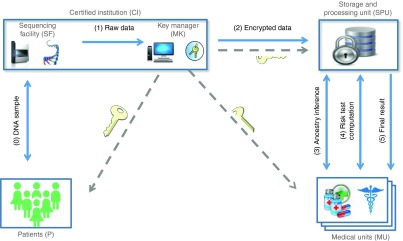
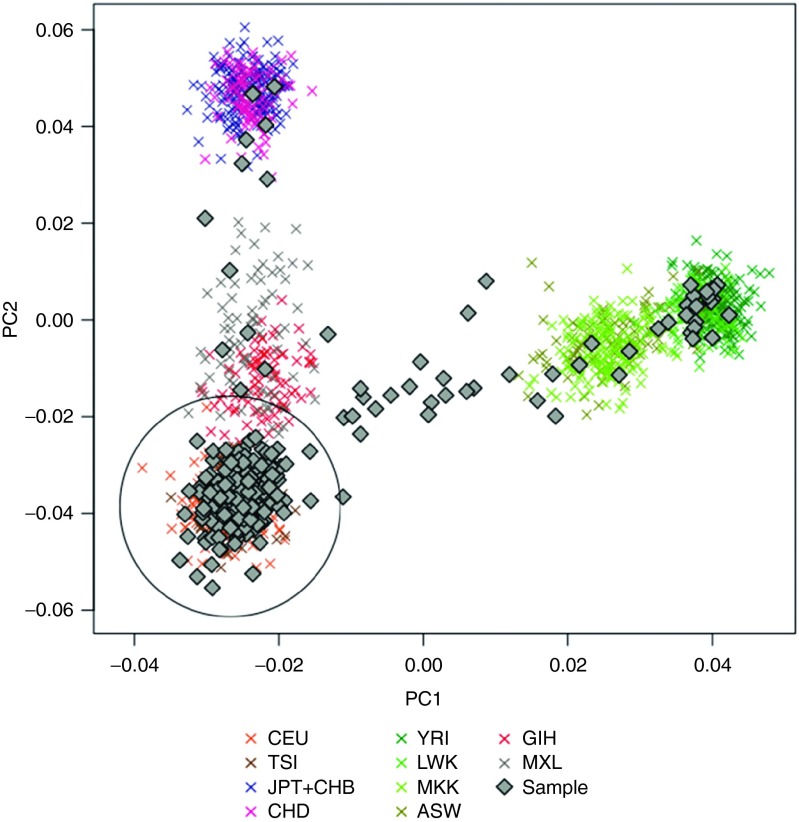
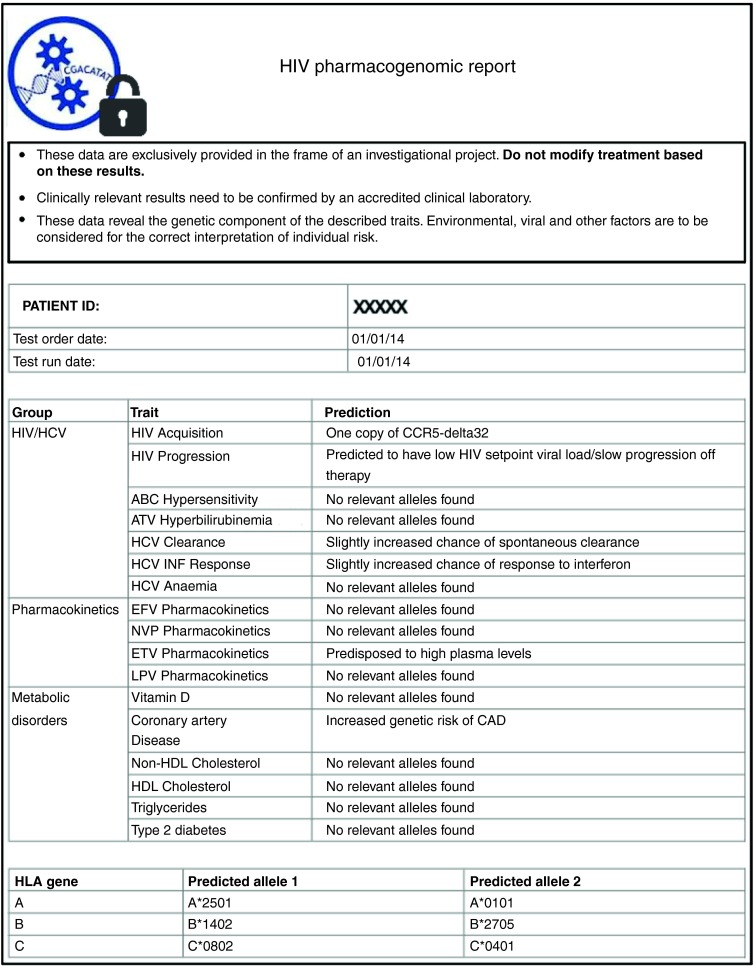
We genotyped 4,149 markers in HIV-positive individuals. Variants allowed for prediction of 17 traits relevant to HIV medical care, inference of patient ancestry, and imputation of human leukocyte antigen (HLA) types. Genetic data were processed under a privacy-preserving framework using homomorphic encryption, and clinical reports describing potentially actionable results were delivered to health-care providers.
A total of 230 patients were included in the study. We demonstrated the feasibility of encrypting a large number of genetic markers, inferring patient ancestry, computing monogenic and polygenic trait risks, and reporting results under privacy-preserving conditions. The average execution time of a multimarker test on encrypted data was 865 ms on a standard computer. The proportion of tests returning potentially actionable genetic results ranged from 0 to 54%.
The model of implementation presented herein informs on strategies to deliver genomic test results for clinical care. Data encryption to ensure privacy helps to build patient trust, a key requirement on the road to genomic-based medicine.Genet Med 18 8, 814-822.
基于基因组的医学实施受到数据隐私以及向医疗从业者提供解释结果等未解决问题的阻碍。我们以基于DNA的HIV相关结果预测作为模型,来探索临床基因组学中的关键问题。
我们对HIV阳性个体的4149个标记进行基因分型。这些变异可用于预测与HIV医疗护理相关的17种性状、推断患者血统以及推算人类白细胞抗原(HLA)类型。基因数据在一个使用同态加密的隐私保护框架下进行处理,并且将描述潜在可采取行动结果的临床报告提供给医疗服务提供者。
该研究共纳入230名患者。我们证明了在隐私保护条件下对大量基因标记进行加密、推断患者血统、计算单基因和多基因性状风险以及报告结果的可行性。在一台标准计算机上,对加密数据进行多标记测试的平均执行时间为865毫秒。返回潜在可采取行动基因结果的测试比例在0%至54%之间。
本文所呈现的实施模型为临床护理提供基因组测试结果的策略提供了信息。通过数据加密来确保隐私有助于建立患者信任,这是迈向基于基因组医学道路上的一项关键要求。《基因医学》18卷8期,814 - 822页