Song Jong Wook, Kim Hyo Jung, Lee Hyelin, Kim Jae-woo, Kwak Young-Lan
Department of Anesthesiology and Pain Medicine, Yonsei University College of Medicine, Seoul 03722, Republic of Korea; Anesthesia and Pain Research Institute, Yonsei University College of Medicine, Seoul 03722, Republic of Korea.
Department of Biochemistry and Molecular Biology, Integrated Genomic Research Center for Metabolic Regulation, Institute of Genetic Science, Yonsei University College of Medicine, Seoul 03722, Republic of Korea.
Oxid Med Cell Longev. 2016;2016:3539649. doi: 10.1155/2016/3539649. Epub 2015 Dec 7.
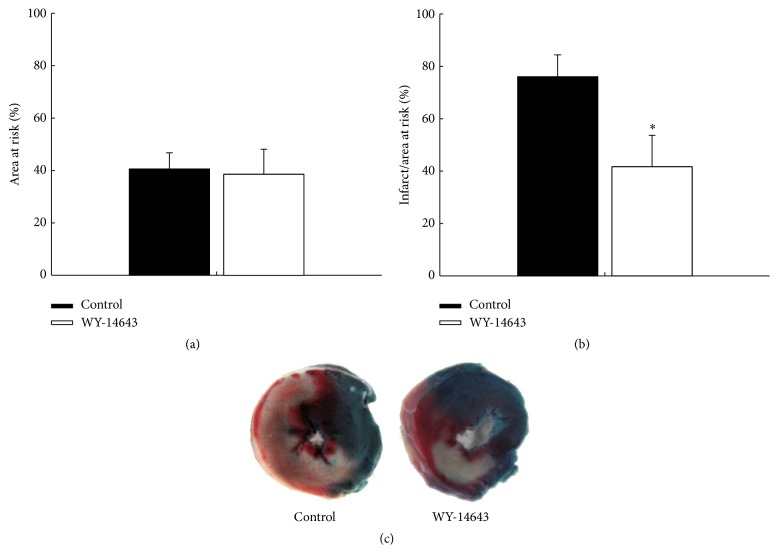
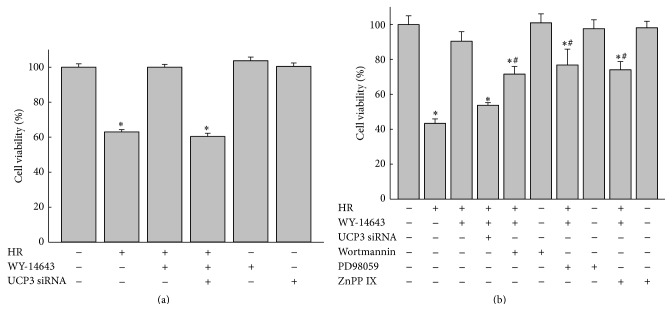
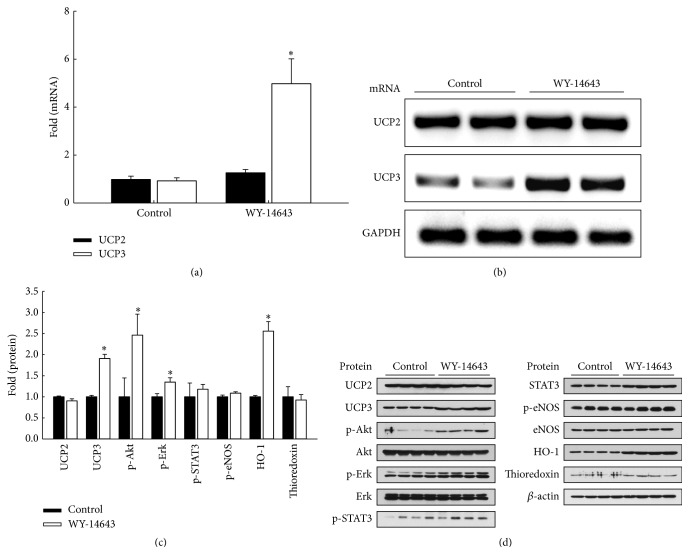
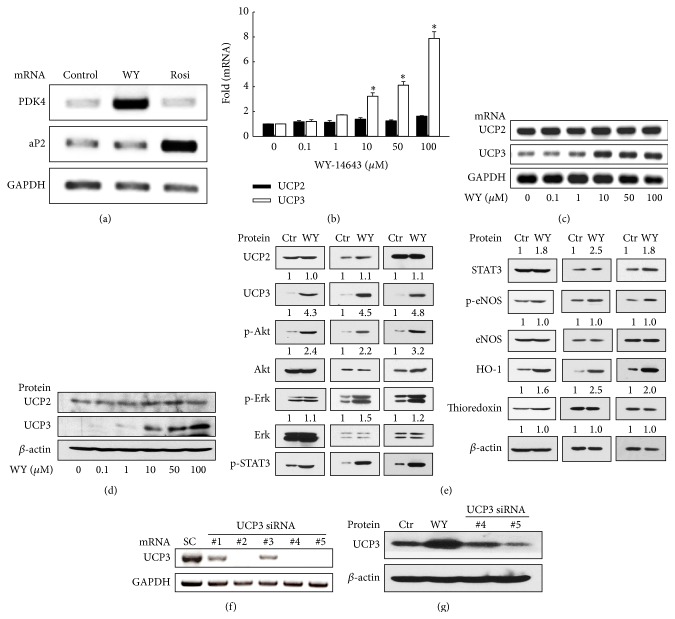
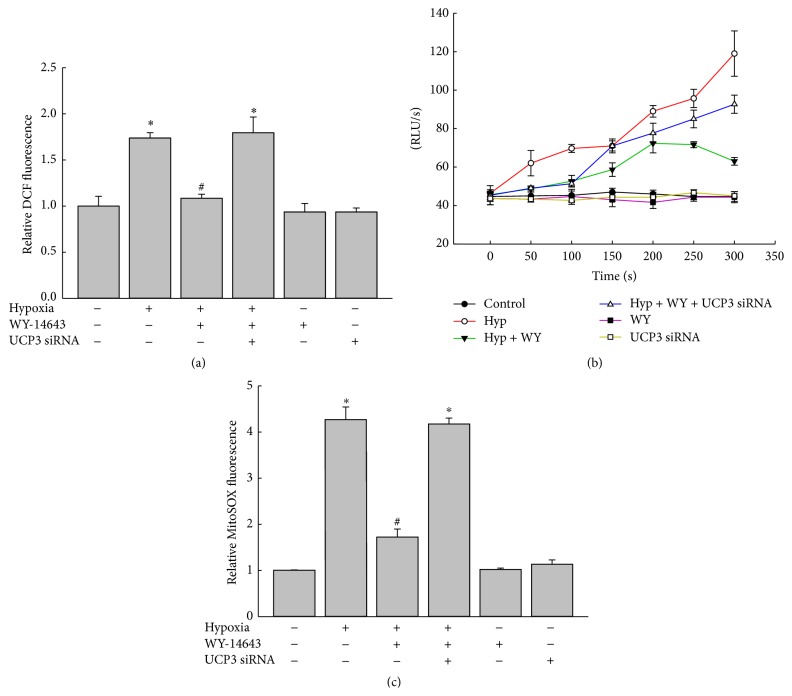
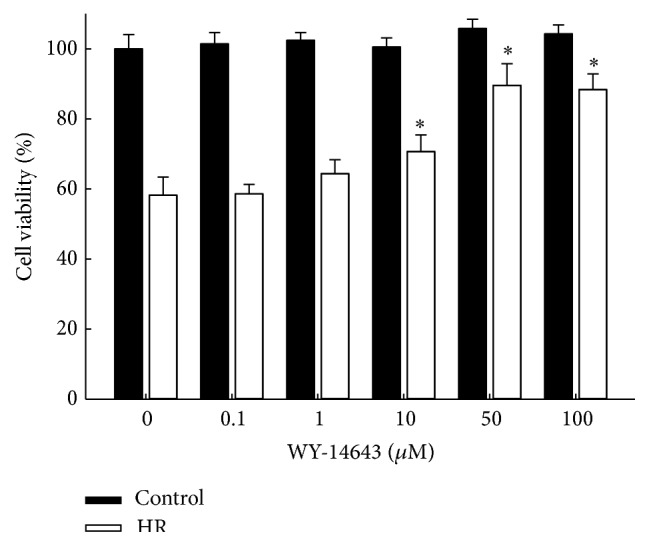
Activation of peroxisome proliferator-activated receptor α (PPARα) confers cardioprotection, while its mechanism remains elusive. We investigated the protective effect of PPARα activation against cardiac ischemia-reperfusion injury in terms of the expression of uncoupling protein (UCP). Myocardial infarct size and UCP expression were measured in rats treated with WY-14643 20 mg/kg, a PPARα ligand, or vehicle. WY-14643 increased UCP3 expression in vivo. Myocardial infarct size was decreased in the WY-14643 group (76 ± 8% versus 42 ± 12%, P<0.05). During reperfusion, the incidence of arrhythmia was higher in the control group compared with the WY-14643 group (9/10 versus 3/10, P<0.05). H9c2 cells were incubated for 24 h with WY-14643 or vehicle. WY-14643 increased UCP3 expression in H9c2 cells. WY-14643 decreased hypoxia-stimulated ROS production. Cells treated with WY-14643 were more resistant to hypoxia-reoxygenation than the untreated cells. Knocking-down UCP3 by siRNA prevented WY-14643 from attenuating the production of ROS. UCP3 siRNA abolished the effect of WY-14643 on cell viability against hypoxia-reoxygenation. In summary, administration of PPARα agonist WY-14643 mitigated the extent of myocardial infarction and incidence of reperfusion-induced arrhythmia. PPARα activation conferred cytoprotective effect against hypoxia-reoxygenation. Associated mechanisms involved increased UCP3 expression and resultant attenuation of ROS production.
过氧化物酶体增殖物激活受体α(PPARα)的激活具有心脏保护作用,但其机制仍不清楚。我们从解偶联蛋白(UCP)的表达方面研究了PPARα激活对心脏缺血再灌注损伤的保护作用。在用PPARα配体WY - 14643(20mg/kg)或赋形剂处理的大鼠中测量心肌梗死面积和UCP表达。WY - 14643在体内增加了UCP3的表达。WY - 14643组的心肌梗死面积减小(76±8%对42±12%,P<0.05)。在再灌注期间,对照组心律失常的发生率高于WY - 14643组(9/10对3/10,P<0.05)。将H9c2细胞与WY - 14643或赋形剂孵育24小时。WY - 14643增加了H9c2细胞中UCP3的表达。WY - 14643减少了缺氧刺激的活性氧生成。用WY - 14643处理的细胞比未处理的细胞对缺氧复氧更具抗性。用小干扰RNA敲低UCP3可阻止WY - 14643减弱活性氧的产生。UCP3小干扰RNA消除了WY - 14643对细胞抗缺氧复氧活力的影响。总之,给予PPARα激动剂WY - 14643可减轻心肌梗死的程度和再灌注诱导的心律失常的发生率。PPARα激活赋予了对缺氧复氧的细胞保护作用。相关机制包括UCP3表达增加以及由此导致的活性氧生成减少。