Naudin Cécile, Chevalier Clément, Roche Serge
CNRS UMR5237, University Montpellier, CRBM, Montpellier, France.
Present address: INSERM U1016, CNRS UMR8104, Institut Cochin, Paris, France.
Oncotarget. 2016 Mar 8;7(10):11033-55. doi: 10.18632/oncotarget.6929.
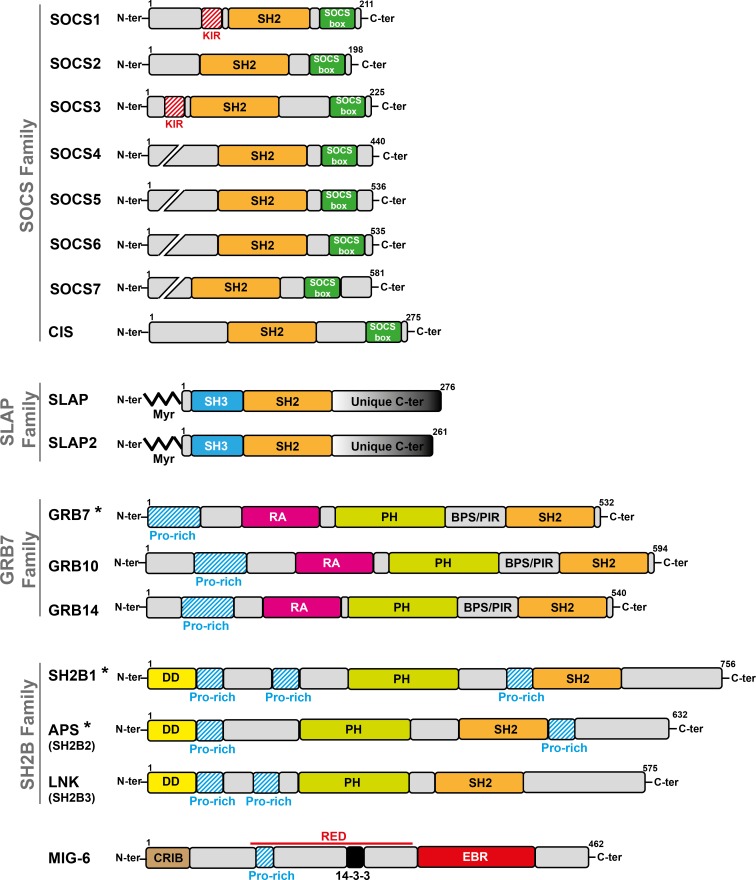
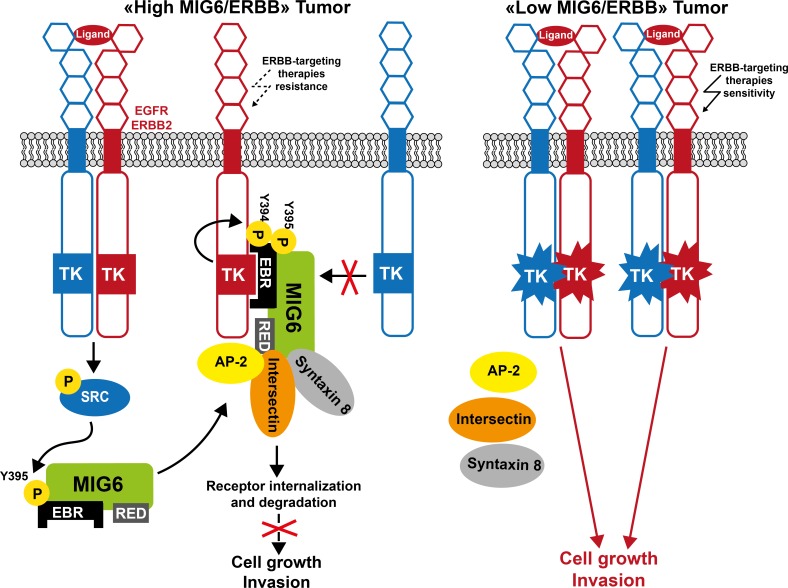
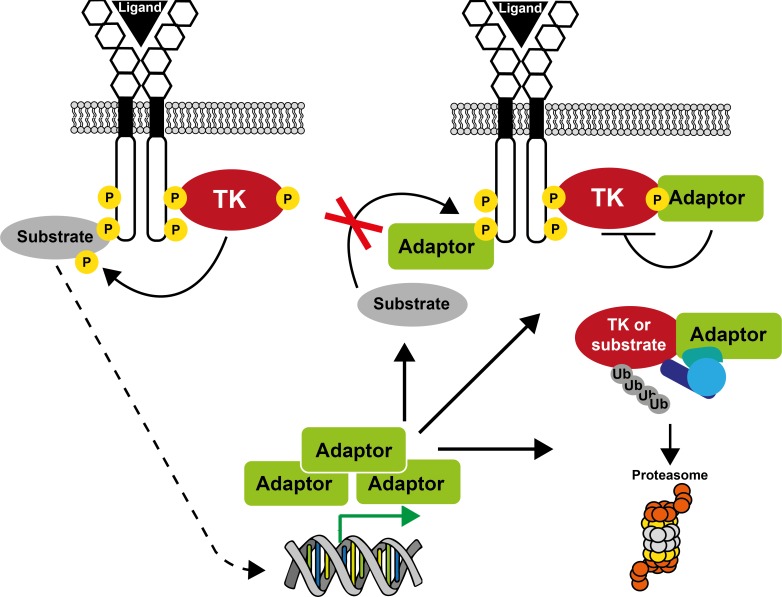
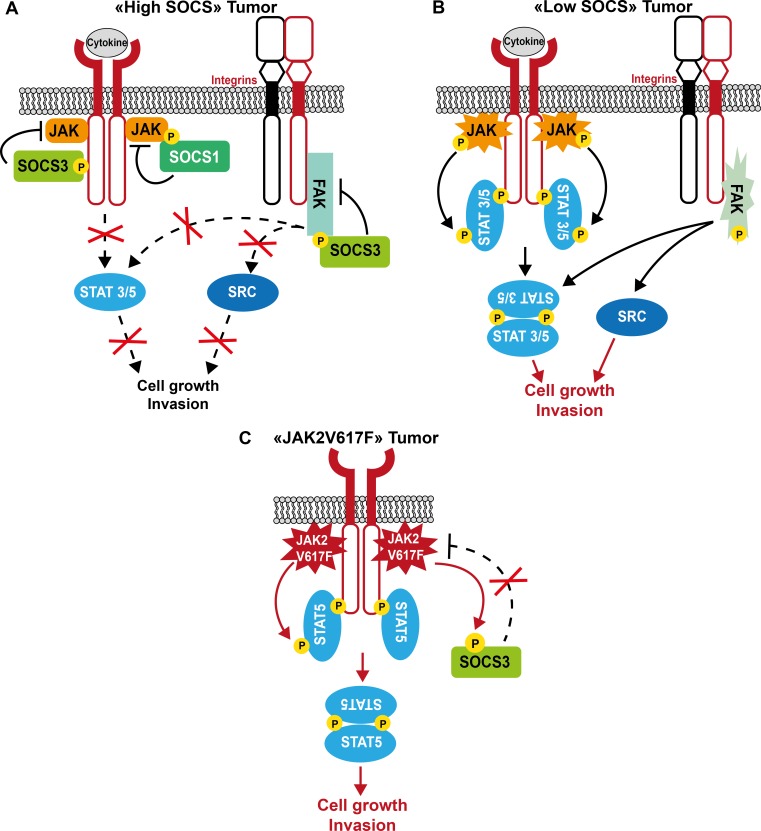
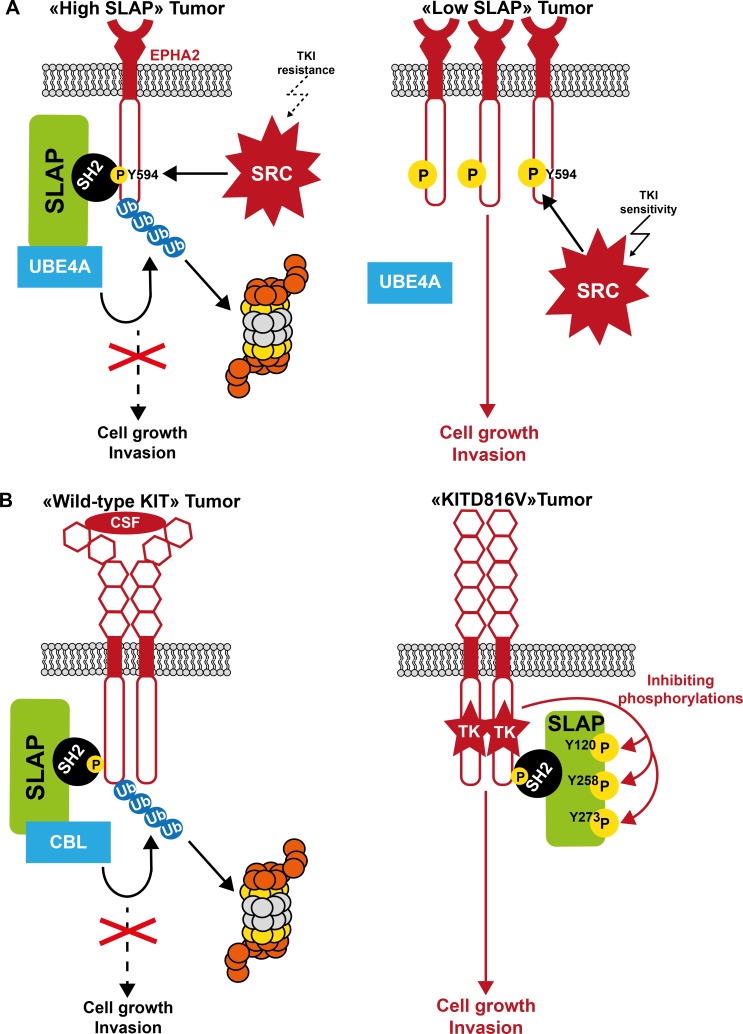
Protein phosphorylation on tyrosine (Tyr) residues has evolved as an important mechanism to coordinate cell communication in multicellular organisms. The importance of this process has been revealed by the discovery of the prominent oncogenic properties of tyrosine kinases (TK) upon deregulation of their physiological activities, often due to protein overexpression and/or somatic mutation. Recent reports suggest that TK oncogenic signaling is also under the control of small adaptor proteins. These cytosolic proteins lack intrinsic catalytic activity and signal by linking two functional members of a catalytic pathway. While most adaptors display positive regulatory functions, a small group of this family exerts negative regulatory functions by targeting several components of the TK signaling cascade. Here, we review how these less studied adaptor proteins negatively control TK activities and how their loss of function induces abnormal TK signaling, promoting tumor formation. We also discuss the therapeutic consequences of this novel regulatory mechanism in human oncology.
酪氨酸(Tyr)残基上的蛋白质磷酸化已演变为多细胞生物中协调细胞通讯的重要机制。酪氨酸激酶(TK)生理活性失调时往往会表现出显著的致癌特性,这一过程的重要性已通过这一发现得以揭示,其生理活性失调通常是由于蛋白质过度表达和/或体细胞突变。最近的报道表明,TK致癌信号传导也受小衔接蛋白的控制。这些胞质蛋白缺乏内在催化活性,通过连接催化途径的两个功能成员来传递信号。虽然大多数衔接蛋白发挥正调控功能,但该家族中的一小部分通过靶向TK信号级联的几个组分发挥负调控功能。在这里,我们综述了这些研究较少的衔接蛋白如何负向控制TK活性,以及它们的功能丧失如何诱导异常的TK信号传导,促进肿瘤形成。我们还讨论了这种新型调控机制在人类肿瘤学中的治疗意义。