Griffin Nicole G, Wang Yu, Hulette Christine M, Halvorsen Matt, Cronin Kenneth D, Walley Nicole M, Haglund Michael M, Radtke Rodney A, Skene J H Pate, Sinha Saurabh R, Heinzen Erin L
Institute for Genomic Medicine, Columbia University, New York, New York, U.S.A.
Department of Neurobiology, Duke University School of Medicine, Durham, North Carolina, U.S.A.
Epilepsia. 2016 Mar;57(3):376-85. doi: 10.1111/epi.13305. Epub 2016 Jan 22.
Hippocampal sclerosis is the most common neuropathologic finding in cases of medically intractable mesial temporal lobe epilepsy. In this study, we analyzed the gene expression profiles of dentate granule cells of patients with mesial temporal lobe epilepsy with and without hippocampal sclerosis to show that next-generation sequencing methods can produce interpretable genomic data from RNA collected from small homogenous cell populations, and to shed light on the transcriptional changes associated with hippocampal sclerosis.
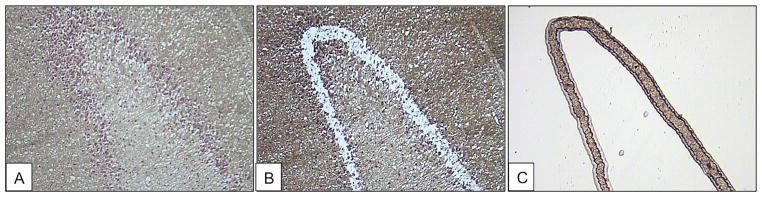
RNA was extracted, and complementary DNA (cDNA) was prepared and amplified from dentate granule cells that had been harvested by laser capture microdissection from surgically resected hippocampi from patients with mesial temporal lobe epilepsy with and without hippocampal sclerosis. Sequencing libraries were sequenced, and the resulting sequencing reads were aligned to the reference genome. Differential expression analysis was used to ascertain expression differences between patients with and without hippocampal sclerosis.
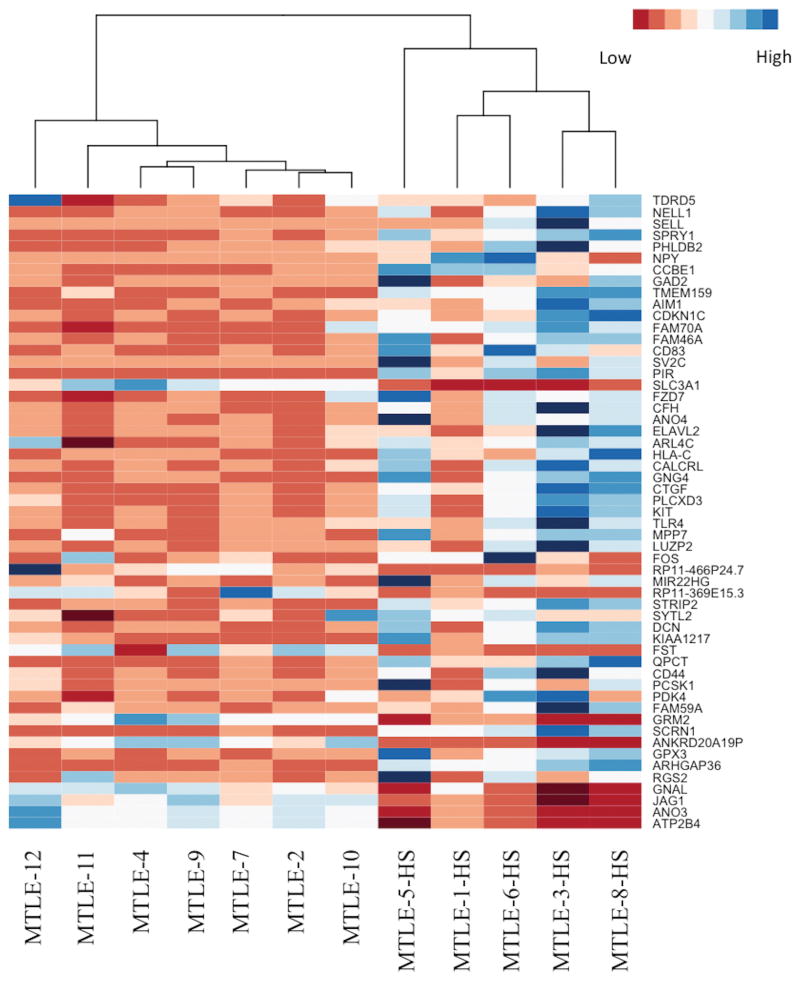
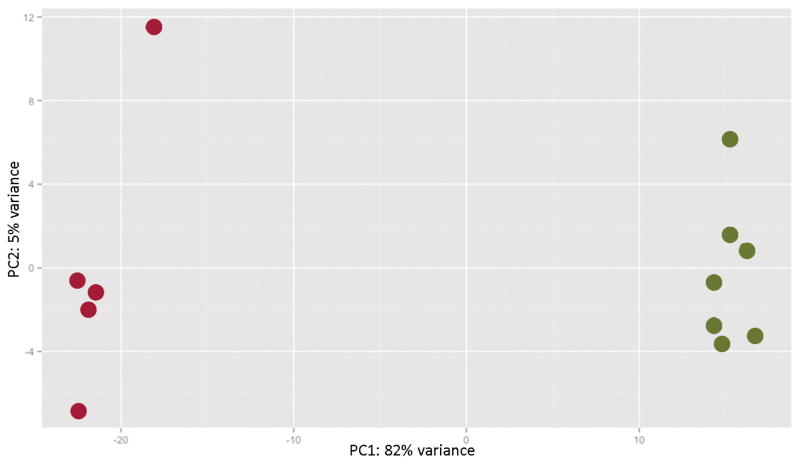
Greater than 90% of the RNA-Seq reads aligned to the reference. There was high concordance between transcriptional profiles obtained for duplicate samples. Principal component analysis revealed that the presence or absence of hippocampal sclerosis was the main determinant of the variance within the data. Among the genes up-regulated in the hippocampal sclerosis samples, there was significant enrichment for genes involved in oxidative phosphorylation.
By analyzing the gene expression profiles of dentate granule cells from surgically resected hippocampal specimens from patients with mesial temporal lobe epilepsy with and without hippocampal sclerosis, we have demonstrated the utility of next-generation sequencing methods for producing biologically relevant results from small populations of homogeneous cells, and have provided insight on the transcriptional changes associated with this pathology.
海马硬化是药物难治性内侧颞叶癫痫病例中最常见的神经病理学发现。在本研究中,我们分析了伴有和不伴有海马硬化的内侧颞叶癫痫患者齿状颗粒细胞的基因表达谱,以表明新一代测序方法能够从从小的同质细胞群体收集的RNA中产生可解释的基因组数据,并阐明与海马硬化相关的转录变化。
从伴有和不伴有海马硬化的内侧颞叶癫痫患者手术切除的海马中,通过激光捕获显微切割收集齿状颗粒细胞,提取RNA,并制备和扩增互补DNA(cDNA)。对测序文库进行测序,并将所得测序读数与参考基因组比对。使用差异表达分析来确定伴有和不伴有海马硬化的患者之间的表达差异。
超过90%的RNA测序读数与参考序列比对。重复样本获得的转录谱之间具有高度一致性。主成分分析显示,海马硬化的存在与否是数据中方差的主要决定因素。在海马硬化样本中上调的基因中,参与氧化磷酸化的基因有显著富集。
通过分析伴有和不伴有海马硬化的内侧颞叶癫痫患者手术切除的海马标本中齿状颗粒细胞的基因表达谱,我们证明了新一代测序方法用于从小的同质细胞群体产生生物学相关结果的实用性,并提供了与这种病理学相关的转录变化的见解。