Raes Eric J, Bodrossy Levente, Van de Kamp Jodie, Holmes Bronwyn, Hardman-Mountford Nick, Thompson Peter A, McInnes Allison S, Waite Anya M
The Oceans Institute, University of Western Australia, M047 35 Stirling Hwy Crawley, 6009 WA, Australia.
CSIRO Oceans and Atmosphere Flagship, Private Bag 5, Wembley, 6913 WA, Australia.
PLoS One. 2016 Jan 22;11(1):e0145996. doi: 10.1371/journal.pone.0145996. eCollection 2016.
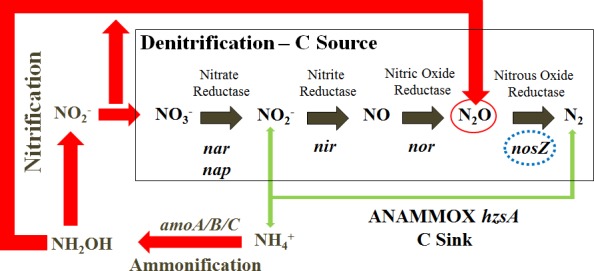
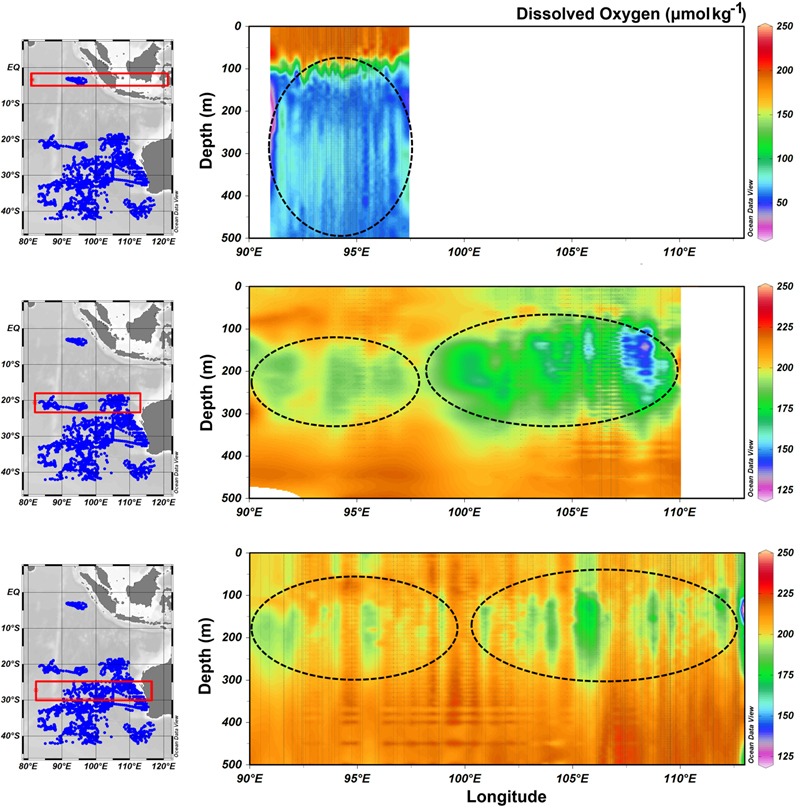
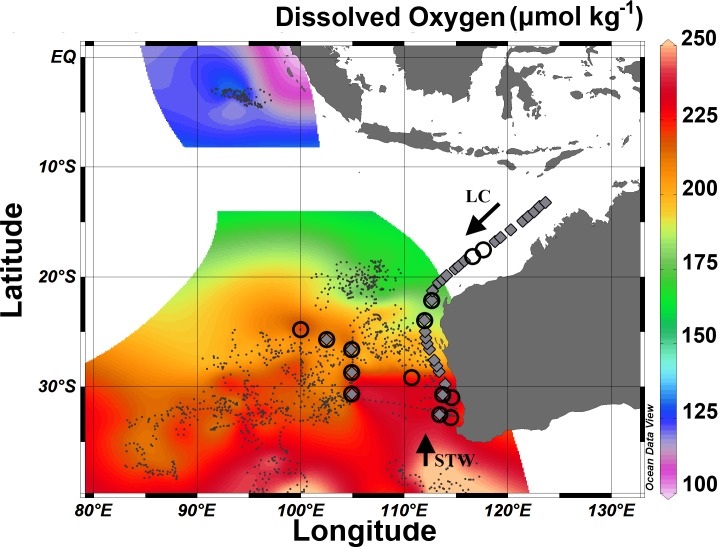
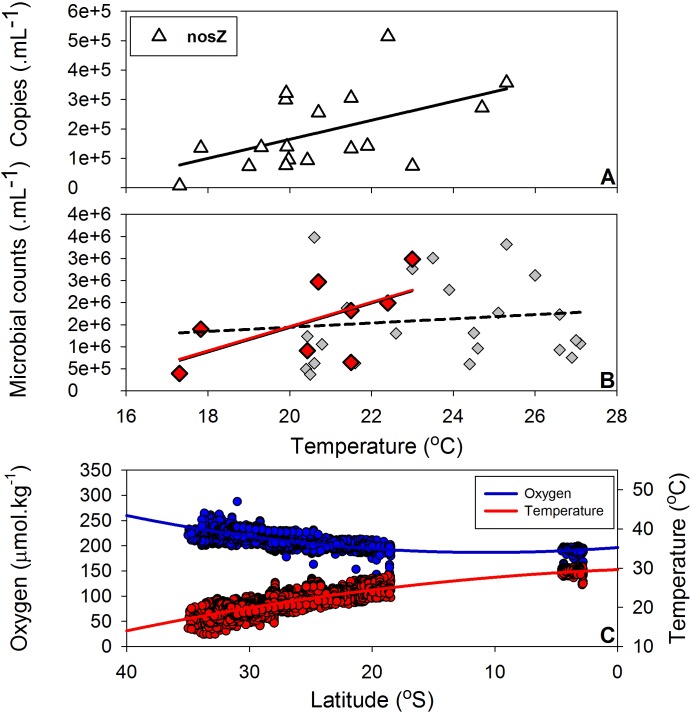
Nitrous oxide (N2O) is a powerful greenhouse gas and a key catalyst of stratospheric ozone depletion. Yet, little data exist about the sink and source terms of the production and reduction of N2O outside the well-known oxygen minimum zones (OMZ). Here we show the presence of functional marker genes for the reduction of N2O in the last step of the denitrification process (nitrous oxide reductase genes; nosZ) in oxygenated surface waters (180-250 O2 μmol.kg(-1)) in the south-eastern Indian Ocean. Overall copy numbers indicated that nosZ genes represented a significant proportion of the microbial community, which is unexpected in these oxygenated waters. Our data show strong temperature sensitivity for nosZ genes and reaction rates along a vast latitudinal gradient (32°S-12°S). These data suggest a large N2O sink in the warmer Tropical waters of the south-eastern Indian Ocean. Clone sequencing from PCR products revealed that most denitrification genes belonged to Rhodobacteraceae. Our work highlights the need to investigate the feedback and tight linkages between nitrification and denitrification (both sources of N2O, but the latter also a source of bioavailable N losses) in the understudied yet strategic Indian Ocean and other oligotrophic systems.
一氧化二氮(N₂O)是一种强大的温室气体,也是平流层臭氧消耗的关键催化剂。然而,在著名的海洋缺氧区(OMZ)之外,关于N₂O产生和减少的源汇项的数据却很少。在此,我们展示了在印度洋东南部含氧表层水(180 - 250 μmol·kg⁻¹ O₂)中,反硝化过程最后一步(一氧化二氮还原酶基因;nosZ)用于还原N₂O的功能标记基因的存在。总体拷贝数表明,nosZ基因在微生物群落中占很大比例,这在这些含氧水域中是出乎意料的。我们的数据显示,沿着广阔的纬度梯度(南纬32° - 南纬12°),nosZ基因和反应速率对温度具有很强的敏感性。这些数据表明,在印度洋东南部较温暖的热带水域存在一个巨大的N₂O汇。PCR产物的克隆测序显示,大多数反硝化基因属于红杆菌科。我们的工作强调了在研究较少但具有战略意义的印度洋和其他贫营养系统中,需要研究硝化作用和反硝化作用(二者均为N₂O的来源,但后者也是生物可利用氮损失的一个来源)之间的反馈和紧密联系。