Sun Xin, Jayakumar Amal, Ward Bess B
Department of Geosciences, Princeton University, PrincetonNJ, United States.
Front Microbiol. 2017 Jun 28;8:1183. doi: 10.3389/fmicb.2017.01183. eCollection 2017.
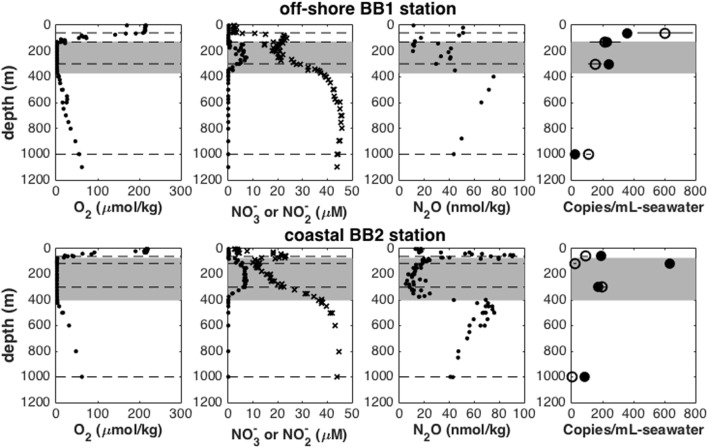
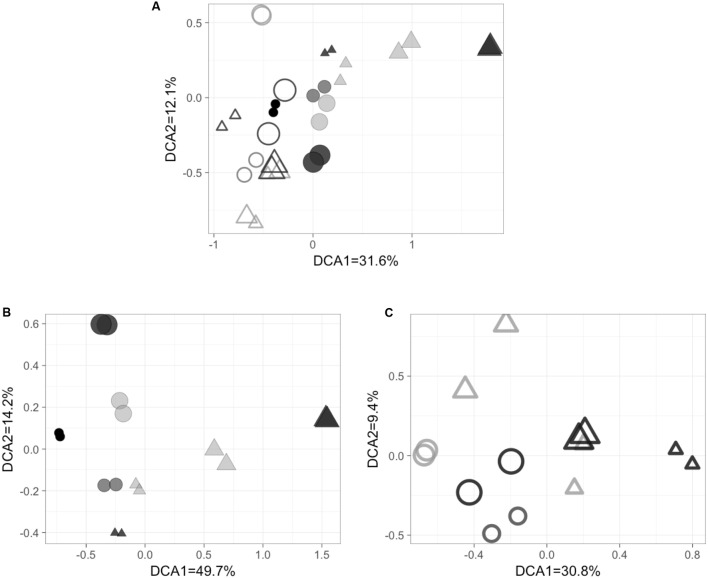
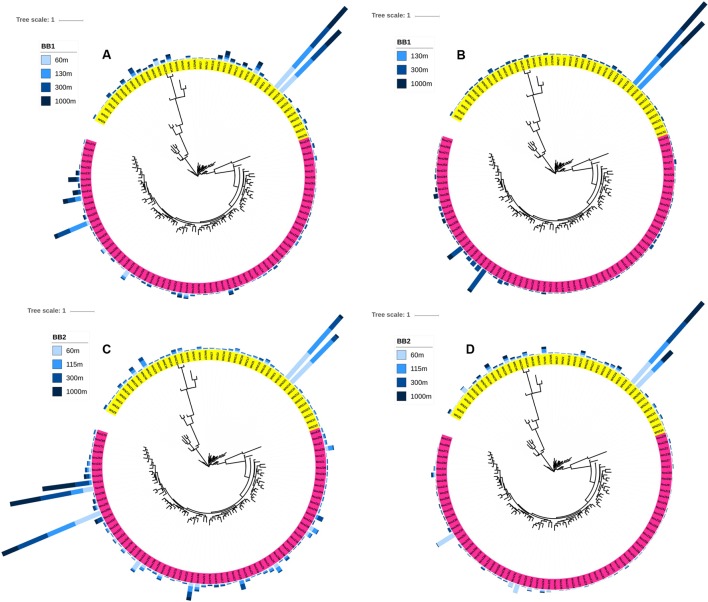
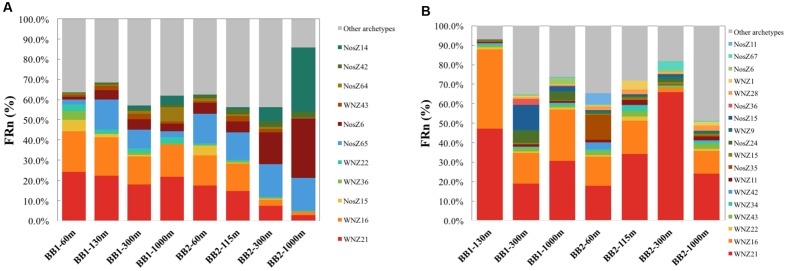
The ozone-depleting and greenhouse gas, nitrous oxide (NO), is mainly consumed by the microbially mediated anaerobic process, denitrification. NO consumption is the last step in canonical denitrification, and is also the least O tolerant step. Community composition of total and active NO consuming bacteria was analyzed based on total (DNA) and transcriptionally active (RNA) nitrous oxide reductase () genes using a functional gene microarray. The total and active communities were dominated by a limited number of archetypes, affiliated with bacteria from marine, soil and marsh environments. In addition to genes related to those of known marine denitrifiers, atypical genes, related to those of soil bacteria that do not possess a complete denitrification pathway, were also detected, especially in surface waters. The community composition of the total assemblage was significantly different from the active assemblage. The community composition of the total assemblage was significantly different between coastal and off-shore stations. The low oxygen assemblages from both stations were similar to each other, while the higher oxygen assemblages were more variable. Community composition of the active assemblage was also significantly different between stations, and varied with NO concentration but not O. Notably, assemblages were not only present but also active in oxygenated seawater: the abundance of total and active bacteria from oxygenated surface water (indicated by gene copy number) was similar to or even larger than in anoxic waters, implying the potential for NO consumption even in the oxygenated surface water.
消耗臭氧层且具有温室效应的气体一氧化二氮(N₂O)主要通过微生物介导的厌氧过程——反硝化作用被消耗。N₂O消耗是经典反硝化作用的最后一步,也是最不耐氧的一步。使用功能基因微阵列,基于总(DNA)和转录活性(RNA)一氧化二氮还原酶(nosZ)基因,分析了总耗N₂O细菌和活性耗N₂O细菌的群落组成。总群落和活性群落由有限数量的原型主导,这些原型隶属于来自海洋、土壤和沼泽环境的细菌。除了与已知海洋反硝化细菌相关的nosZ基因外,还检测到了与不具有完整反硝化途径的土壤细菌相关的非典型nosZ基因,尤其是在表层水中。总nosZ群落组成与活性群落组成显著不同。沿海和近海站点的总nosZ群落组成显著不同。两个站点的低氧群落彼此相似,而高氧群落则更具变异性。活性nosZ群落组成在不同站点之间也存在显著差异,并且随N₂O浓度而变化,但不随氧气浓度变化。值得注意的是,nosZ群落在含氧海水中不仅存在而且具有活性:含氧表层水中总nosZ细菌和活性nosZ细菌的丰度(以基因拷贝数表示)与缺氧水域相似甚至更高,这意味着即使在含氧表层水中也存在消耗N₂O的潜力。