Murdock Duncan J E, Gabbott Sarah E, Purnell Mark A
Department of Geology, University of Leicester, University Road, Leicester, LE1 7RH, UK.
BMC Evol Biol. 2016 Jan 22;16:19. doi: 10.1186/s12862-016-0582-7.
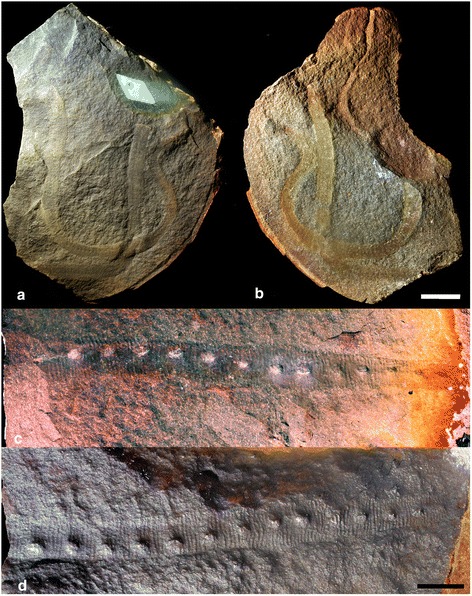
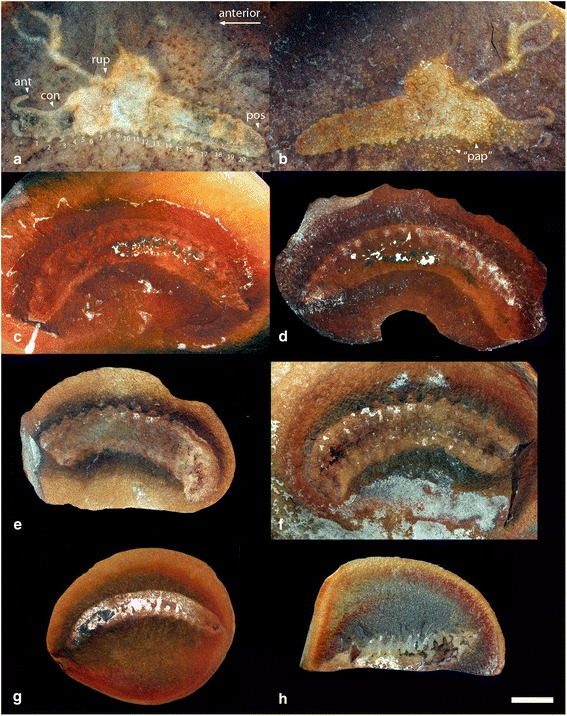
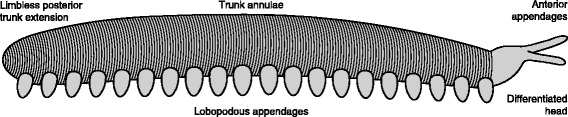
The origin of the body plan of modern velvet worms (Onychophora) lies in the extinct lobopodians of the Palaeozoic. Helenodora inopinata, from the Mazon Creek Lagerstätte of Illinois (Francis Creek Shale, Carbondale Formation, Middle Pennsylvanian), has been proposed as an intermediate between the "weird wonders" of the Cambrian seas and modern terrestrial predatory onychophorans. The type material of H. inopinata, however, leaves much of the crucial anatomy unknown.
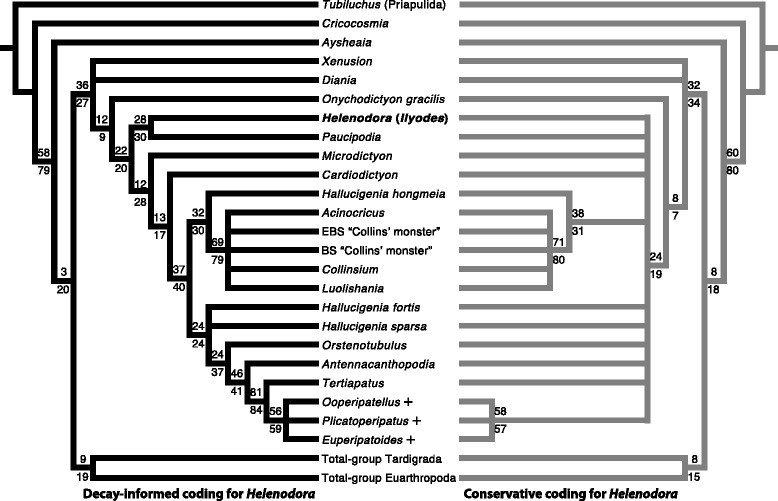
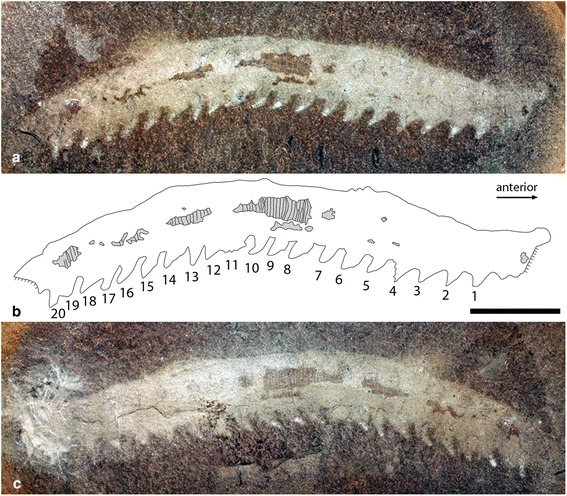
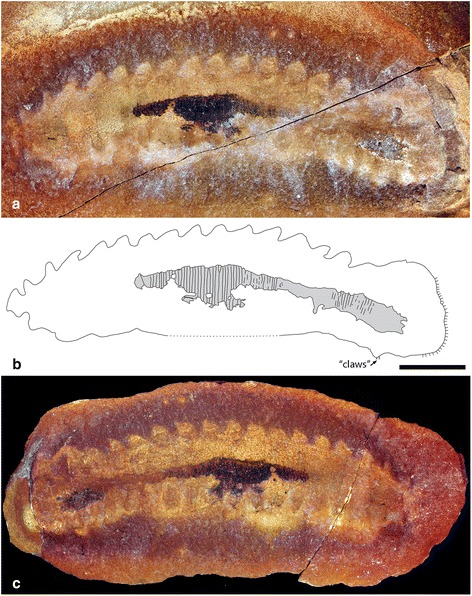
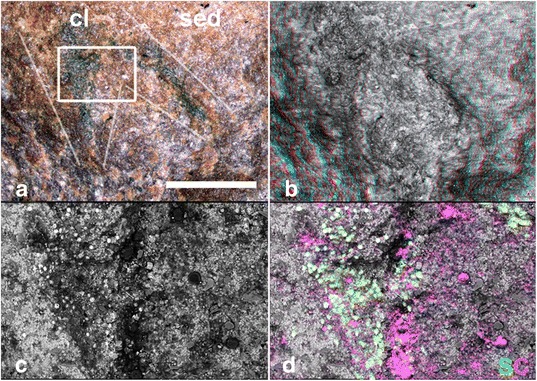
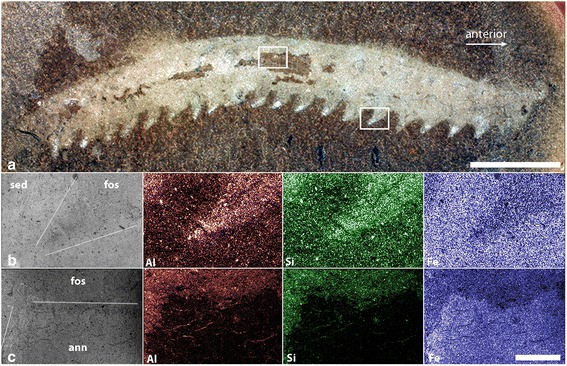
Here we present a redescription of this taxon based on more complete material, including new details of the head and posterior portion of the trunk, informed by the results of experimental decay of extant onychophorans. H. inopinata is indeed best resolved as a stem-onychophoran, but lacks several key features of modern velvet worms including, crucially, those that would suggest a terrestrial mode of life.
The presence of H. inopinata in the Carboniferous demonstrates the survival of a Cambrian marine morphotype, and a likely post-Carboniferous origin of crown-Onychophora. Our analysis also demonstrates that taphonomically informed tests of character interpretations have the potential to improve phylogenetic resolution.
现代天鹅绒虫(有爪动物门)身体结构的起源可追溯至古生代已灭绝的叶足动物。来自伊利诺伊州马宗溪化石库(宾夕法尼亚纪中期卡本代尔组弗朗西斯溪页岩)的意外海伦虫被认为是寒武纪海洋“怪异奇观”与现代陆生捕食性有爪动物之间的过渡物种。然而,意外海伦虫的模式标本仍有许多关键解剖结构未知。
在此,我们基于更完整的标本对该分类单元进行重新描述,包括头部和躯干后部的新细节,这些细节参考了现存有爪动物的实验性腐烂结果。意外海伦虫确实最好被归为有爪动物干群,但缺乏现代天鹅绒虫的几个关键特征,至关重要的是,缺乏那些表明其陆地生活方式的特征。
石炭纪意外海伦虫的存在证明了寒武纪海洋形态类型的延续,以及冠有爪动物门可能起源于石炭纪之后。我们的分析还表明,基于埋藏学的性状解释检验有可能提高系统发育分辨率。