Oey Melanie, Sawyer Anne Linda, Ross Ian Lawrence, Hankamer Ben
Institute for Molecular Bioscience, The University of Queensland, St Lucia, Qld, Australia.
Ruhr-University Bochum, Bochum, Germany.
Plant Biotechnol J. 2016 Jul;14(7):1487-99. doi: 10.1111/pbi.12516. Epub 2016 Jan 23.
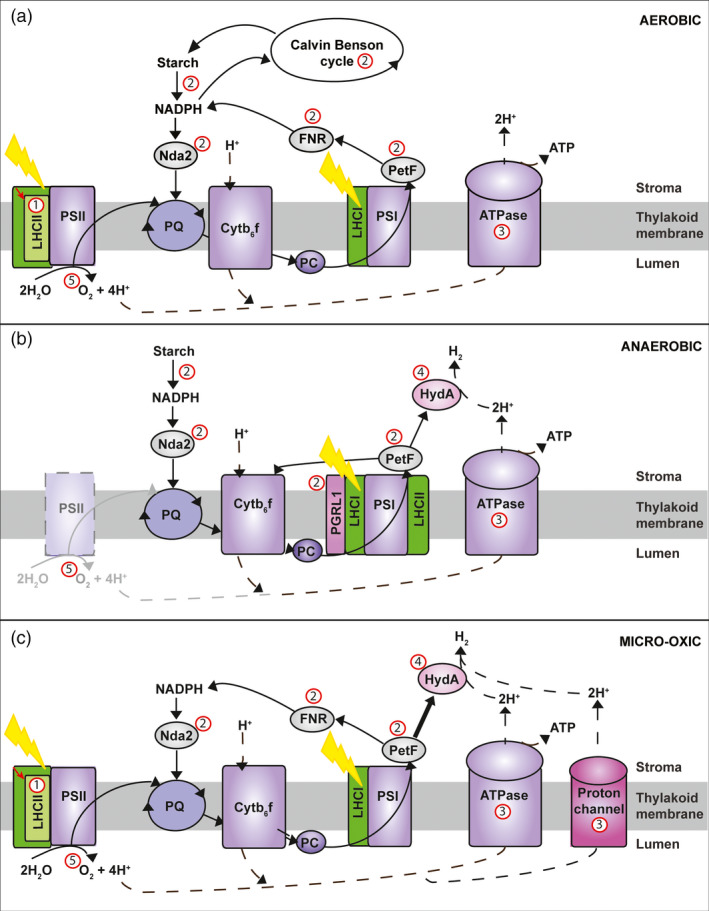
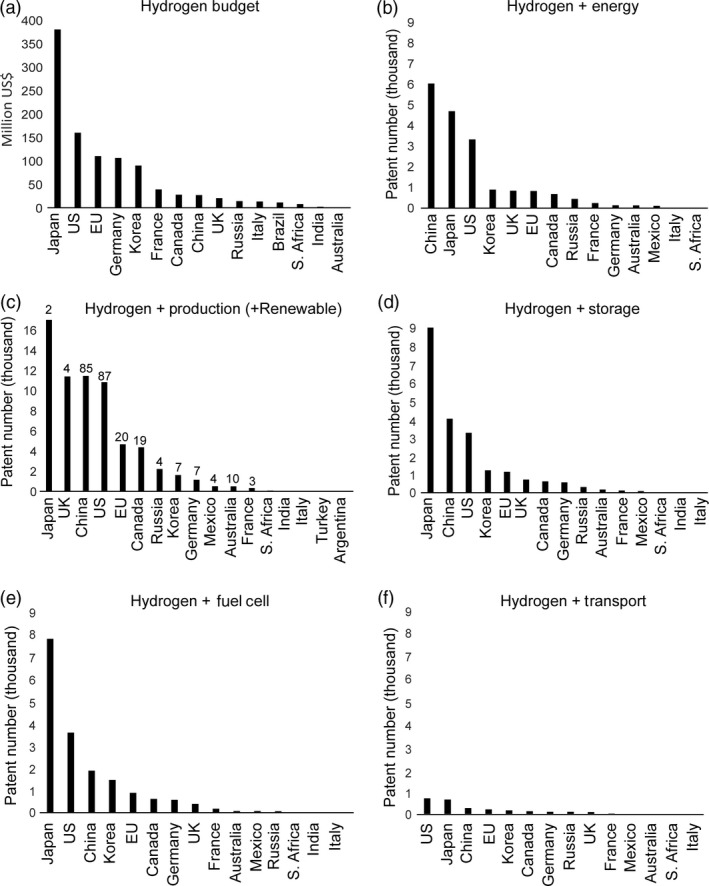
The global population is predicted to increase from ~7.3 billion to over 9 billion people by 2050. Together with rising economic growth, this is forecast to result in a 50% increase in fuel demand, which will have to be met while reducing carbon dioxide (CO2 ) emissions by 50-80% to maintain social, political, energy and climate security. This tension between rising fuel demand and the requirement for rapid global decarbonization highlights the need to fast-track the coordinated development and deployment of efficient cost-effective renewable technologies for the production of CO2 neutral energy. Currently, only 20% of global energy is provided as electricity, while 80% is provided as fuel. Hydrogen (H2 ) is the most advanced CO2 -free fuel and provides a 'common' energy currency as it can be produced via a range of renewable technologies, including photovoltaic (PV), wind, wave and biological systems such as microalgae, to power the next generation of H2 fuel cells. Microalgae production systems for carbon-based fuel (oil and ethanol) are now at the demonstration scale. This review focuses on evaluating the potential of microalgal technologies for the commercial production of solar-driven H2 from water. It summarizes key global technology drivers, the potential and theoretical limits of microalgal H2 production systems, emerging strategies to engineer next-generation systems and how these fit into an evolving H2 economy.
预计到2050年,全球人口将从约73亿增加到90亿以上。随着经济增长的加快,预计燃料需求将增长50%,要满足这一需求,同时将二氧化碳(CO₂)排放量减少50%至80%,以维护社会、政治、能源和气候安全。燃料需求增长与全球快速脱碳要求之间的这种矛盾突出表明,需要加快高效且具有成本效益的可再生技术的协调开发和部署,以生产碳中和能源。目前,全球能源仅有20%以电力形式供应,而80%是以燃料形式供应。氢气(H₂)是最先进的无CO₂燃料,它可通过一系列可再生技术(包括光伏(PV)、风能、波浪能以及诸如微藻之类的生物系统)生产出来,从而为下一代H₂燃料电池提供动力,因此它提供了一种“通用”能源货币。用于生产碳基燃料(油和乙醇)的微藻生产系统目前已达到示范规模。本综述着重评估微藻技术用于从水中商业化生产太阳能驱动的H₂的潜力。它总结了全球关键技术驱动因素、微藻H₂生产系统的潜力和理论极限、设计下一代系统的新兴策略以及这些策略如何融入不断发展的H₂经济之中。