Li Jinquan, Bus Anja, Spamer Viola, Stich Benjamin
Max Planck Institute for Plant Breeding Research, Carl-von-Linné-Weg 10, Köln, 50829, Germany.
Syngenta Seeds GmbH, Zum Knipkenbach 20, Bad Salzuflen, 32107, Germany.
BMC Plant Biol. 2016 Jan 25;16:26. doi: 10.1186/s12870-016-0707-6.
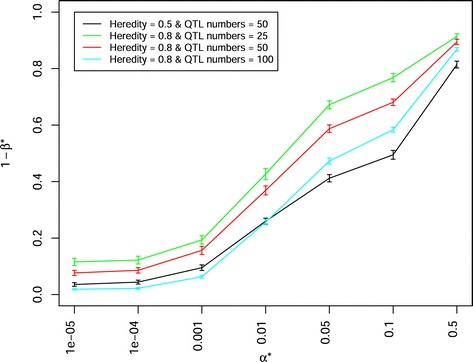
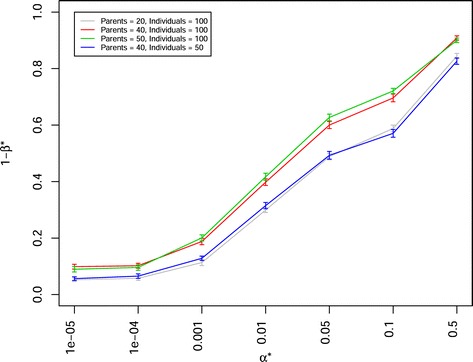
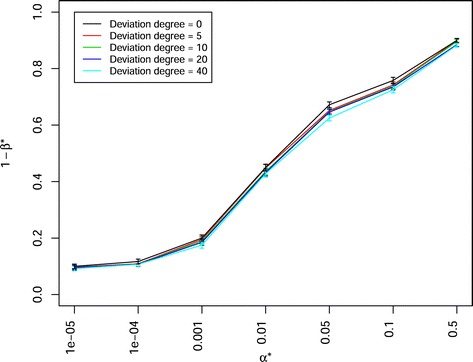
Rapeseed (Brassica napus L.) is an important oilseed crop throughout the world, serving as source for edible oil and renewable energy. Development of nested association mapping (NAM) population and methods is of importance for quantitative trait locus (QTL) mapping in rapeseed. The objectives of the research were to compare the power of QTL detection 1- β(∗) (β(∗) is the empirical type II error rate) (i) of two mating designs, double haploid (DH-NAM) and backcross (BC-NAM), (ii) of different statistical models, and (iii) for different genetic situations.
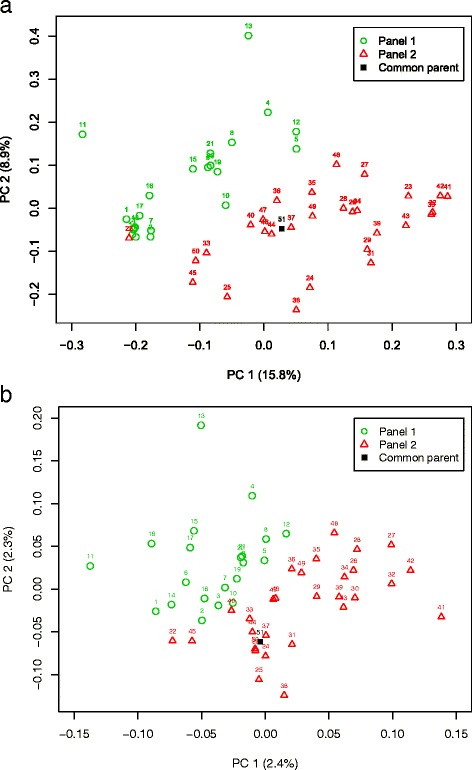
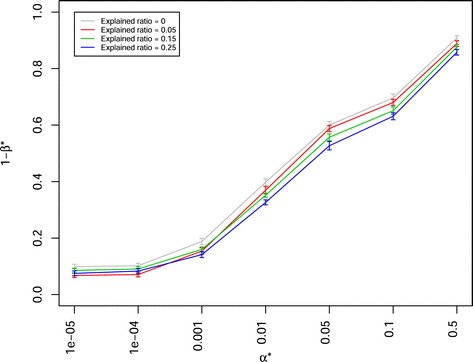
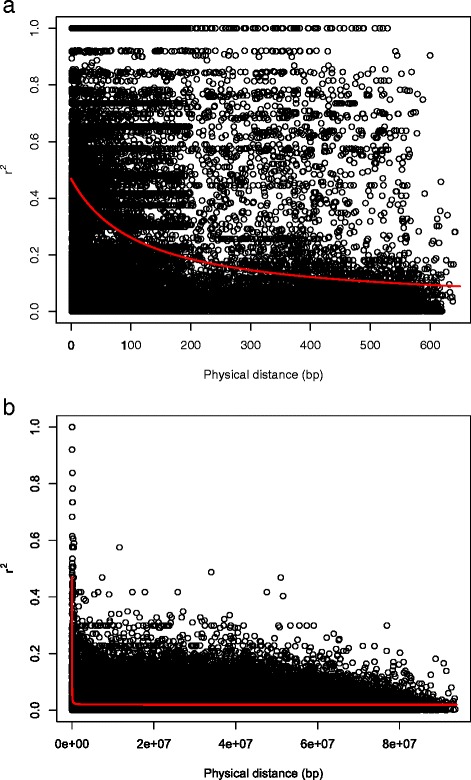
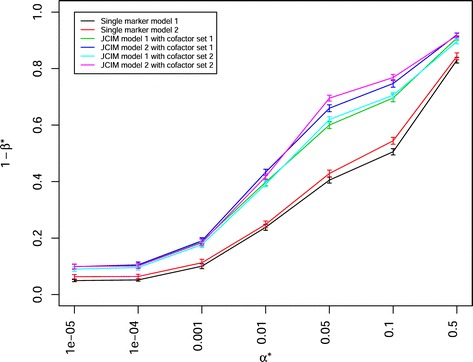
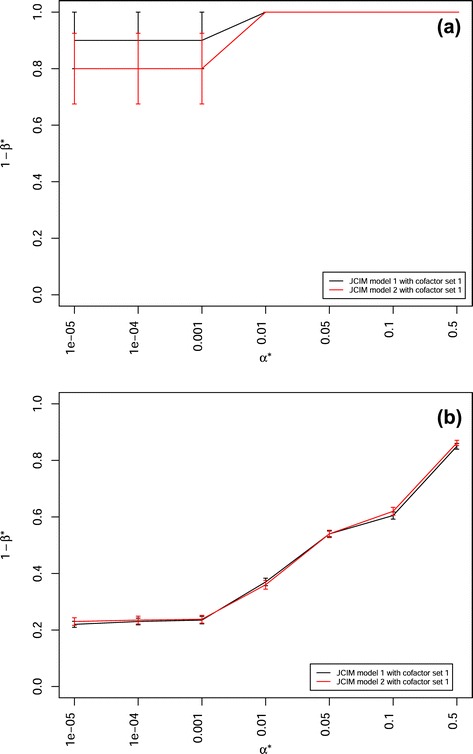
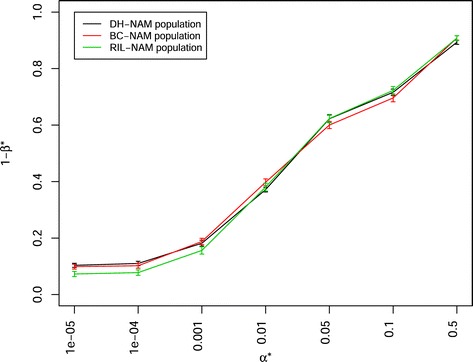
The computer simulations were based on the empirical data of a single nucleotide polymorphism (SNP) set of 790 SNPs from 30 sequenced conserved genes of 51 accessions of world-wide diverse B. napus germplasm. The results showed that a joint composite interval mapping (JCIM) model had significantly higher power of QTL detection than a single marker model. The DH-NAM mating design showed a slightly higher power of QTL detection than the BC-NAM mating design. The JCIM model considering QTL effects nested within subpopulations showed higher power of QTL detection than the JCIM model considering QTL effects across subpopulations, when examing a scenario in which there were interaction effects by a few QTLs interacting with a few background markers as well as a scenario in which there were interaction effects by many QTLs (≥ 25) each with more than 10 background markers and the proportion of total variance explained by the interactions was higher than 75 %.
The results of our study support the optimal design as well as analysis of NAM populations, especially in rapeseed.
油菜(Brassica napus L.)是全球重要的油料作物,是食用油和可再生能源的来源。巢式关联作图(NAM)群体及方法的开发对于油菜数量性状位点(QTL)作图具有重要意义。本研究的目的是比较两种交配设计(双单倍体(DH-NAM)和回交(BC-NAM))、不同统计模型以及不同遗传情况下QTL检测功效1-β∗(β∗为经验II类错误率)。
计算机模拟基于来自51份全球不同油菜种质30个测序保守基因的790个单核苷酸多态性(SNP)位点的经验数据。结果表明,联合复合区间作图(JCIM)模型的QTL检测功效显著高于单标记模型。DH-NAM交配设计的QTL检测功效略高于BC-NAM交配设计。当考察少数QTL与少数背景标记相互作用以及许多QTL(≥25)各自与超过10个背景标记相互作用且相互作用解释的总方差比例高于75%的情况时,考虑亚群体内QTL效应的JCIM模型比考虑亚群体间QTL效应的JCIM模型具有更高的QTL检测功效。
我们的研究结果支持NAM群体的优化设计及分析,尤其是在油菜中。