Zhang Meiling, Sun Yuhong, Chen Liqiao, Cai Chunfang, Qiao Fang, Du Zhenyu, Li Erchao
Laboratory of Aquaculture Nutrition and Environmental Health, School of Life Sciences, East China Normal University, Shanghai 200241, China.
School of Biology & Basic Medical Sciences, Soochow University, Suzhou 215123, China.
PLoS One. 2016 Jan 28;11(1):e0148135. doi: 10.1371/journal.pone.0148135. eCollection 2016.
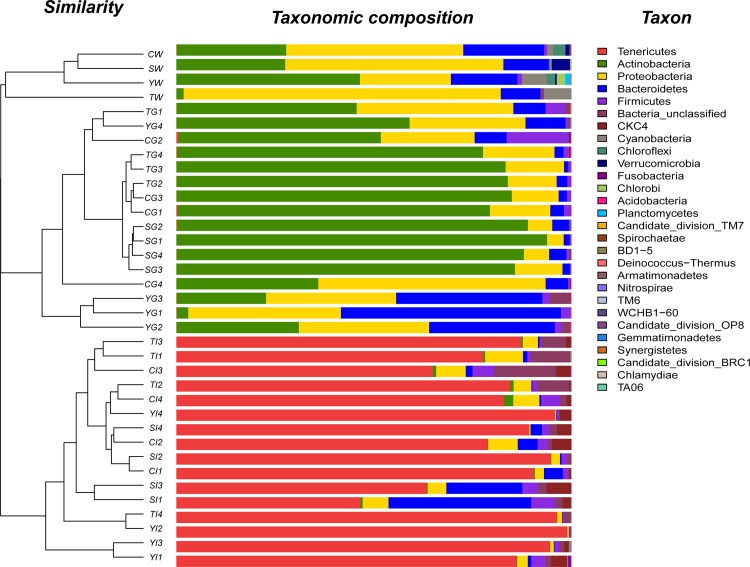
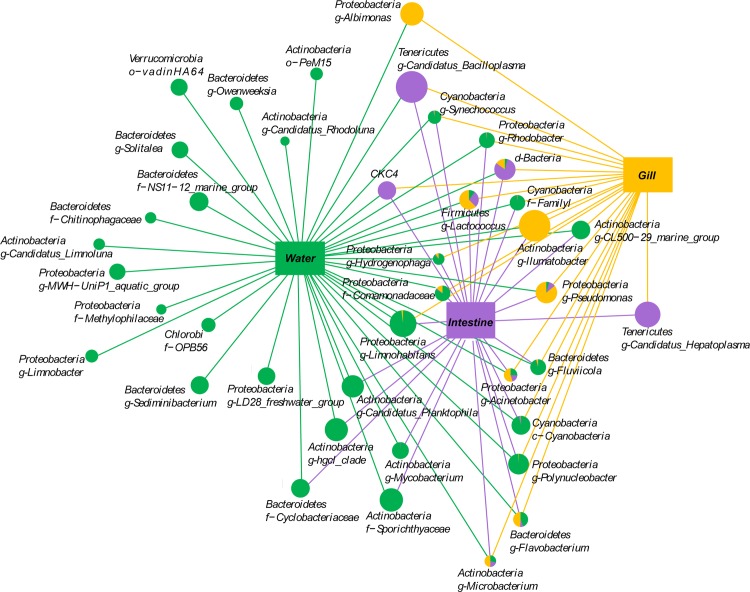
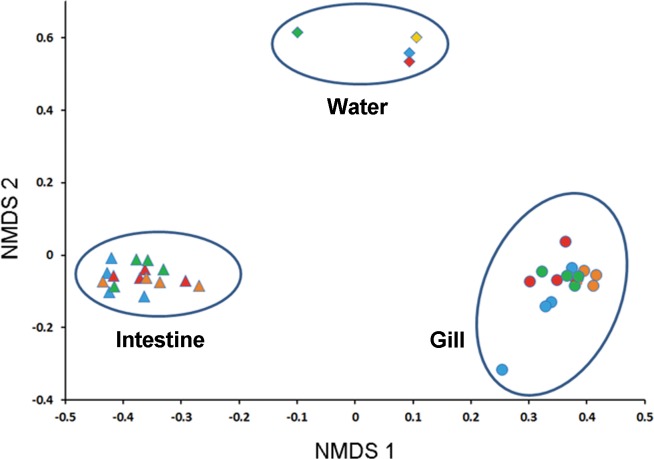
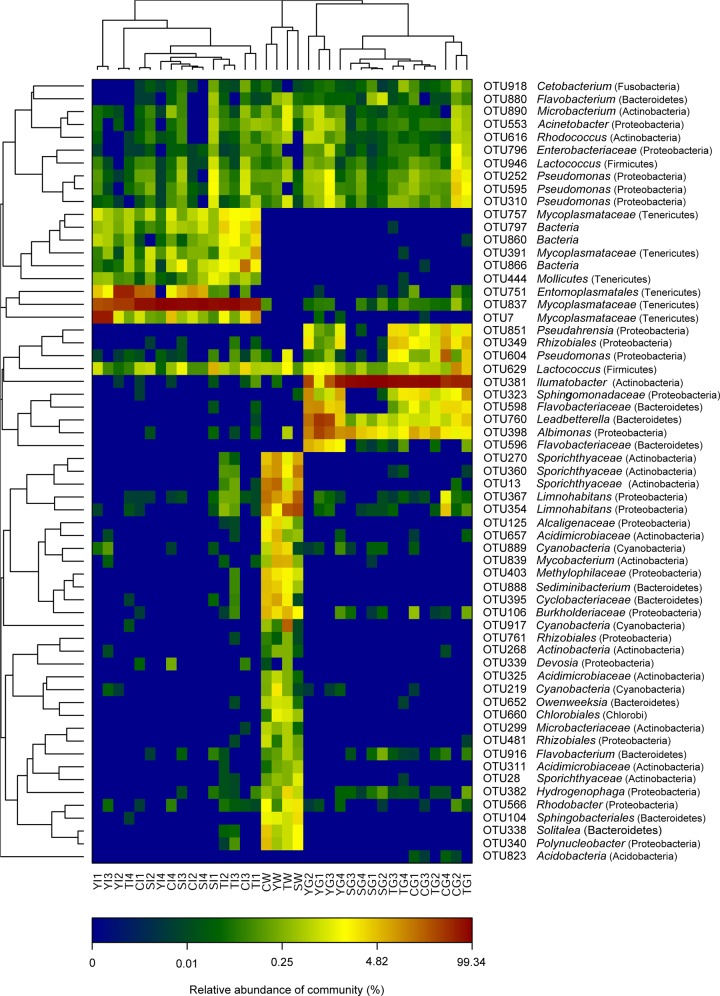
Aquatic animals have a close relationship with water, but differences in their symbiotic bacteria and the bacterial composition in water remains unclear. Wild or domestic Chinese mitten crabs (Eriocheir sinensis) and the water in which they live were collected from four sampling sites in Jiangsu and Shanghai, China. Bacterial composition in water, gills or guts of E. sinensis, were compared by high-throughput sequencing using 16S rRNA genes. Analysis of >660,000 sequences indicated that bacterial diversity was higher in water than in gills or guts. Tenericutes and Proteobacteria were dominant phyla in guts, while Actinobacteria, Proteobacteria and Bacteroidetes were dominant in gills and water. Non-metric multidimensional scaling analysis indicated that microbiota from gills, guts or water clearly separated into three groups, suggesting that crabs harbor a more specific microbial community than the water in which they live. The dominant OTUs in crab gut were related to Mycoplasmataceae, which were low in abundance in gills, showing that, like mammals, crabs have body-site specific microbiota. OTUs related to Ilumatobacter and Albimonas, which are commonly present in sediment and seawater, were dominant in gills but almost absent from the sampled water. Considering E. sinensis are bottom-dwelling crustacean and they mate in saline water or seawater, behavior and life cycle of crabs may play an important role in shaping the symbiotic bacterial pattern. This study revealed the relationship between the symbiotic bacteria of Chinese mitten crab and their habitat, affording information on the assembly factors of commensal bacteria in aquatic animals.
水生动物与水关系密切,但它们共生细菌与水中细菌组成的差异尚不清楚。在中国江苏和上海的四个采样点采集了野生或家养中华绒螯蟹及其生活的水体。通过对16S rRNA基因进行高通量测序,比较了水体、中华绒螯蟹鳃或肠道中的细菌组成。对超过660,000条序列的分析表明,水体中的细菌多样性高于鳃或肠道。柔膜菌门和变形菌门是肠道中的优势菌门,而放线菌门、变形菌门和拟杆菌门在鳃和水体中占主导地位。非度量多维尺度分析表明,鳃、肠道或水体中的微生物群明显分为三组,这表明螃蟹拥有比其生活水体更具特异性的微生物群落。蟹肠道中的优势操作分类单元与支原体科有关,在鳃中的丰度较低,这表明,与哺乳动物一样,螃蟹也有身体部位特异性的微生物群。与通常存在于沉积物和海水中的发光杆菌属和白色单胞菌属相关的操作分类单元在鳃中占主导地位,但在所采水样中几乎不存在。考虑到中华绒螯蟹是底栖甲壳类动物,它们在盐水或海水中交配,螃蟹的行为和生命周期可能在塑造共生细菌模式中起重要作用。本研究揭示了中华绒螯蟹共生细菌与其栖息地之间的关系,为水生动物共生细菌的组装因素提供了信息。