Chen Chao, Liu Zhiguang, Pan Qi, Chen Xiao, Wang Huihua, Guo Haikun, Liu Shidong, Lu Hongfeng, Tian Shilin, Li Ruiqiang, Shi Wei
Institute of Apicultural Research, Chinese Academy of Agricultural Sciences, Beijing, China Key Laboratory of Pollinating Insect Biology, Ministry of Agriculture, Beijing, China.
Novogene Bioinformatics Institute, Beijing, China.
Mol Biol Evol. 2016 May;33(5):1337-48. doi: 10.1093/molbev/msw017. Epub 2016 Jan 27.
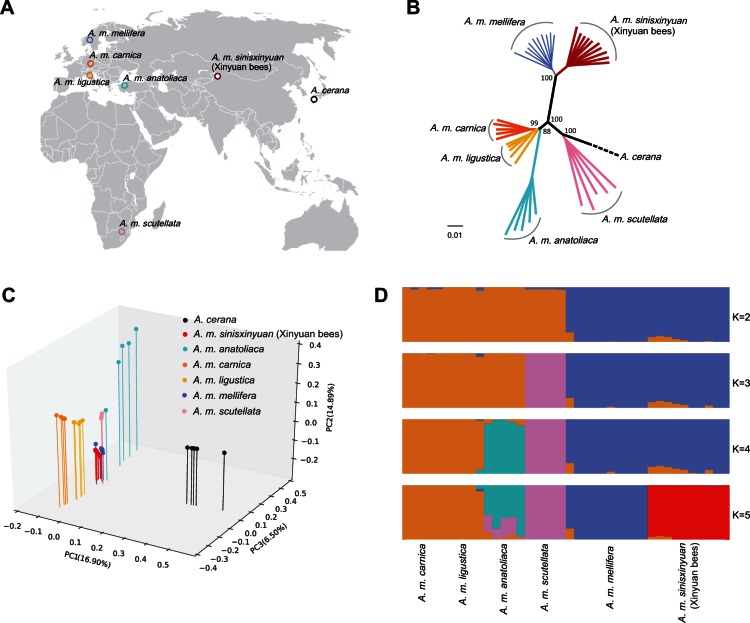
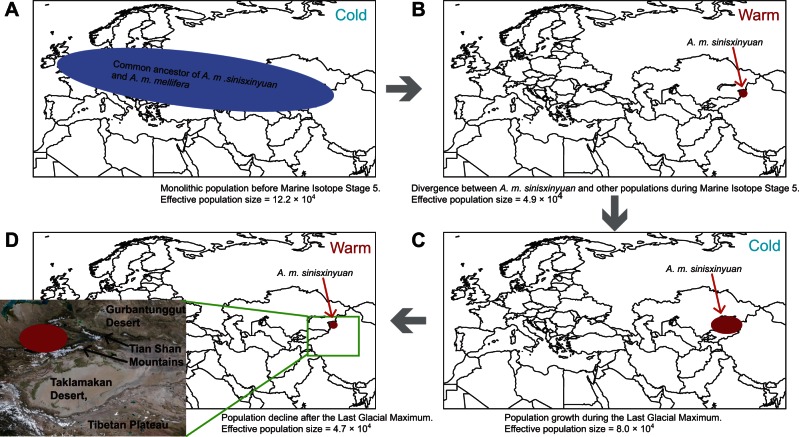
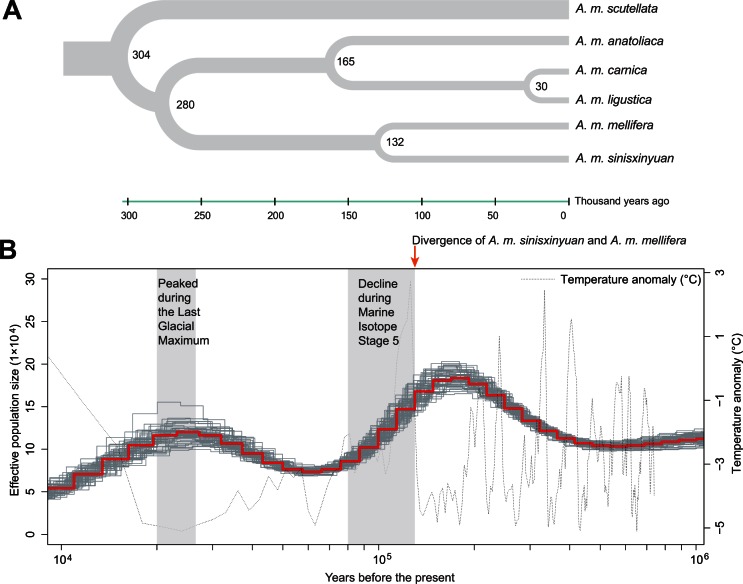
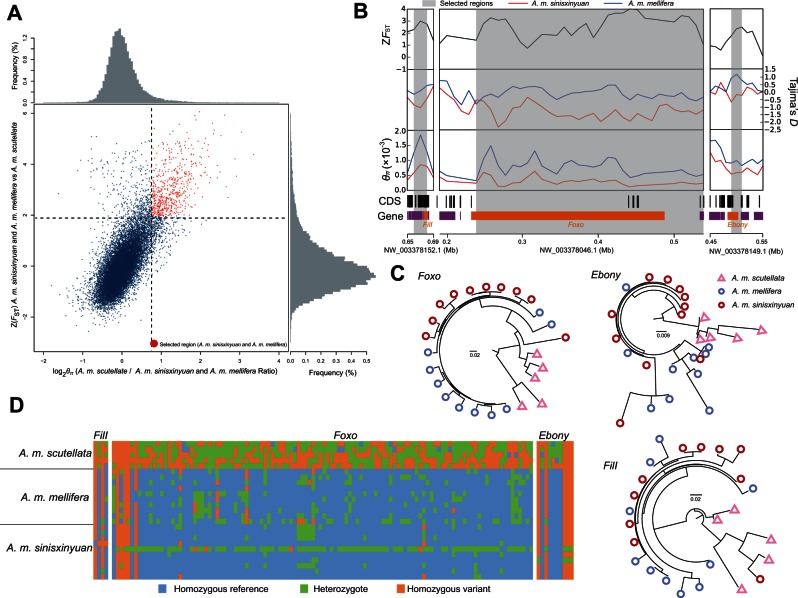
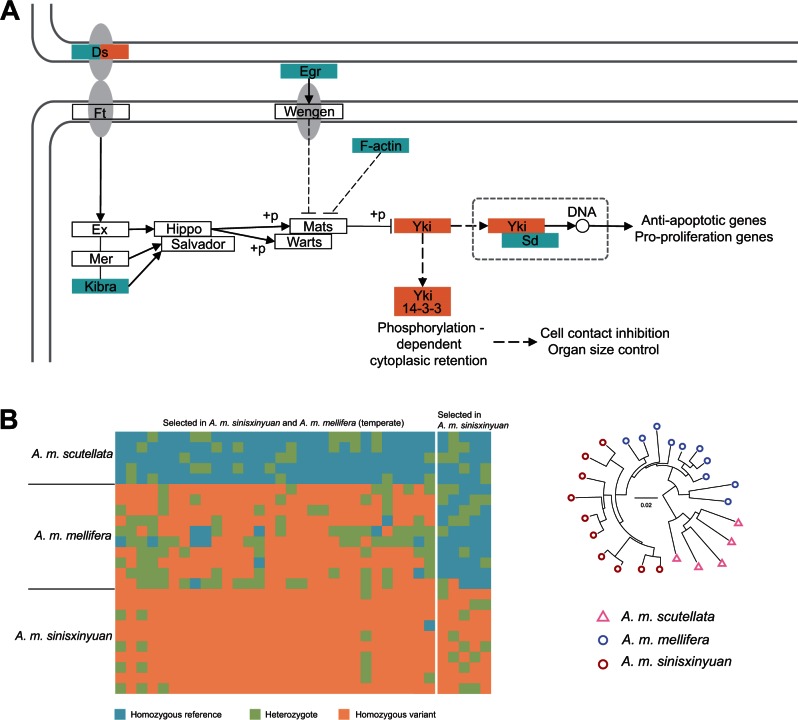
Studying the genetic signatures of climate-driven selection can produce insights into local adaptation and the potential impacts of climate change on populations. The honey bee (Apis mellifera) is an interesting species to study local adaptation because it originated in tropical/subtropical climatic regions and subsequently spread into temperate regions. However, little is known about the genetic basis of its adaptation to temperate climates. Here, we resequenced the whole genomes of ten individual bees from a newly discovered population in temperate China and downloaded resequenced data from 35 individuals from other populations. We found that the new population is an undescribed subspecies in the M-lineage of A. mellifera (Apis mellifera sinisxinyuan). Analyses of population history show that long-term global temperature has strongly influenced the demographic history of A. m. sinisxinyuan and its divergence from other subspecies. Further analyses comparing temperate and tropical populations identified several candidate genes related to fat body and the Hippo signaling pathway that are potentially involved in adaptation to temperate climates. Our results provide insights into the demographic history of the newly discovered A. m. sinisxinyuan, as well as the genetic basis of adaptation of A. mellifera to temperate climates at the genomic level. These findings will facilitate the selective breeding of A. mellifera to improve the survival of overwintering colonies.
研究气候驱动选择的遗传特征可以深入了解局部适应以及气候变化对种群的潜在影响。蜜蜂(西方蜜蜂)是研究局部适应的一个有趣物种,因为它起源于热带/亚热带气候区域,随后扩散到温带地区。然而,关于其适应温带气候的遗传基础知之甚少。在这里,我们对来自中国温带一个新发现种群的10只蜜蜂个体的全基因组进行了重测序,并从其他种群的35个个体中下载了重测序数据。我们发现这个新种群是西方蜜蜂M系中一个未被描述的亚种(中华新源蜜蜂)。种群历史分析表明,长期的全球温度强烈影响了中华新源蜜蜂的种群历史及其与其他亚种的分化。进一步比较温带和热带种群的分析确定了几个与脂肪体和Hippo信号通路相关的候选基因,这些基因可能参与了对温带气候的适应。我们的结果为新发现的中华新源蜜蜂的种群历史以及西方蜜蜂在基因组水平上适应温带气候的遗传基础提供了见解。这些发现将有助于西方蜜蜂的选择性育种,以提高越冬蜂群的存活率。