Cooper Julie E, McCann Conor J, Natarajan Dipa, Choudhury Shanas, Boesmans Werend, Delalande Jean-Marie, Vanden Berghe Pieter, Burns Alan J, Thapar Nikhil
Stem Cells and Regenerative Medicine, UCL Institute of Child Health, 30 Guilford Street, London, United Kingdom.
Laboratory for Enteric NeuroScience, Translational Research Center for GastroIntestinal Disorders, Department of Clinical and Experimental Medicine, University of Leuven, Leuven, Belgium.
PLoS One. 2016 Jan 29;11(1):e0147989. doi: 10.1371/journal.pone.0147989. eCollection 2016.
Enteric neuropathies are severe gastrointestinal disorders with unsatisfactory outcomes. We aimed to investigate the potential of enteric neural stem cell therapy approaches for such disorders by transplanting mouse enteric neural crest cells (ENCCs) into ganglionic and aganglionic mouse gut in vivo and analysing functional integration and long-term safety.
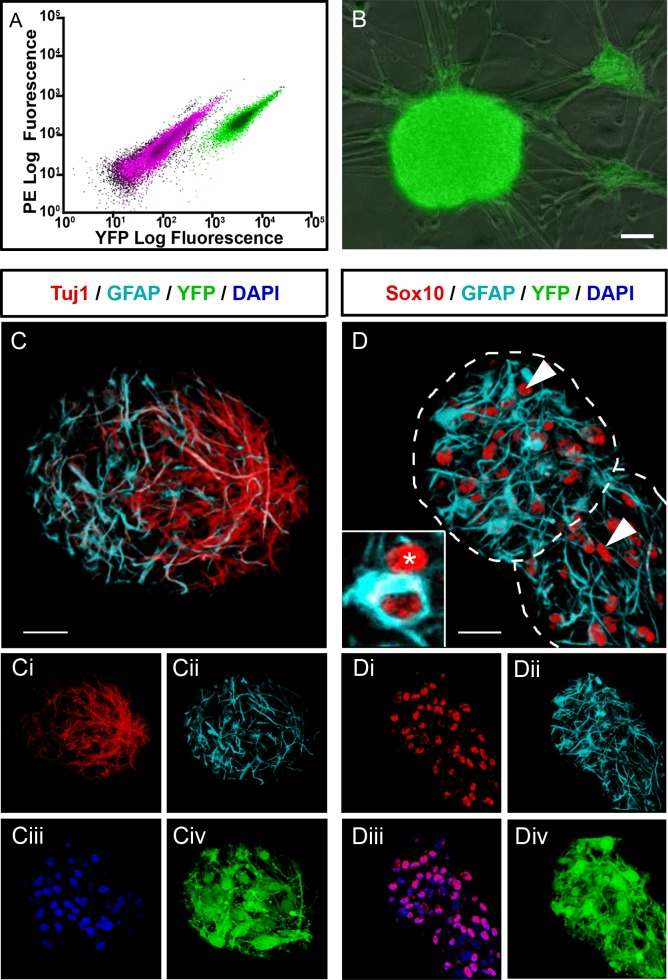
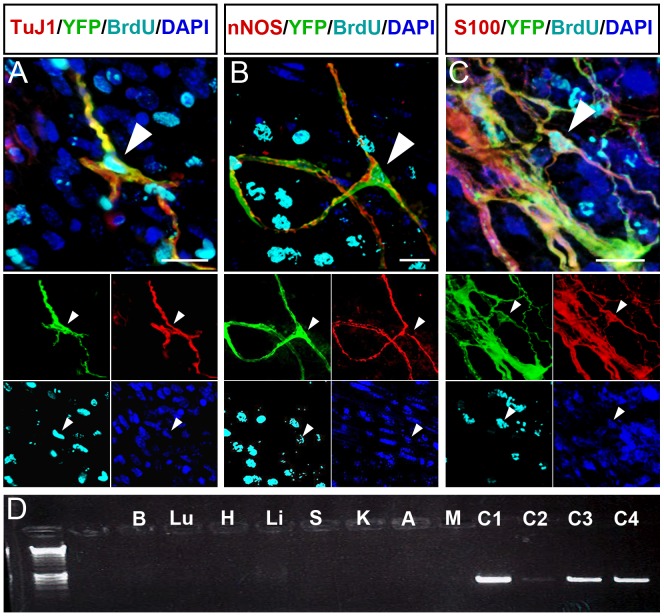
Neurospheres generated from yellow fluorescent protein (YFP) expressing ENCCs selected from postnatal Wnt1-cre;R26R-YFP/YFP murine gut were transplanted into ganglionic hindgut of wild-type littermates or aganglionic hindgut of Ednrbtm1Ywa mice (lacking functional endothelin receptor type-B). Intestines were then assessed for ENCC integration and differentiation using immunohistochemistry, cell function using calcium imaging, and long-term safety using PCR to detect off-target YFP expression.
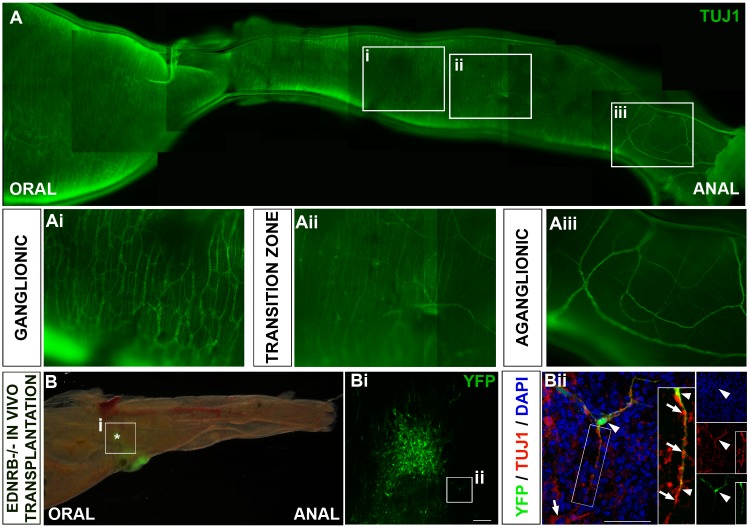
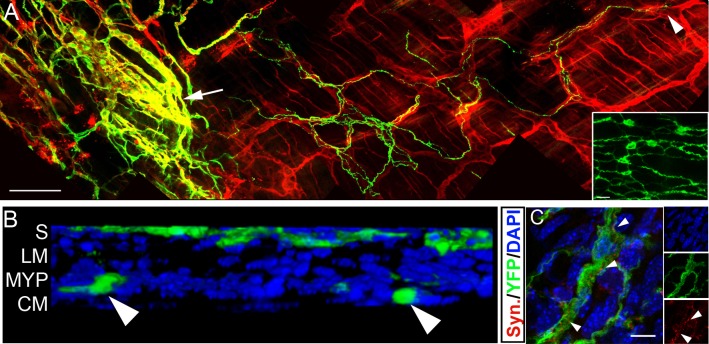
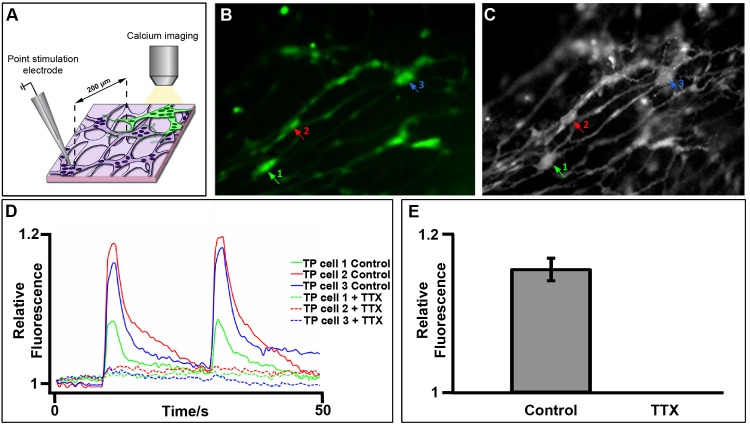
YFP+ ENCCs engrafted, proliferated and differentiated into enteric neurons and glia within recipient ganglionic gut. Transplanted cells and their projections spread along the endogenous myenteric plexus to form branching networks. Electrical point stimulation of endogenous nerve fibres resulted in calcium transients (F/F0 = 1.16 ± 0.01;43 cells, n = 6) in YFP+ transplanted ENCCs (abolished with TTX). Long-term follow-up (24 months) showed transplanted ENCCs did not give rise to tumours or spread to other organs (PCR negative in extraintestinal sites). In aganglionic gut ENCCs similarly spread and differentiated to form neuronal and glial networks with projections closely associated with endogenous neural networks of the transition zone.
Transplanted ENCCs successfully engrafted into recipient ganglionic and aganglionic gut showing appropriate spread, localisation and, importantly, functional integration without any long-term safety issues. This study provides key support for the development and use of enteric neural stem cell therapies.
肠道神经病变是严重的胃肠道疾病,治疗效果不尽人意。我们旨在通过将小鼠肠道神经嵴细胞(ENCCs)体内移植到有神经节和无神经节的小鼠肠道中,并分析功能整合和长期安全性,来研究肠道神经干细胞治疗方法对这类疾病的潜在作用。
从出生后Wnt1-cre;R26R-YFP/YFP小鼠肠道中选取表达黄色荧光蛋白(YFP)的ENCCs生成的神经球,移植到野生型同窝小鼠的有神经节后肠或Ednrbtm1Ywa小鼠(缺乏功能性内皮素B型受体)的无神经节后肠中。然后使用免疫组织化学评估肠道中ENCCs的整合和分化,使用钙成像评估细胞功能,使用聚合酶链反应(PCR)检测脱靶YFP表达评估长期安全性。
YFP+ ENCCs在受体有神经节的肠道内植入、增殖并分化为肠道神经元和神经胶质细胞。移植的细胞及其突起沿着内源性肌间神经丛扩散,形成分支网络。对内源性神经纤维进行电点刺激导致YFP+移植的ENCCs出现钙瞬变(F/F0 = 1.16 ± 0.01;43个细胞,n = 6)(TTX可消除)。长期随访(24个月)显示移植的ENCCs未引发肿瘤,也未扩散到其他器官(肠外部位PCR检测为阴性)。在无神经节的肠道中,ENCCs同样扩散并分化,形成神经元和神经胶质网络,其突起与过渡区的内源性神经网络紧密相连。
移植的ENCCs成功植入受体有神经节和无神经节的肠道,显示出适当的扩散、定位,重要的是功能整合,且没有任何长期安全性问题。本研究为肠道神经干细胞治疗的开发和应用提供了关键支持。