Moodley Nishila, Gray Glenda, Bertram Melanie
From the Perinatal HIV Research Unit, Faculty of Health Sciences, University of the Witwatersrand, Johannesburg (NM, GG); South African HVTN AIDS Vaccine Early Stage Investigator Program (SHAPe) (NM); The South African Department of Science and Technology/National Research Foundation (DST/NRF), Centre of Excellence in Epidemiological Modelling and Analysis (SACEMA), University of Stellenbosch, Stellenbosch, South Africa (NM); and Health Systems Governance and Finance, World Health Organization, Geneva (MB).
Medicine (Baltimore). 2016 Jan;95(4):e2528. doi: 10.1097/MD.0000000000002528.
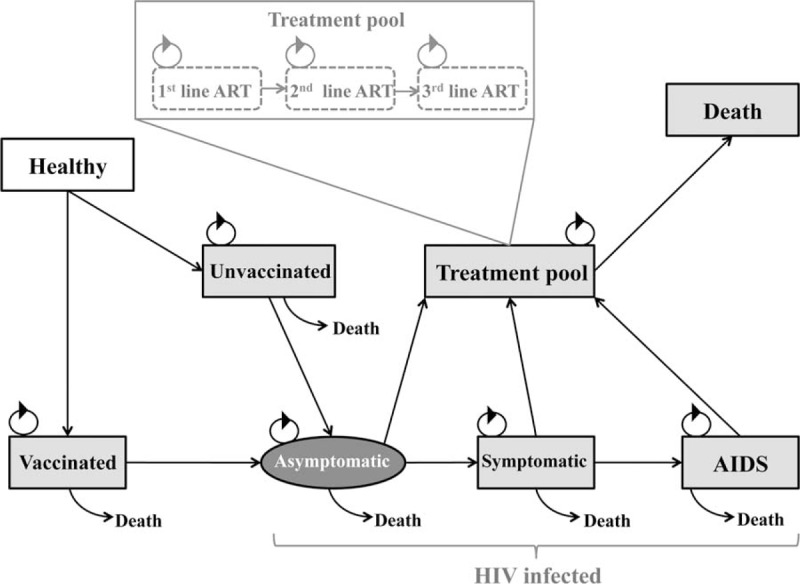
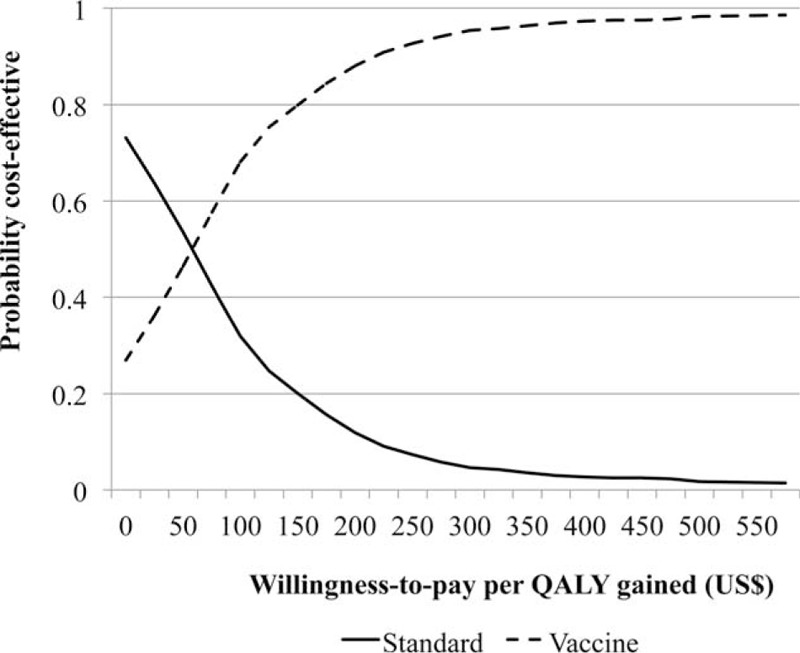
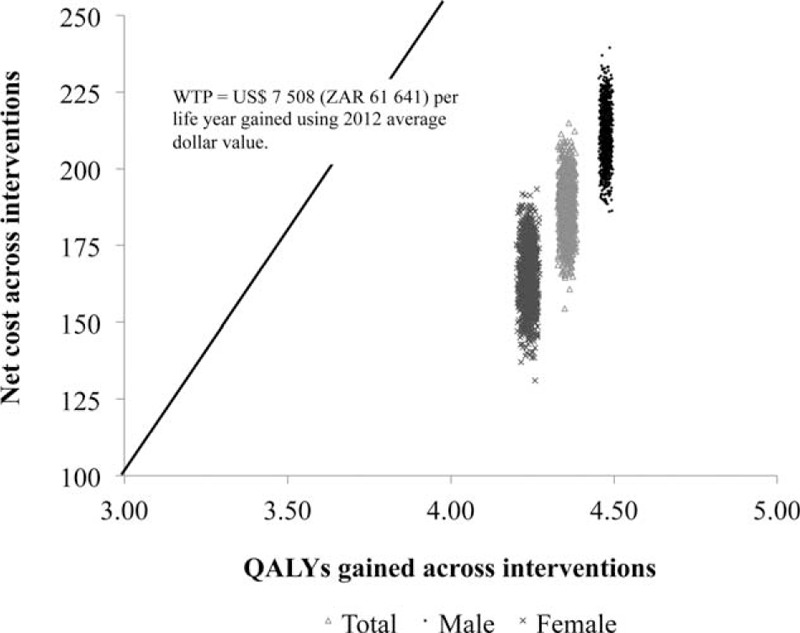
Despite comprising 0.7% of the world population, South Africa is home to 18% of the global human immunodeficiency virus (HIV) prevalence. Unyielding HIV subepidemics among adolescents threaten national attempts to curtail the disease burden. Should an HIV vaccine become available, establishing its point of entry into the health system becomes a priority. This study assesses the impact of school-based HIV vaccination and explores how variations in vaccine characteristics affect cost-effectiveness. The cost per quality adjusted life year (QALY) gained associated with school-based adolescent HIV vaccination services was assessed using Markov modeling that simulated annual cycles based on national costing data. The estimation was based on a life expectancy of 70 years and employs the health care provider perspective. The simultaneous implementation of HIV vaccination services with current HIV management programs would be cost-effective, even at relatively higher vaccine cost. At base vaccine cost of US$ 12, the incremental cost effectiveness ratio (ICER) was US$ 43 per QALY gained, with improved ICER values yielded at lower vaccine costs. The ICER was sensitive to duration of vaccine mediated protection and variations in vaccine efficacy. Data from this work demonstrate that vaccines offering longer duration of protection and at lower cost would result in improved ICER values. School-based HIV vaccine services of adolescents, in addition to current HIV prevention and treatment health services delivered, would be cost-effective.
尽管南非人口仅占世界人口的0.7%,但其艾滋病病毒(HIV)感染者却占全球HIV感染者的18%。青少年中持续存在的HIV亚型流行威胁着该国减轻疾病负担的努力。如果有HIV疫苗可用,确定其进入卫生系统的切入点将成为当务之急。本研究评估了以学校为基础的HIV疫苗接种的影响,并探讨了疫苗特性的差异如何影响成本效益。使用基于国家成本数据模拟年度周期的马尔可夫模型评估了与以学校为基础的青少年HIV疫苗接种服务相关的每获得一个质量调整生命年(QALY)的成本。该估计基于70岁的预期寿命,并采用医疗保健提供者的视角。即使在疫苗成本相对较高的情况下,将HIV疫苗接种服务与当前的HIV管理计划同时实施也具有成本效益。在疫苗基础成本为12美元时,每获得一个QALY的增量成本效益比(ICER)为43美元,在较低的疫苗成本下ICER值有所改善。ICER对疫苗介导的保护持续时间和疫苗效力的变化敏感。这项工作的数据表明,提供更长保护持续时间且成本更低的疫苗将导致ICER值改善。除了目前提供的HIV预防和治疗卫生服务外,以学校为基础的青少年HIV疫苗接种服务也具有成本效益。