Ilavenil Soundharrajan, Al-Dhabi Naif Abdullah, Srigopalram Srisesharam, Ock Kim Young, Agastian Paul, Baru Rajasekhar, Choi Ki Choon, Valan Arasu Mariadhas
Grassland and Forage Division, National Institute of Animal Science, RDA, Seonghwan-Eup, Cheonan-Si, Chungnam 330801, Korea.
Department of Botany and Microbiology, Addiriyah Chair for Environmental Studies, College of Science, King Saud University, P. O. Box 2455, Riyadh 11451, Saudi Arabia.
Molecules. 2016 Jan 28;21(2):161. doi: 10.3390/molecules21020161.
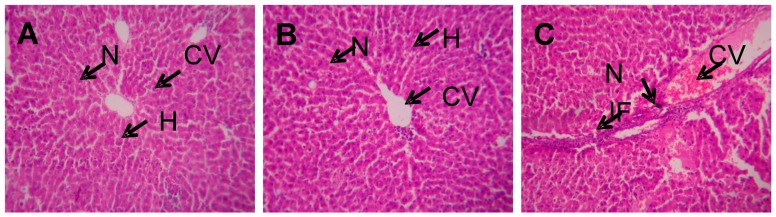
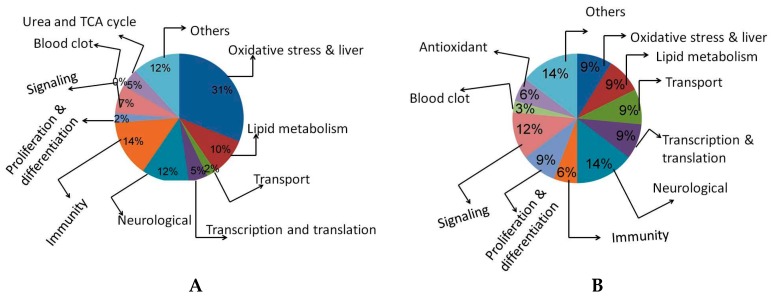
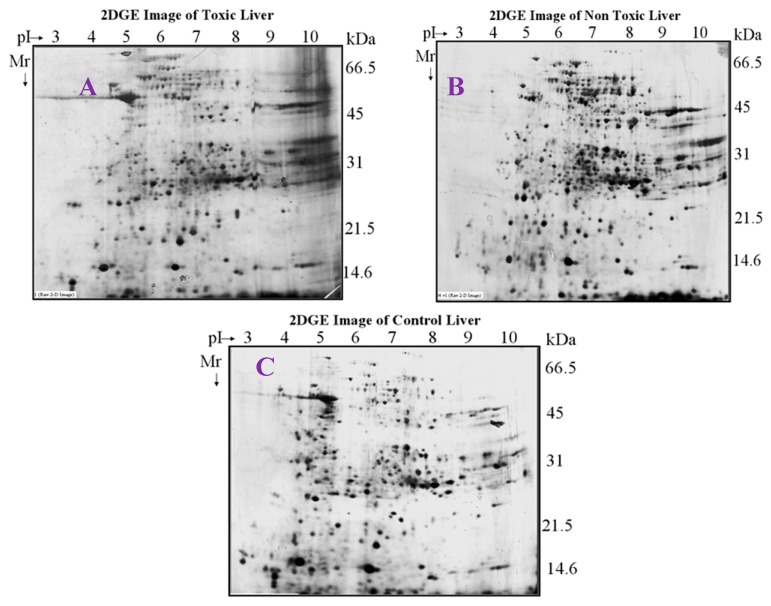
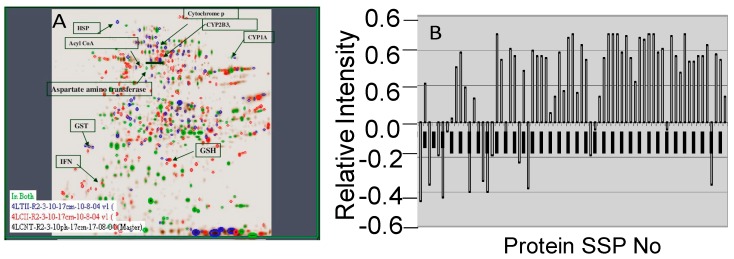
Understanding the mechanism of chemical toxicity, which is essential for cross-species and dose extrapolations, is a major challenge for toxicologists. Standard mechanistic studies in animals for examining the toxic and pathological changes associated with the chemical exposure have often been limited to the single end point or pathways. Toxicoproteomics represents a potential aid to the toxicologist to understand the multiple pathways involved in the mechanism of toxicity and also determine the biomarkers that are possible to predictive the toxicological response. We performed an acute toxicity study in Wistar rats with the prototype liver toxin; the acetaminophen (APAP) effects on protein profiles in the liver and its correlation with the plasma biochemical markers for liver injury were analyzed. Three separate groups--control, nontoxic (150 mg/kg) and toxic dose (1500 mg/kg) of APAP--were studied. The proteins extracted from the liver were separated by 2-DE and analyzed by MALDI-TOF. The differential proteins in the gels were analyzed by BIORAD's PDQuest software and identified by feeding the peptide mass fingerprint data to various public domain programs like Mascot and MS-Fit. The identified proteins in toxicity-induced rats were classified based on their putative protein functions, which are oxidative stress (31%), immunity (14%), neurological related (12%) and transporter proteins (2%), whereas in non-toxic dose-induced rats they were oxidative stress (9%), immunity (6%), neurological (14%) and transporter proteins (9%). It is evident that the percentages of oxidative stress and immunity-related proteins were up-regulated in toxicity-induced rats as compared with nontoxic and control rats. Some of the liver drug metabolizing and detoxifying enzymes were depleted under toxic conditions compared with non-toxic rats. Several other proteins were identified as a first step in developing an in-house rodent liver toxicoproteomics database.
理解化学毒性机制是毒理学家面临的一项重大挑战,而这一机制对于跨物种和剂量外推至关重要。在动物身上进行的用于研究与化学物质暴露相关的毒性和病理变化的标准机制研究,通常仅限于单一终点或途径。毒理蛋白质组学为毒理学家理解毒性机制中涉及的多种途径以及确定可能预测毒理学反应的生物标志物提供了潜在帮助。我们用原型肝毒素对Wistar大鼠进行了急性毒性研究;分析了对乙酰氨基酚(APAP)对肝脏蛋白质谱的影响及其与肝损伤血浆生化标志物的相关性。研究了三个独立的组——对照组、无毒(150毫克/千克)和有毒剂量(1500毫克/千克)的APAP组。从肝脏中提取的蛋白质通过二维电泳进行分离,并通过基质辅助激光解吸电离飞行时间质谱进行分析。凝胶中的差异蛋白质通过伯乐公司的PDQuest软件进行分析,并通过将肽质量指纹数据输入到各种公共领域程序(如Mascot和MS-Fit)中进行鉴定。根据其假定的蛋白质功能对毒性诱导大鼠中鉴定出的蛋白质进行分类,即氧化应激(31%)、免疫(14%)、神经相关(12%)和转运蛋白(2%),而在无毒剂量诱导的大鼠中,它们分别为氧化应激(9%)、免疫(6%)、神经(14%)和转运蛋白(9%)。显然,与无毒和对照大鼠相比,毒性诱导大鼠中氧化应激和免疫相关蛋白质的百分比上调。与无毒大鼠相比,在毒性条件下一些肝脏药物代谢和解毒酶减少。鉴定出的其他几种蛋白质是建立内部啮齿动物肝脏毒理蛋白质组学数据库的第一步。