Zhang Han, Si Yali, Wang Xiaofeng, Gong Peng
Ministry of Education Key Laboratory for Earth System Modeling, Center for Earth System Science, Institute for Global Change Studies, Tsinghua University, Beijing 100084, China.
Joint Center for Global Change Studies, Beijing 100875, China.
Int J Environ Res Public Health. 2016 Jan 27;13(2):164. doi: 10.3390/ijerph13020164.
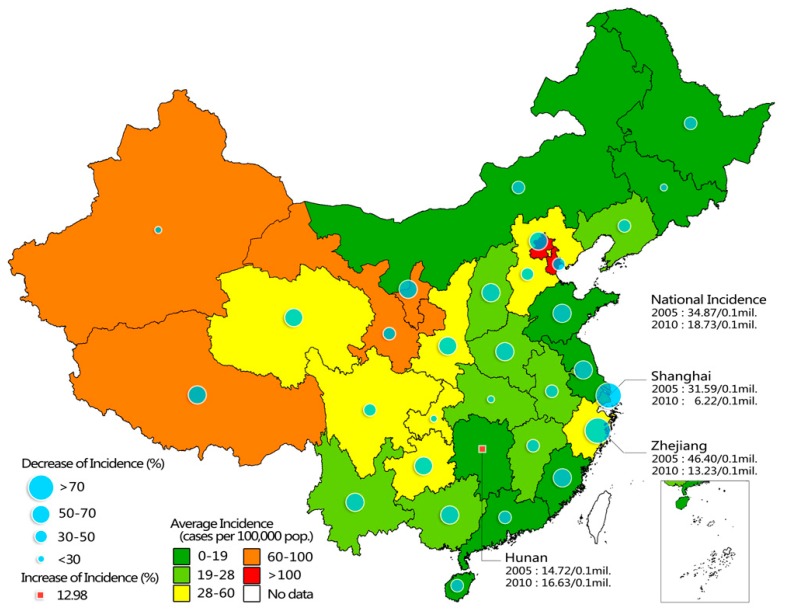
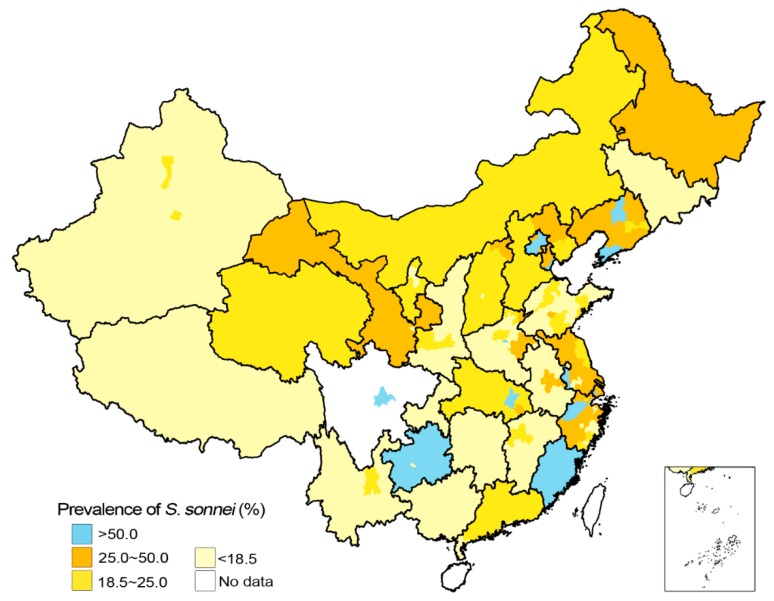
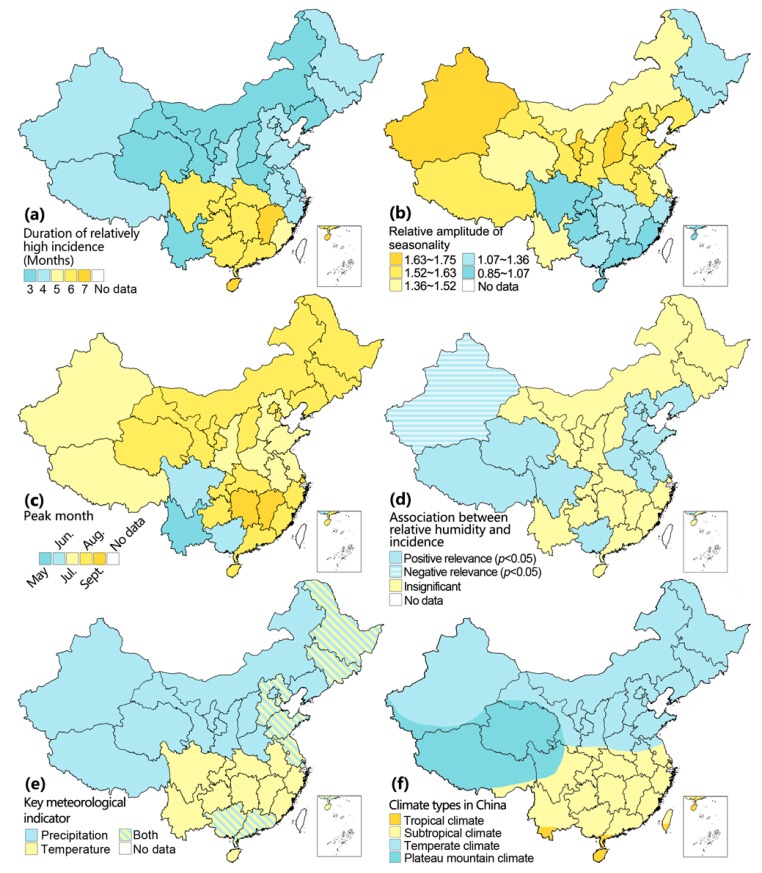
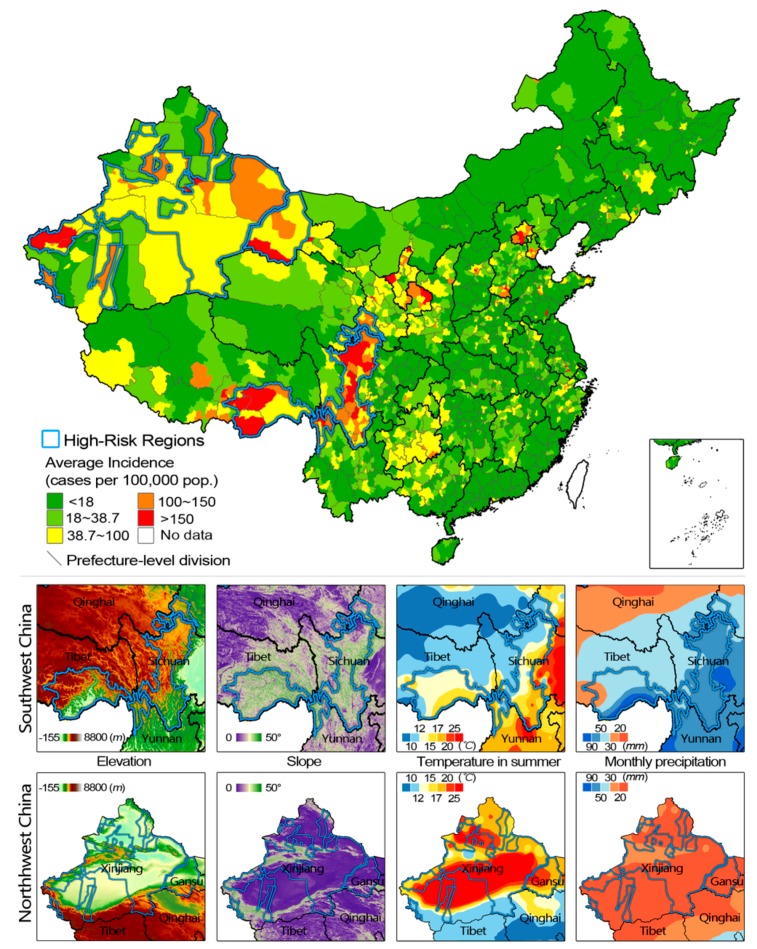
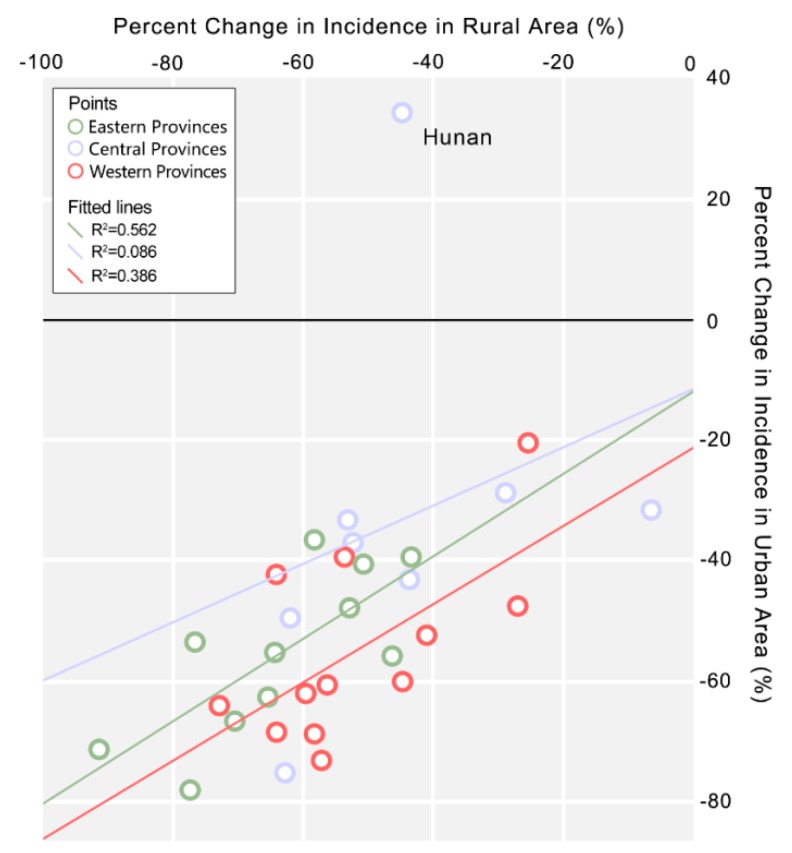
Although the incidence of bacillary dysentery in China has been declining progressively, a considerable disease burden still exists. Few studies have analyzed bacillary dysentery across China and knowledge gaps still exist in the aspects of geographic distribution and ecological drivers, seasonality and its association with meteorological factors, urban-rural disparity, prevalence and distribution of Shigella species. Here, we performed nationwide analyses to fill the above gaps. Geographically, we found that incidence increased along an east-west gradient which was inversely related to the economic conditions of China. Two large endemically high-risk regions in western China and their ecological drivers were identified for the first time. We characterized seasonality of bacillary dysentery incidence and assessed its association with meteorological factors, and saw that it exhibits north-south differences in peak duration, relative amplitude and key meteorological factors. Urban and rural incidences among China's cities were compared, and disparity associated with urbanization level was invariant in most cities. Balanced decrease of urban and rural incidence was observed for all provinces except Hunan. S. flexneri and S. sonnei were identified as major causative species. Increasing prevalence of S. sonnei and geographic distribution of Shigella species were associated with economic status. Findings and inferences from this study draw broader pictures of bacillary dysentery in mainland China and could provide useful information for better interventions and public health planning.
尽管中国细菌性痢疾的发病率一直在逐步下降,但仍存在相当大的疾病负担。很少有研究对中国各地的细菌性痢疾进行分析,在地理分布和生态驱动因素、季节性及其与气象因素的关联、城乡差异、志贺菌属的流行情况和分布等方面仍存在知识空白。在此,我们进行了全国范围的分析以填补上述空白。在地理方面,我们发现发病率沿东西梯度上升,这与中国的经济状况呈负相关。首次确定了中国西部两个地方性高风险大区及其生态驱动因素。我们对细菌性痢疾发病率的季节性进行了特征描述,并评估了其与气象因素的关联,发现其在高峰持续时间、相对幅度和关键气象因素方面存在南北差异。比较了中国各城市的城乡发病率,发现大多数城市中与城市化水平相关的差异是不变的。除湖南外,所有省份的城乡发病率均呈均衡下降。福氏志贺菌和宋内志贺菌被确定为主要致病菌种。宋内志贺菌流行率的上升和志贺菌属的地理分布与经济状况有关。本研究的结果和推论描绘了中国大陆细菌性痢疾的更广泛图景,并可为更好的干预措施和公共卫生规划提供有用信息。