Li Zhenjun, Wang Ligui, Sun Weige, Hou Xuexin, Yang Haiyan, Sun Lina, Xu Shuai, Sun Qiangzheng, Zhang Jingshan, Song Hongbin, Lin Hualiang
1] State Key Laboratory for Infectious Disease Prevention and Control, National Institute for Communicable Disease Control and Prevention, Chinese Center for Disease Control and Prevention; Collaborative Innovation Center for Diagnosis and Treatment of Infectious Diseases [2].
Sci Rep. 2013 Nov 21;3:3239. doi: 10.1038/srep03239.
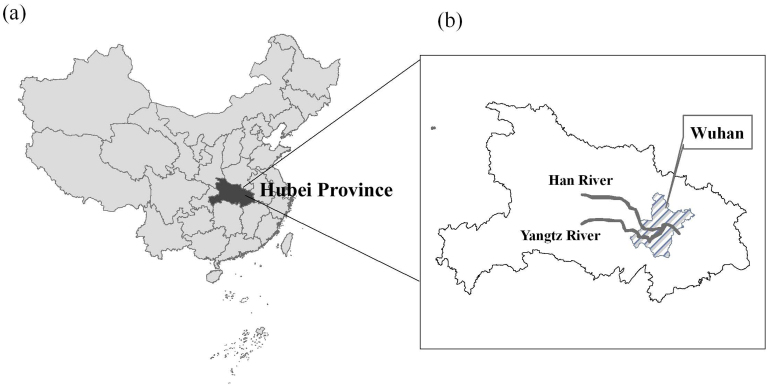
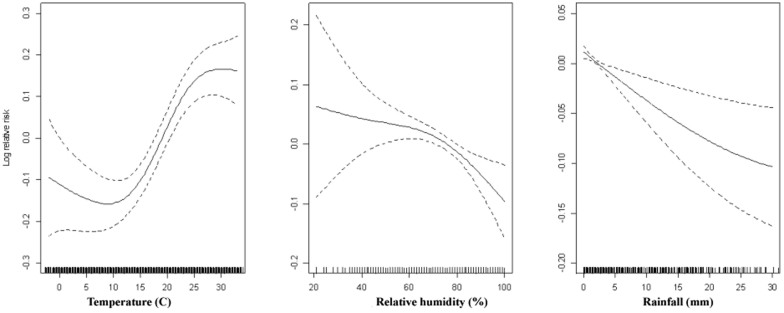
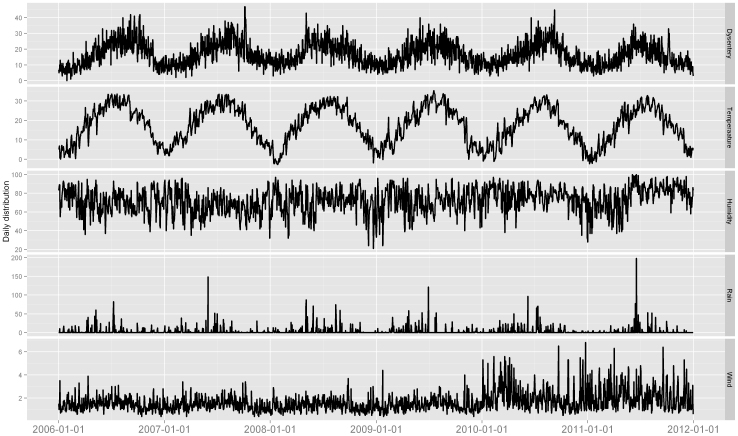
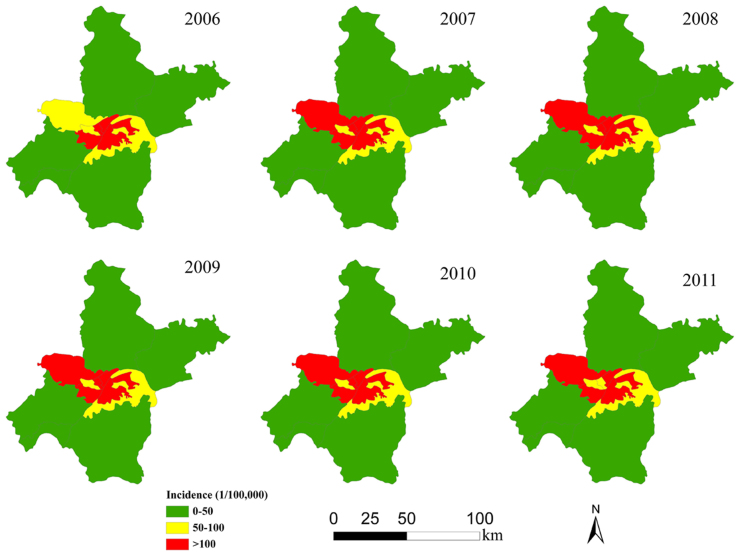
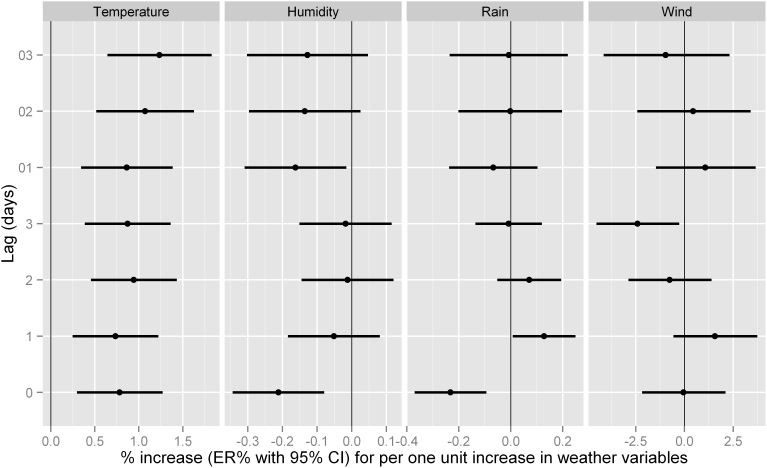
Spatial distribution of bacillary dysentery incidence was mapped at the district level in Wuhan, China. And a generalized additive time series model was used to examine the effect of daily weather factors on bacillary dysentery in the high-risk areas, after controlling for potential confounding factors. Central districts were found to be the high-risk areas. The time series analysis found an acute effect of meteorological factors on bacillary dysentery occurrence. A positive association was found for mean temperature (excess risk (ER) for 1°C increase being 0.94% (95% confidence interval (CI): 0.46% to 1.43% on the lag day 2), while a negative effect was observed for relative humidity and rainfall, the ER for 1% increase in relative humidity was -0.21% (95% CI: -0.34% to -0.08%), and the ER for 1 mm increase in rainfall was -0.23% (95% CI: -0.37% to -0.09%). This study suggests that bacillary dysentery prevention and control strategy should consider local weather variations.
在中国武汉,绘制了区级层面的细菌性痢疾发病率空间分布图。在控制潜在混杂因素后,使用广义相加时间序列模型研究了高风险地区每日天气因素对细菌性痢疾的影响。发现中心城区是高风险地区。时间序列分析发现气象因素对细菌性痢疾的发生有急性影响。发现平均温度呈正相关(滞后第2天温度每升高1°C,超额风险(ER)为0.94%(95%置信区间(CI):0.46%至1.43%)),而相对湿度和降雨量呈负效应,相对湿度每增加1%,ER为-0.21%(95%CI:-0.34%至-0.08%),降雨量每增加1毫米,ER为-0.23%(95%CI:-0.37%至-0.09%)。本研究表明,细菌性痢疾防控策略应考虑当地天气变化。