Hedayati Mohammad, Haffner Michael C, Coulter Jonathan B, Raval Raju R, Zhang Yonggang, Zhou Haoming, Mian Omar, Knight Emma J, Razavi Nina, Dalrymple Susan, Isaacs John T, Santos Aileen, Hales Russell, Nelson William G, Yegnasubramanian Srinivasan, DeWeese Theodore L
Department of Radiation Oncology and Molecular Radiation Sciences, Sidney Kimmel Comprehensive Cancer Center, The Johns Hopkins University School of Medicine, Baltimore, MD.
Department of Oncology, Sidney Kimmel Comprehensive Cancer Center, The Johns Hopkins University School of Medicine, Baltimore, MD.
Clin Cancer Res. 2016 Jul 1;22(13):3310-3319. doi: 10.1158/1078-0432.CCR-15-1147. Epub 2016 Feb 1.
The current standard of care for patients with locally advanced prostate cancer is a combination of androgen deprivation and radiation therapy. Radiation is typically given with androgen suppression when testosterone levels are at their nadir. Recent reports have shown that androgen stimulation of androgen-deprived prostate cancer cells leads to formation of double-strand breaks (DSB). Here, we exploit this finding and investigate the extent and timing of androgen-induced DSBs and their effect on tumor growth following androgen stimulation in combination with ionizing radiation (IR).
Androgen-induced DNA damage was assessed by comet assays and γH2A.X foci formation. Effects of androgen stimulation and radiation were determined in vitro and in vivo with xenograft models.
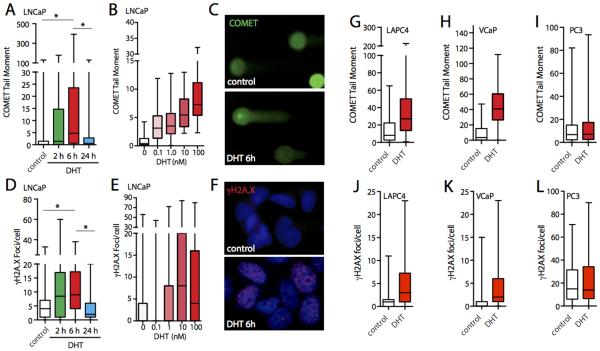
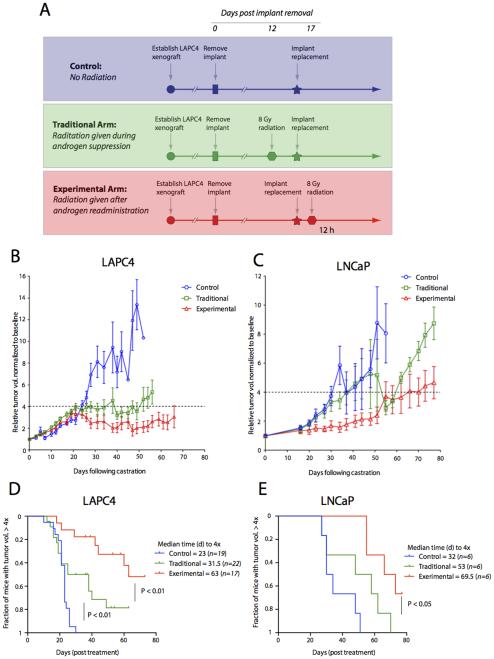
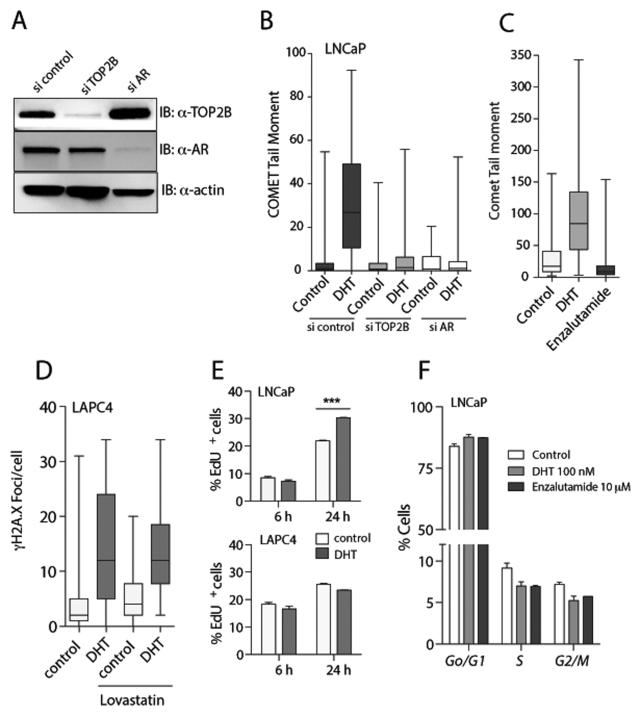
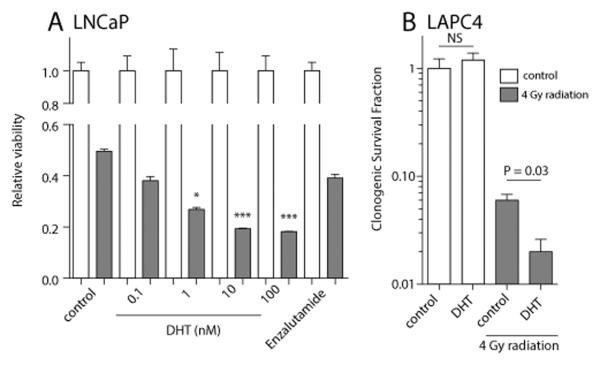
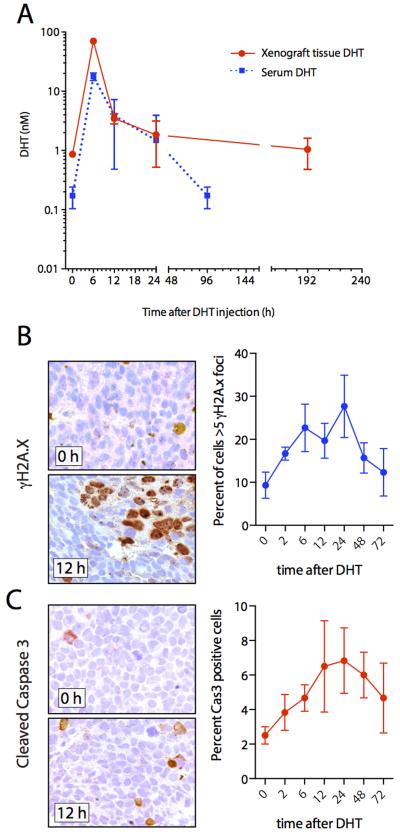
We document that androgen treatment of androgen-deprived prostate cancer cell lines resulted in a dose- and time-dependent induction of widespread DSBs. Generation of these breaks was dependent on androgen receptor and topoisomerase II beta but not on cell-cycle progression. In vitro models demonstrated a synergistic interaction between IR and androgen stimulation when IR is given at a time point corresponding with high levels of androgen-induced DSB formation. Furthermore, in vivo studies showed a significant improvement in tumor growth delay when radiation was given shortly after androgen repletion in castrated mice.
These results suggest a potential cooperative effect and improved tumor growth delay with androgen-induced DSBs and radiation with implications for improving the therapeutic index of prostate cancer radiation therapy. Clin Cancer Res; 22(13); 3310-9. ©2016 AACRSee related commentary by Chua and Bristow, p. 3124.
局部晚期前列腺癌患者目前的标准治疗方案是雄激素剥夺疗法与放射治疗相结合。通常在睾酮水平处于最低点时,在雄激素抑制的同时进行放射治疗。最近的报告显示,雄激素对去势的前列腺癌细胞的刺激会导致双链断裂(DSB)的形成。在此,我们利用这一发现,研究雄激素诱导的DSB的程度和时间,以及在雄激素刺激与电离辐射(IR)联合作用后对肿瘤生长的影响。
通过彗星试验和γH2A.X焦点形成评估雄激素诱导的DNA损伤。利用异种移植模型在体外和体内确定雄激素刺激和辐射的效果。
我们证明,对去势的前列腺癌细胞系进行雄激素治疗会导致广泛的DSB呈剂量和时间依赖性诱导。这些断裂的产生依赖于雄激素受体和拓扑异构酶IIβ,但不依赖于细胞周期进程。体外模型表明,当在与高水平雄激素诱导的DSB形成相对应的时间点给予IR时,IR与雄激素刺激之间存在协同相互作用。此外,体内研究表明,在去势小鼠中雄激素补充后不久给予放射治疗,肿瘤生长延迟有显著改善。
这些结果表明,雄激素诱导的DSB与放射治疗之间可能存在协同作用,并改善肿瘤生长延迟,这对提高前列腺癌放射治疗的治疗指数具有重要意义。《临床癌症研究》;22(13);3310 - 9。©2016美国癌症研究协会。见Chua和Bristow的相关评论,第3124页。