Kuracha Murali R, Thomas Peter, Loggie Brian W, Govindarajan Venkatesh
Department of Surgery, Creighton University, 2500 California Plaza, Omaha, Nebraska, 68178.
Department of Biomedical Sciences, Creighton University, 2500 California Plaza, Omaha, Nebraska, 68178.
Cancer Med. 2016 Apr;5(4):711-9. doi: 10.1002/cam4.640. Epub 2016 Feb 2.
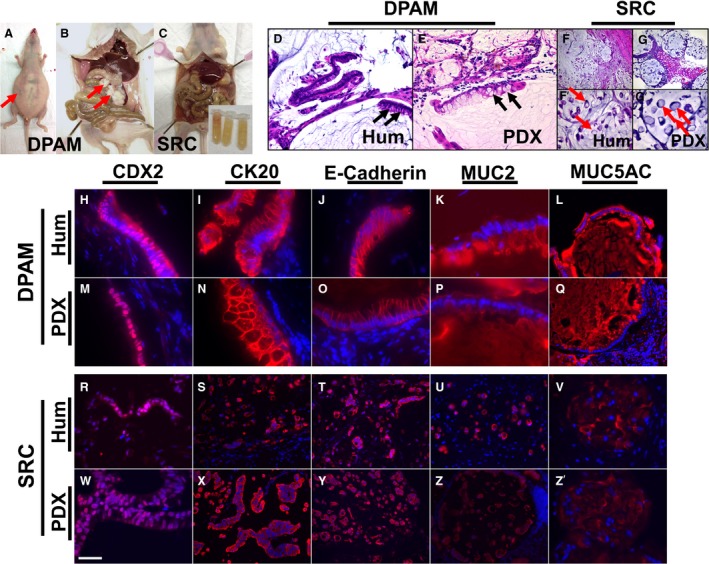
Pseudomyxoma peritonei (PMP) is a neoplastic syndrome characterized by peritoneal tumor implants with copious mucinous ascites. The standard of care for PMP patients is aggressive cytoreductive surgery performed in conjunction with heated intraperitoneal chemotherapy. Not all patients are candidates for these procedures and a majority of the patients will have recurrent disease. In addition to secreted mucin, inflammation and fibrosis are central to PMP pathogenesis but the molecular processes that regulate tumor-stromal interactions within the peritoneal tumor microenvironment remain largely unknown. This knowledge is critical not only to elucidate PMP pathobiology but also to identify novel targets for therapy. Here, we report the generation of patient-derived xenograft (PDX) mouse models for PMP and assess the ability of these models to replicate the inflammatory peritoneal microenvironment of human PMP patients. PDX mouse models of low- and high-grade PMP were generated and were of a similar histopathology as human PMP. Cytokines previously shown to be elevated in human PMP were also elevated in PDX ascites. Significant differences in IL-6 and IL-8/KC/MIP2 were seen between human and PDX ascites. Interestingly, these cytokines were mostly secreted by mouse-derived, tumor-associated stromal cells rather than by human-derived PMP tumor cells. Our data suggest that the PMP PDX mouse models are especially suited to the study of tumor-stromal interactions that regulate the peritoneal inflammatory environment in PMP as the tumor and stromal cells in these mouse models are of human and murine origins, respectively. These mouse models are therefore, likely to be useful in vivo surrogates for testing and developing novel therapeutic treatment interventions for PMP.
腹膜假黏液瘤(PMP)是一种肿瘤综合征,其特征为腹膜肿瘤种植伴大量黏液性腹水。PMP患者的标准治疗方案是积极的减瘤手术联合热腹腔内化疗。并非所有患者都适合这些手术,大多数患者会出现疾病复发。除了分泌的黏蛋白外,炎症和纤维化是PMP发病机制的核心,但调节腹膜肿瘤微环境内肿瘤-基质相互作用的分子过程仍 largely未知。这一知识不仅对于阐明PMP病理生物学至关重要,而且对于确定新的治疗靶点也至关重要。在此,我们报告了PMP患者来源的异种移植(PDX)小鼠模型的建立,并评估了这些模型复制人类PMP患者炎性腹膜微环境的能力。建立了低级别和高级别PMP的PDX小鼠模型,其组织病理学与人类PMP相似。先前在人类PMP中显示升高的细胞因子在PDX腹水中也升高。人类和PDX腹水之间在IL-6和IL-8/KC/MIP2方面存在显著差异。有趣的是,这些细胞因子大多由小鼠来源的肿瘤相关基质细胞分泌,而非人类来源的PMP肿瘤细胞。我们的数据表明,PMP PDX小鼠模型特别适合研究调节PMP腹膜炎症环境的肿瘤-基质相互作用,因为这些小鼠模型中的肿瘤细胞和基质细胞分别来源于人类和小鼠。因此,这些小鼠模型可能是用于测试和开发PMP新型治疗干预措施的有用体内替代物。