Moczko Tobias R, Bugaj Till J, Herzog Wolfgang, Nikendei Christoph
Department for General Internal and Psychosomatic Medicine, University Hospital of Heidelberg, Heidelberg, Germany; School of Medicine, Faculty of Health, Witten/Herdecke University, Witten, Germany.
Department for General Internal and Psychosomatic Medicine, University Hospital of Heidelberg, Heidelberg, Germany.
Adv Med Educ Pract. 2016 Jan 14;7:15-27. doi: 10.2147/AMEP.S94105. eCollection 2016.
This study was designed to explore final-year medical students' stressors and coping strategies at the transition to the clinical workplace.
In this qualitative study, semi-standardized interviews with eight final-year medical students (five male, three female; aged 25.9±1.4 years) were conducted during their internal medicine rotation. After verbatim transcription, a qualitative content analysis of students' impressions of stress provoking and easing factors during final-year education was performed.
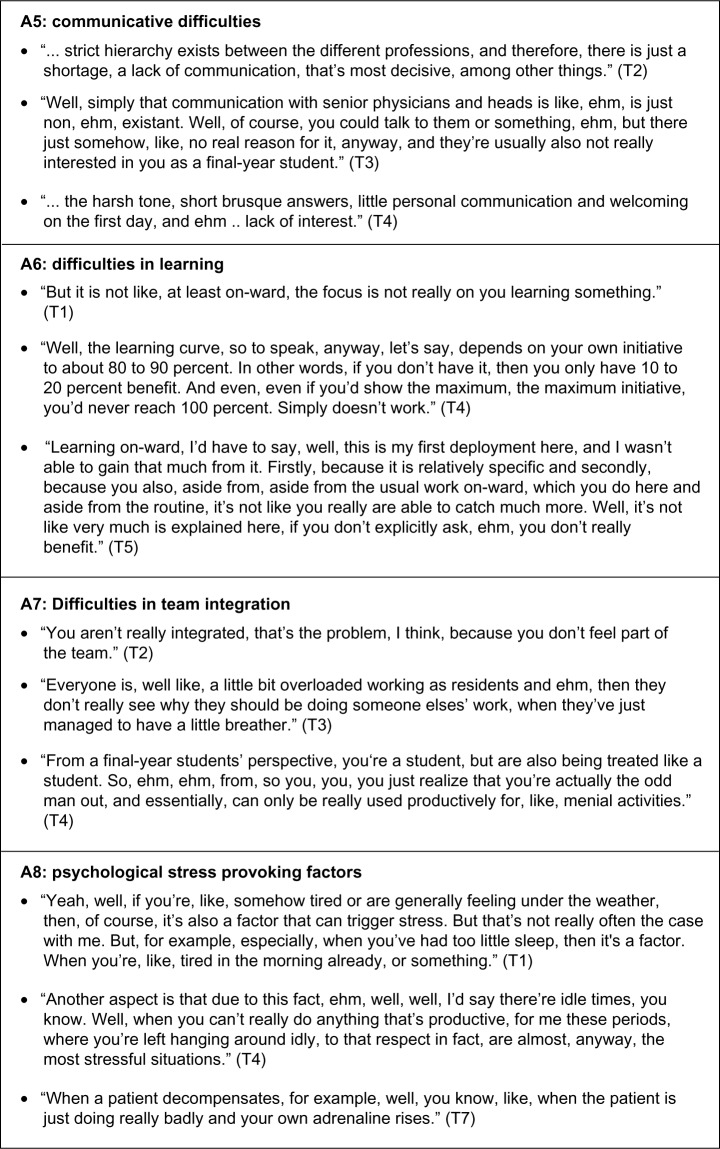
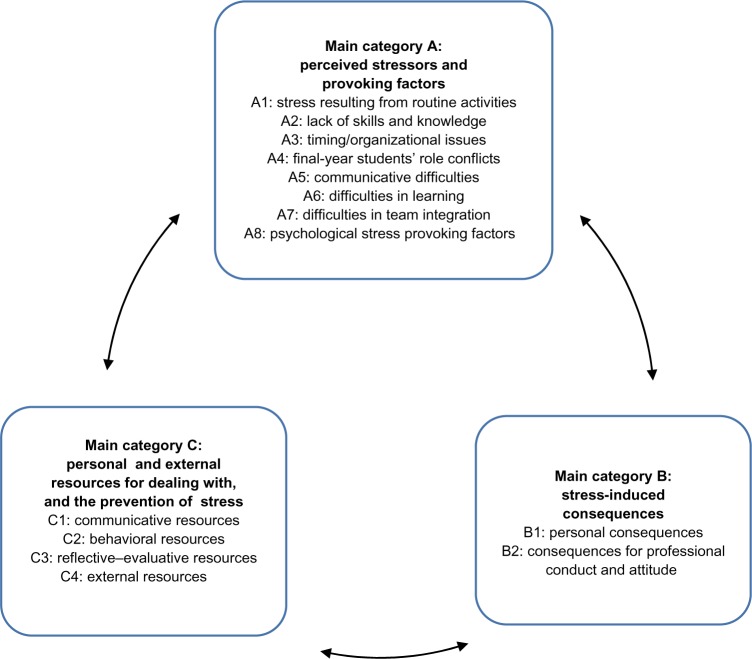
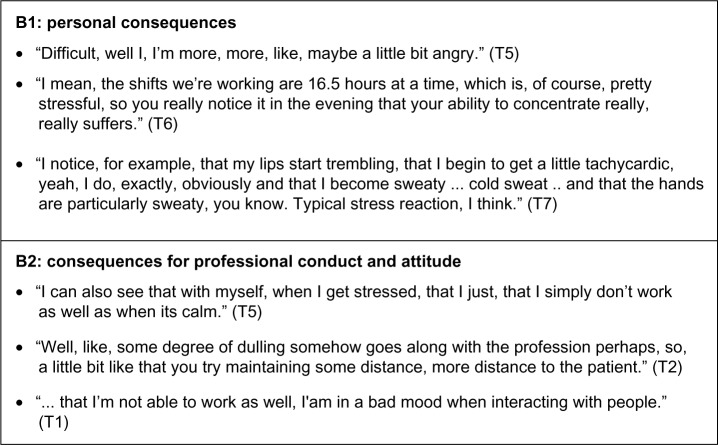
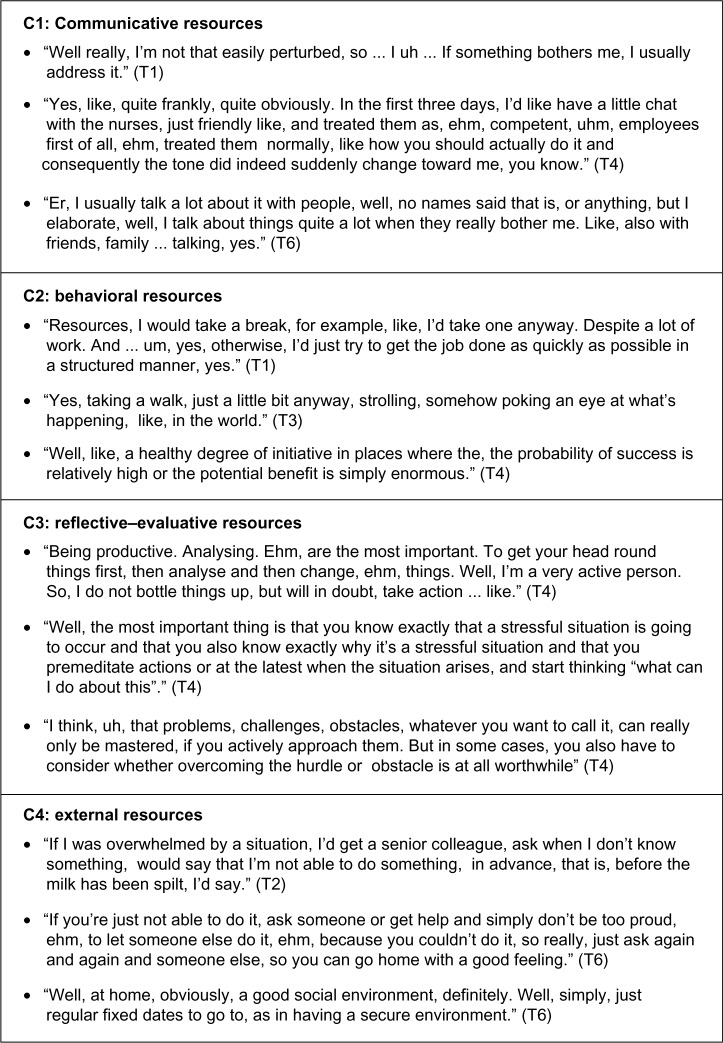
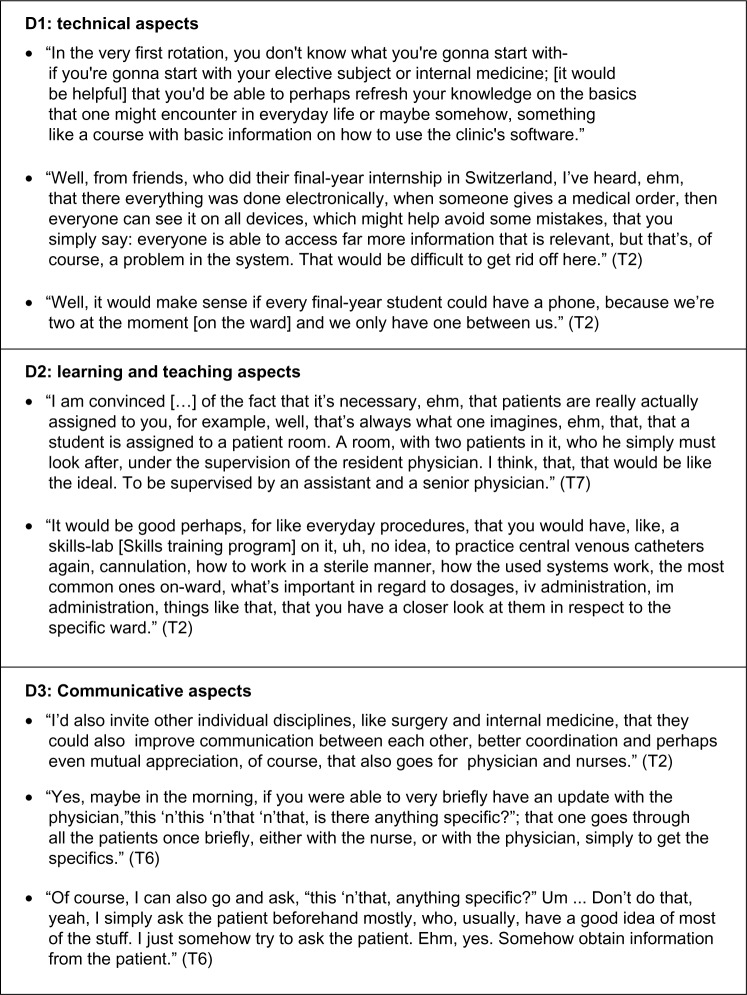
Students' statements regarding burdens and dealing with stress were classified into four main categories: A) perceived stressors and provoking factors, B) stress-induced consequences, C) personal and external resources for preventing and dealing with stress, and D) final-year students' suggestions for workplace improvement.
Final-year medical students perceived different types of stress during their transition to medical wards, and reported both negative consequences and coping resources concerning perceived stress. As supervision, feedback, and coping strategies played an important role in the students' perception of stress, final-year medical education curricula development should focus on these specifically.
本研究旨在探讨医学专业最后一年的学生在向临床工作场所过渡时的压力源及应对策略。
在这项定性研究中,对八名医学专业最后一年的学生(五名男性,三名女性;年龄25.9±1.4岁)在内科轮转期间进行了半标准化访谈。逐字转录后,对学生在最后一年学习期间对压力诱发因素和缓解因素的印象进行了定性内容分析。
学生关于负担和应对压力的陈述分为四大类:A)感知到的压力源和诱发因素,B)压力诱发的后果,C)预防和应对压力的个人及外部资源,D)医学专业最后一年的学生对工作场所改进的建议。
医学专业最后一年的学生在向医疗病房过渡期间感受到了不同类型的压力,并报告了与感知到的压力相关的负面后果及应对资源。由于监督、反馈和应对策略在学生对压力的感知中起着重要作用,医学专业最后一年的医学教育课程开发应特别关注这些方面。