Choudhary Mahipal, van Mastrigt Ron, van Asselt Els
Department of Urology, Sector FURORE, Room EE1630, Erasmus MC, Dr. Molewaterplein 50, 3015 GE Rotterdam, The Netherlands.
Springerplus. 2016 Jan 15;5:35. doi: 10.1186/s40064-016-1687-6. eCollection 2016.
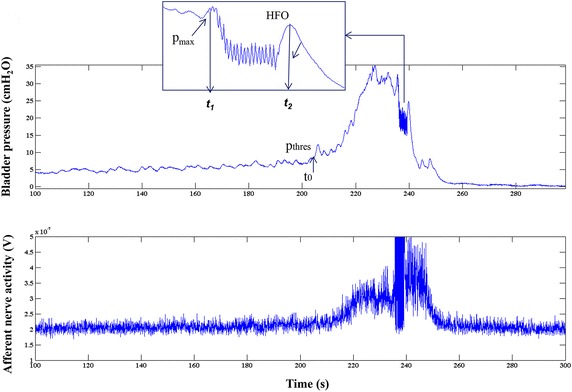
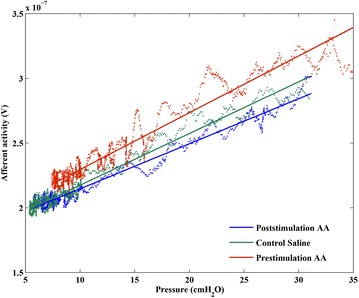
Tibial nerve stimulation (TNS) is a form of peripheral neuromodulation which has been found effective in treating overactive bladder symptoms, with lesser side effects than first line pharmacotherapy. Despite its widespread clinical use, the underlying mechanism of action is not fully understood. Our aim was to study its effect on the bladder neurophysiology and the trigger mechanism of voiding in the overactive detrusor, simulated by acetic acid (AA) instillation. In urethane anaesthetized male Wistar rats, the tibial nerve was stimulated for 30 min at 5 Hz, pulse width 200 µs and amplitude approximately three times the threshold to induce a slight toe movement. The pressure at which a voiding contraction was triggered (pthres) did not change significantly between the pre- and post-TNS measurements in AA induced detrusor overactivity. It was found that TNS significantly reversed the effects of AA irritation by increasing the bladder compliance and the bladder volume at pthres, as well as suppressed the threshold afferent nerve activity. The slope of the linear relationship between pressure and the afferent activity increased after AA instillation and decreased significantly after stimulation. In addition to its well-known central inhibitory mechanisms, this study has demonstrated that TNS improves bladder storage capacity by delaying the onset of voiding, via an inhibitory effect on the bladder afferent signaling at the peripheral level.
胫神经刺激(TNS)是一种外周神经调节方式,已被发现可有效治疗膀胱过度活动症症状,且副作用比一线药物治疗更少。尽管其在临床广泛应用,但其潜在作用机制尚未完全明确。我们的目的是研究其对膀胱神经生理学的影响以及在由醋酸(AA)灌注模拟的逼尿肌过度活动中排尿的触发机制。在氨基甲酸乙酯麻醉的雄性Wistar大鼠中,以5Hz的频率、200µs的脉宽以及约为阈值三倍的幅度刺激胫神经30分钟,以诱发轻微的脚趾运动。在AA诱导的逼尿肌过度活动中,TNS测量前后触发排尿收缩的压力(pthres)无显著变化。研究发现,TNS通过增加膀胱顺应性和pthres时的膀胱容量,显著逆转了AA刺激的影响,并抑制了阈值传入神经活动。AA灌注后压力与传入活动之间线性关系的斜率增加,刺激后显著降低。除了其众所周知的中枢抑制机制外,本研究还表明,TNS通过在外周水平对膀胱传入信号的抑制作用,延迟排尿的起始来提高膀胱储尿能力。