Song Ren, Koyuncu Orkide O, Greco Todd M, Diner Benjamin A, Cristea Ileana M, Enquist Lynn W
Department of Molecular Biology, Princeton University, Princeton, New Jersey, USA Princeton Neuroscience Institute, Princeton University, Princeton, New Jersey, USA.
Department of Molecular Biology, Princeton University, Princeton, New Jersey, USA.
mBio. 2016 Feb 2;7(1):e02145-15. doi: 10.1128/mBio.02145-15.
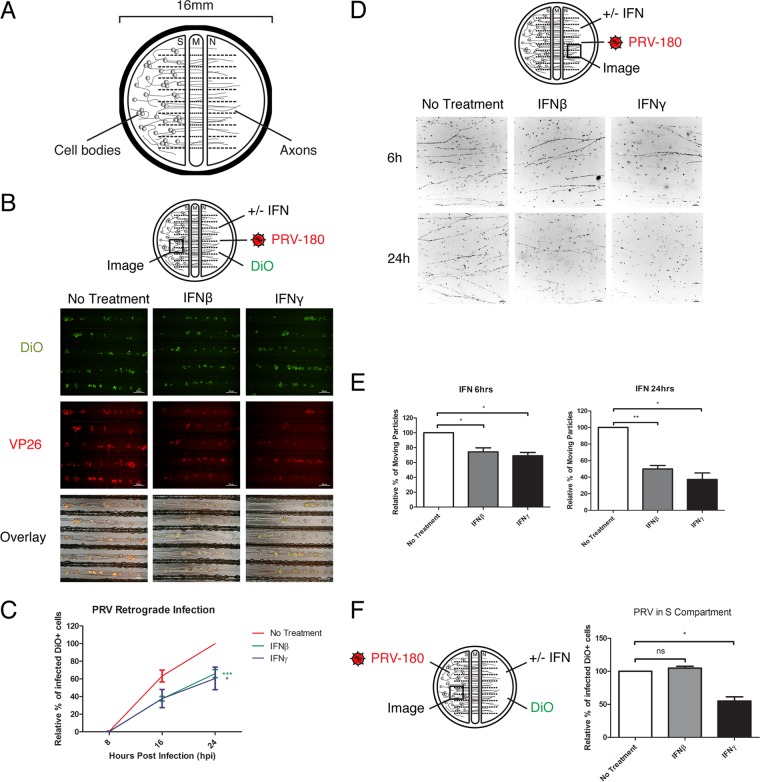
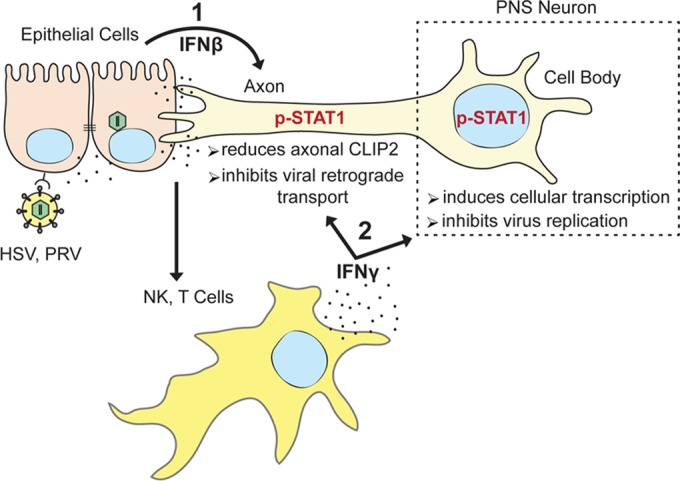
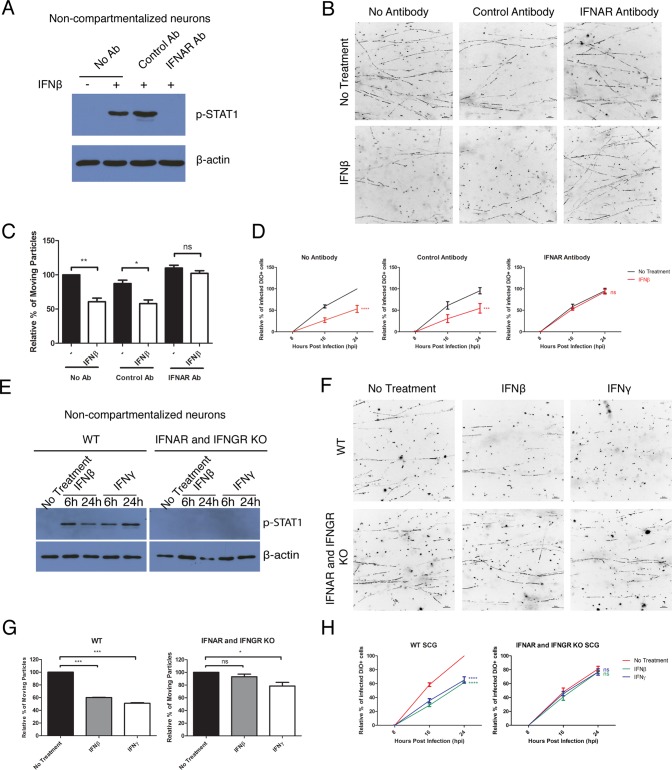
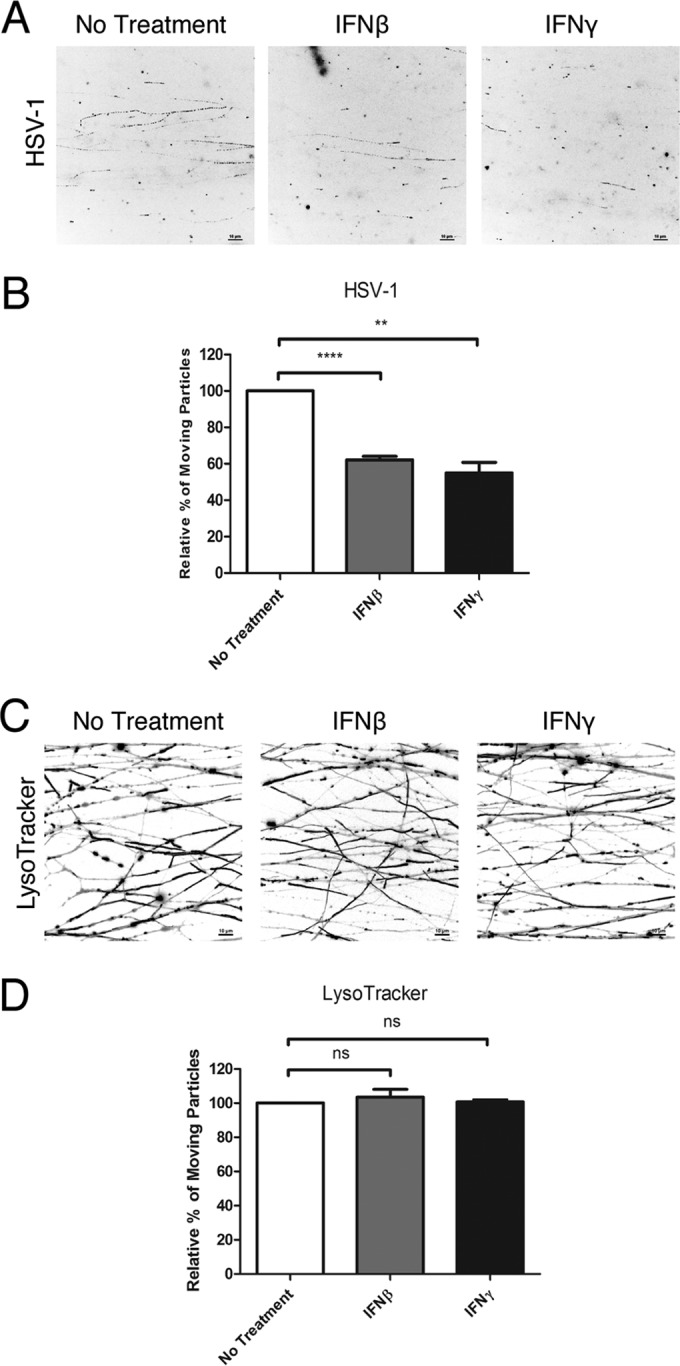
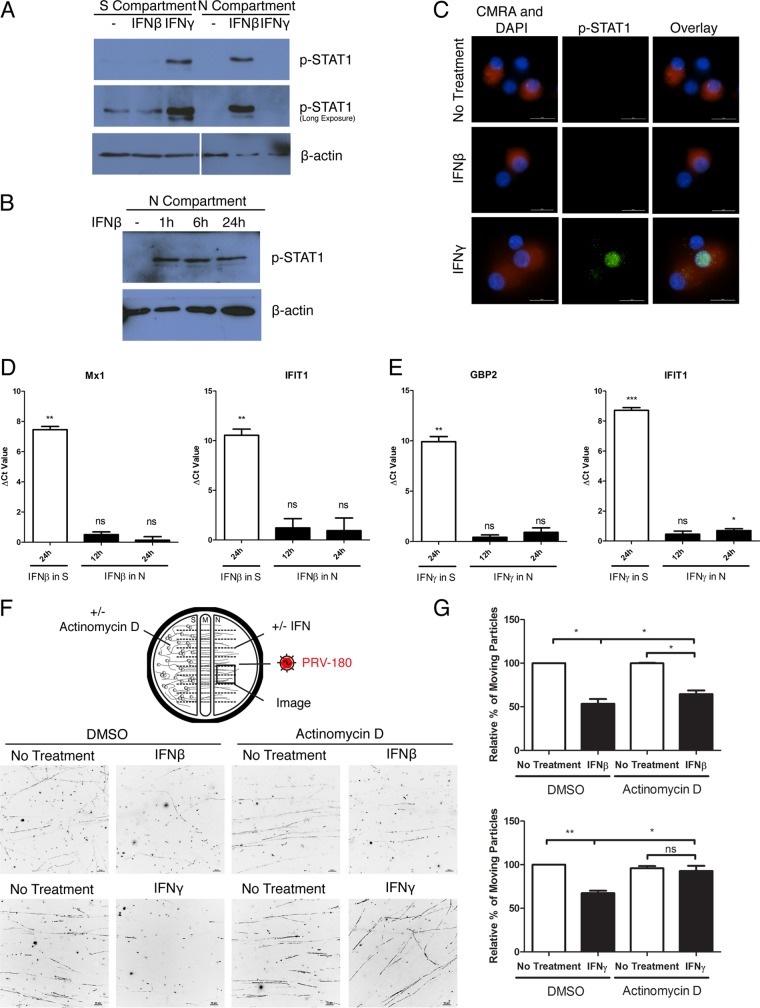
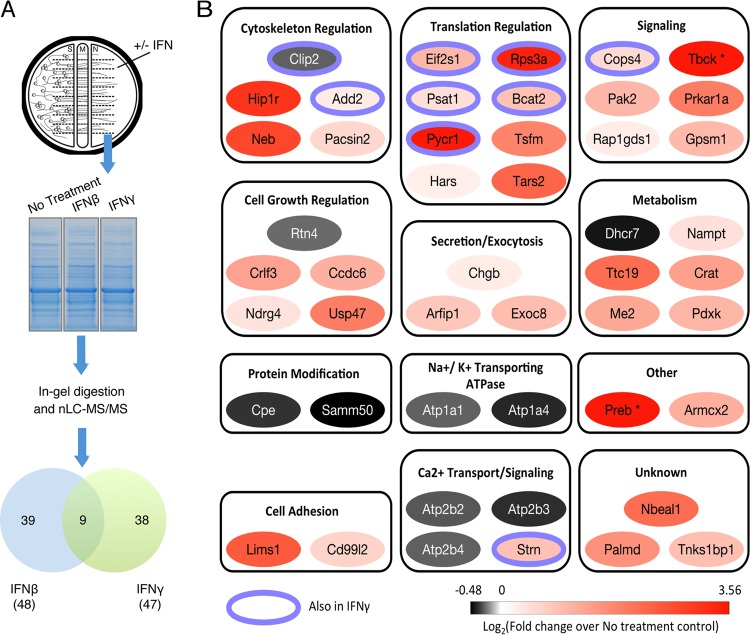
Infection by alphaherpesviruses, including herpes simplex virus (HSV) and pseudorabies virus (PRV), typically begins at epithelial surfaces and continues into the peripheral nervous system (PNS). Inflammatory responses are induced at the infected peripheral site prior to invasion of the PNS. When the peripheral tissue is first infected, only the innervating axons are exposed to this inflammatory milieu, which includes the interferons (IFNs). The fundamental question is how do PNS cell bodies respond to these distant, potentially damaging events experienced by axons. Using compartmented cultures that physically separate neuron axons from cell bodies, we found that pretreating isolated axons with beta interferon (IFN-β) or gamma interferon (IFN-γ) significantly diminished the number of herpes simplex virus 1 (HSV-1) and PRV particles moving in axons toward the cell bodies in a receptor-dependent manner. Exposing axons to IFN-β induced STAT1 phosphorylation (p-STAT1) only in axons, while exposure of axons to IFN-γ induced p-STAT1 accumulation in distant cell body nuclei. Blocking transcription in cell bodies eliminated antiviral effects induced by IFN-γ, but not those induced by IFN-β. Proteomic analysis of IFN-β- or IFN-γ-treated axons identified several differentially regulated proteins. Therefore, unlike treatment with IFN-γ, IFN-β induces a noncanonical, local antiviral response in axons. The activation of a local IFN response in axons represents a new paradigm for cytokine control of neuroinvasion.
Neurons are highly polarized cells with long axonal processes that connect to distant targets. PNS axons that innervate peripheral tissues are exposed to various situations that follow infection, inflammation, and damage of the tissue. After viral infection in the periphery, axons represent potential front-line barriers to PNS infection and damage. Indeed, most viral infections do not spread to the PNS, yet the mechanisms responsible are not well studied. We devised an experimental system to study how axons respond to inflammatory cytokines that would be produced by infected tissues. We found that axons respond differentially to type I and type II interferons. The response to type I interferon (IFN-β) is a rapid axon-only response. The response to type II interferon (IFN-γ) involves long-distance signaling to the PNS cell body. These responses to two interferons erect an efficient and rapid barrier to PNS infection.
包括单纯疱疹病毒(HSV)和伪狂犬病病毒(PRV)在内的α疱疹病毒感染通常始于上皮表面,并持续侵入外周神经系统(PNS)。在PNS被侵袭之前,感染的外周部位会引发炎症反应。当外周组织首次被感染时,只有支配它的轴突暴露于这种炎症环境中,其中包括干扰素(IFN)。根本问题是PNS细胞体如何应对轴突所经历的这些远距离、潜在的损伤事件。使用将神经元轴突与细胞体物理分隔开的分隔培养法,我们发现用β干扰素(IFN-β)或γ干扰素(IFN-γ)预处理分离的轴突,以受体依赖的方式显著减少了沿轴突向细胞体移动的单纯疱疹病毒1型(HSV-1)和PRV颗粒的数量。使轴突暴露于IFN-β仅在轴突中诱导STAT1磷酸化(p-STAT1),而轴突暴露于IFN-γ则诱导p-STAT1在远处的细胞体细胞核中积累。阻断细胞体中的转录消除了IFN-γ诱导的抗病毒作用,但未消除IFN-β诱导的作用。对经IFN-β或IFN-γ处理的轴突进行蛋白质组分析,鉴定出几种差异调节的蛋白质。因此,与IFN-γ处理不同,IFN-β在轴突中诱导一种非经典的局部抗病毒反应。轴突中局部IFN反应的激活代表了细胞因子控制神经侵袭的一种新范式。
神经元是具有长轴突过程的高度极化细胞,轴突连接到远处的靶点。支配外周组织的PNS轴突暴露于组织感染、炎症和损伤后的各种情况。外周病毒感染后,轴突是PNS感染和损伤的潜在一线屏障。事实上,大多数病毒感染不会扩散到PNS,但相关机制尚未得到充分研究。我们设计了一个实验系统来研究轴突如何应对感染组织产生的炎症细胞因子。我们发现轴突对I型和II型干扰素的反应不同。对I型干扰素(IFN-β)的反应是一种快速的仅轴突反应。对II型干扰素(IFN-γ)的反应涉及向PNS细胞体的长距离信号传导。这两种干扰素的这些反应为PNS感染建立了一个高效、快速的屏障。