Woods Andy T, Michel Charles, Spence Charles
Crossmodal Research Laboratory, Department of Experimental Psychology, University of Oxford , Oxford , United Kingdom.
PeerJ. 2016 Jan 4;4:e1526. doi: 10.7717/peerj.1526. eCollection 2016.
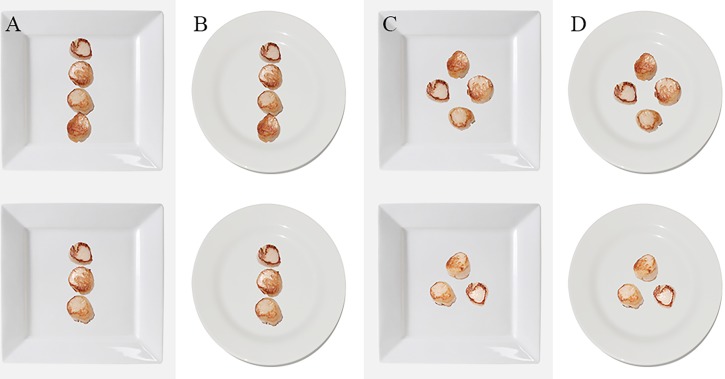
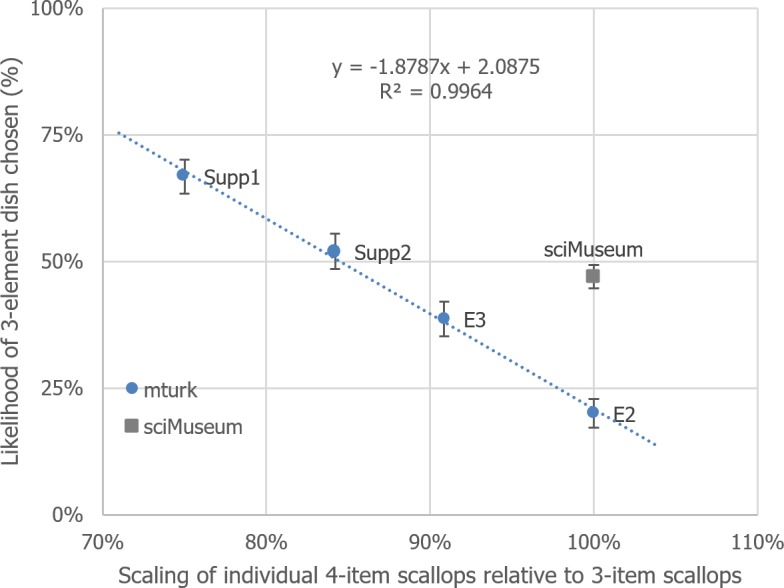
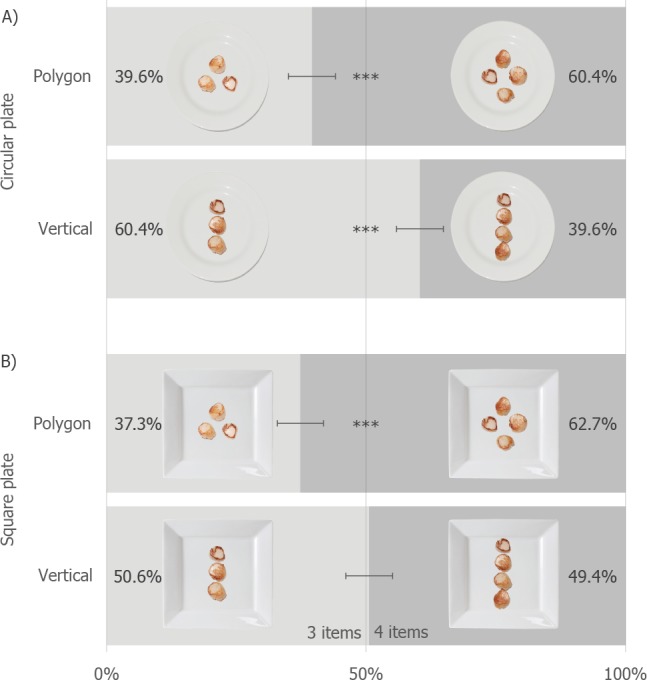
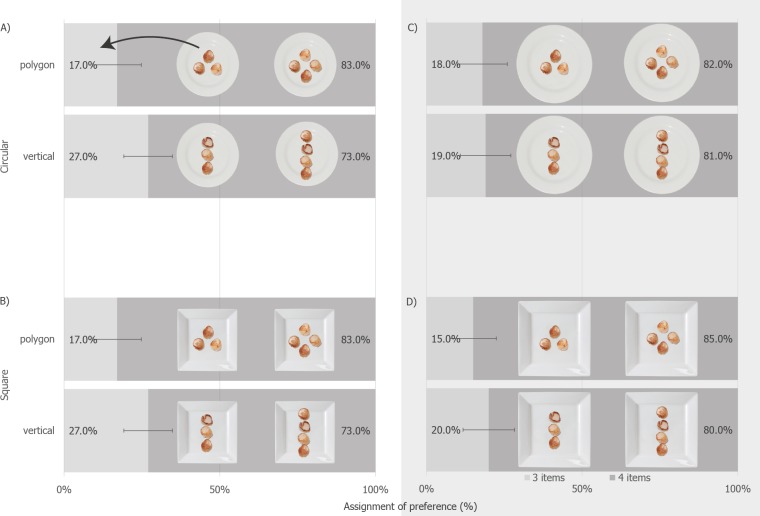
We report on the results of a series of large-scale computer-based preference tests (conducted at The Science Museum in London and online) that evaluated the widely-held belief that food should be plated in odd rather than even numbers of elements in order to maximize the visual appeal of a dish. Participants were presented with pairs of plates of food showing odd versus even number of seared scallops (3 vs. 4; 1-6 in Experiment 7), arranged in a line, as a polygon or randomly, on either a round or square white plate. No consistent evidence for a preference for odd or even numbers of food items was found, thus questioning the oft-made assertion that odd number of items on a plate looks better than an even number. The implications of these results are discussed.
我们报告了一系列大规模的基于计算机的偏好测试结果(在伦敦科学博物馆和网上进行),这些测试评估了一种广泛持有的观点,即食物应以奇数而非偶数的元素装盘,以最大限度地提高菜肴的视觉吸引力。参与者会看到成对的装有食物的盘子,盘子上煎扇贝的数量为奇数与偶数对比(实验7中为3个对4个;1至6个),它们排成一排、呈多边形排列或随机排列,放置在圆形或方形白色盘子上。未发现对食物数量奇数或偶数有一致偏好的证据,因此对常说的盘子上奇数个食物看起来比偶数个更好的说法提出了质疑。本文讨论了这些结果的含义。