Zhang Hong, Yi Hongping, Wu Mingzhu, Zhang Yongbin, Zhang Xuejin, Li Meihua, Wang Guangzhi
Hami Melon Research Center, Xinjiang Academy of Agricultural Science, Urumqi, Xinjiang, China.
PLoS One. 2016 Feb 3;11(2):e0148150. doi: 10.1371/journal.pone.0148150. eCollection 2016.
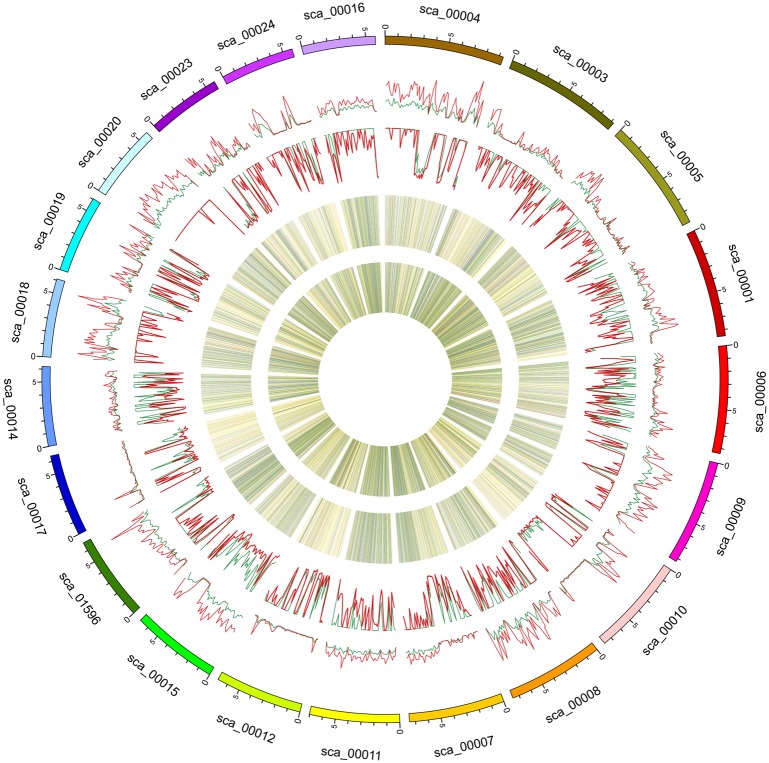
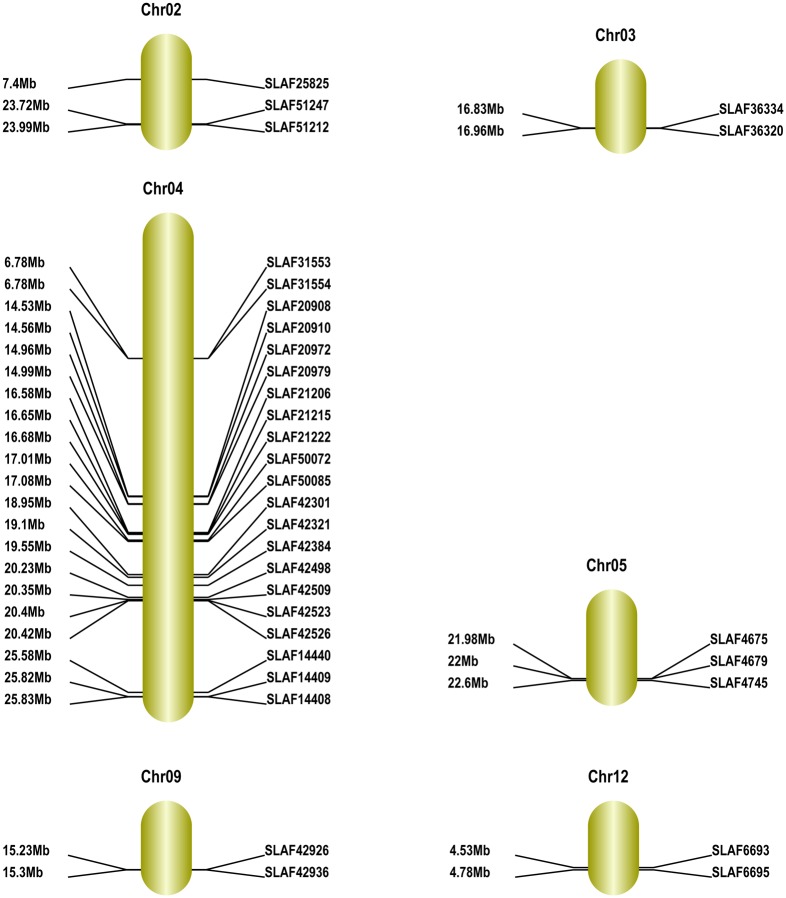
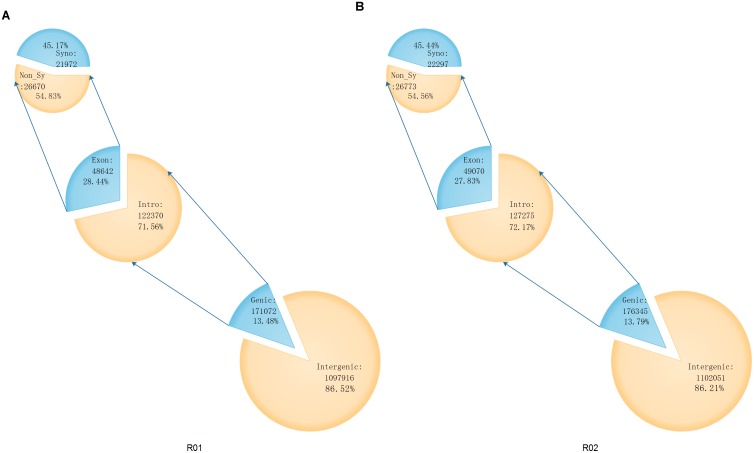
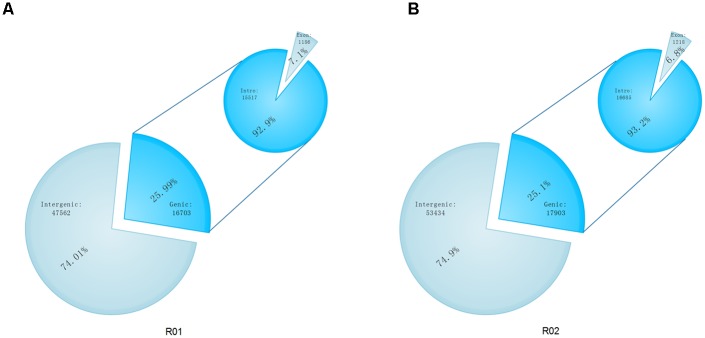
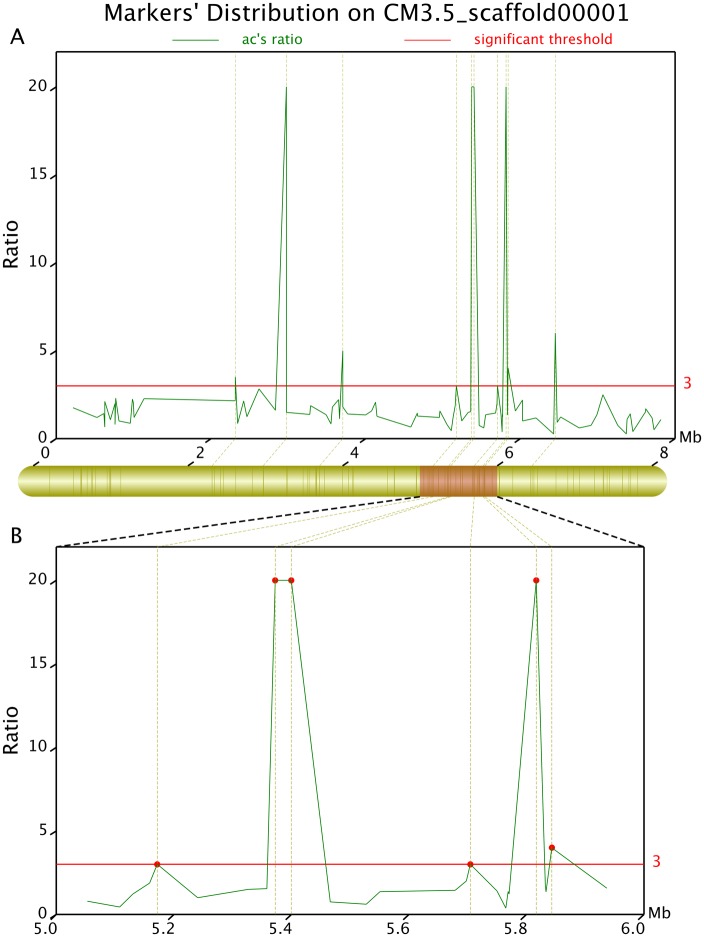
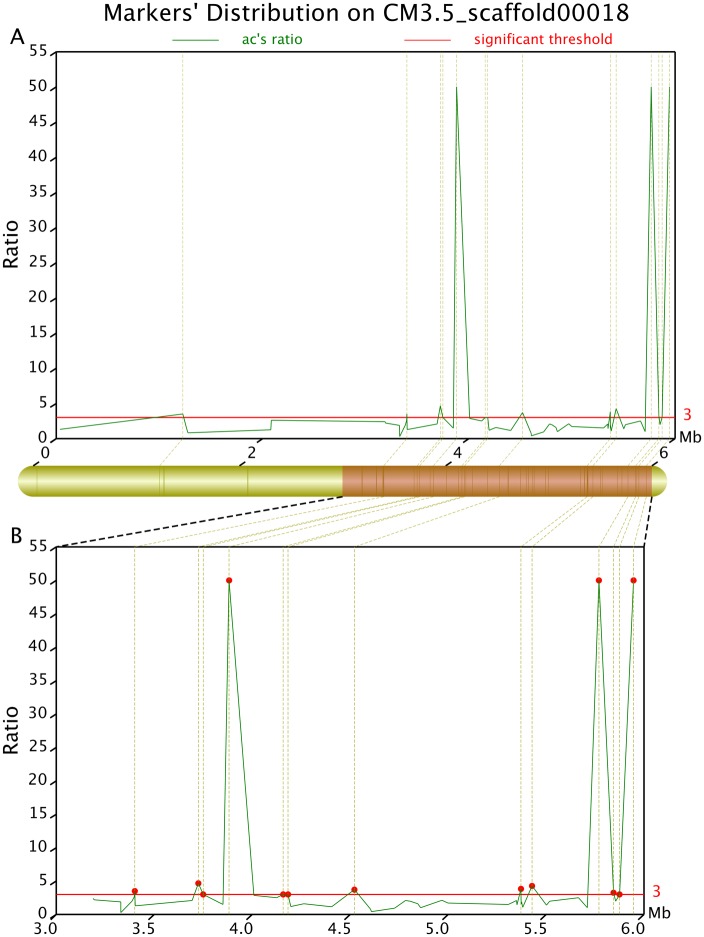
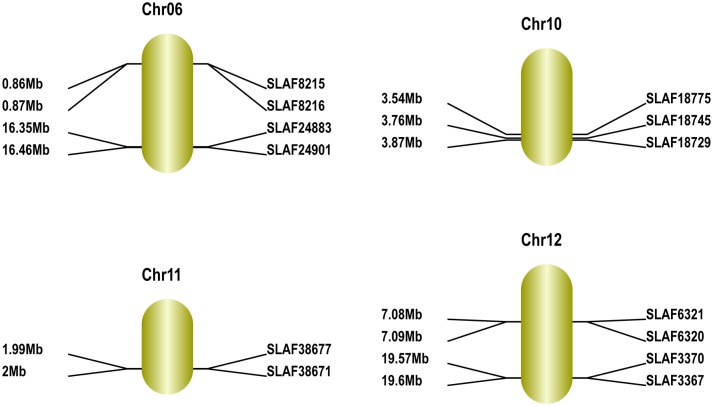
We used a next-generation high-throughput sequencing platform to resequence the Xinguowei and Shouxing melon cultivars, the parents of Fengwei melon. We found 84% of the reads (under a coverage rate of "13×") placed on the reference genome DHL92. There were 2,550,000 single-nucleotide polymorphisms and 140,000 structural variations in the two genomes. We also identified 1,290 polymorphic genes between Xinguowei and Shouxing. We combined specific length amplified fragment sequencing (SLAF-seq) and bulked-segregant analysis (super-BSA) to analyze the two parents and the F2 extreme phenotypes. This combined method yielded 12,438,270 reads, 46,087 SLAF tags, and 4,480 polymorphic markers (average depth of 161.81×). There were six sweet trait-related regions containing 13 differential SLAF markers, and 23 sour trait-related regions containing 48 differential SLAF markers. We further fine-mapped the sweet trait to the genomic regions on chromosomes 6, 10, 11, and 12. Correspondingly, we mapped the sour trait-related genomic regions to chromosomes 2, 3, 4, 5, 9, and 12. Finally, we positioned nine of the 61 differential markers in the sweet and sour trait candidate regions on the parental genome. These markers corresponded to one sweet and eight sour trait-related genes. Our study provides a basis for marker-assisted breeding of desirable sweet and sour traits in Fengwei melons.
我们使用了新一代高通量测序平台对风味甜瓜的亲本新国威和寿星甜瓜品种进行重测序。我们发现84%的 reads(覆盖率为“13×”)定位在参考基因组DHL92上。两个基因组中存在255万个单核苷酸多态性和14万个结构变异。我们还鉴定出了新国威和寿星之间的1290个多态性基因。我们结合了特定长度扩增片段测序(SLAF-seq)和混合分组分析法(super-BSA)来分析这两个亲本以及F2极端表型。这种联合方法产生了12438270条reads、46087个SLAF标签和4480个多态性标记(平均深度为161.81×)。有6个与甜味性状相关的区域包含13个差异SLAF标记,23个与酸味性状相关的区域包含48个差异SLAF标记。我们进一步将甜味性状精细定位到6号、10号、11号和12号染色体上的基因组区域。相应地,我们将酸味性状相关的基因组区域定位到2号、3号、4号、5号、9号和12号染色体上。最后,我们在亲本基因组上的酸甜性状候选区域中定位了61个差异标记中的9个。这些标记对应一个甜味和八个酸味性状相关基因。我们的研究为风味甜瓜中理想的酸甜性状的分子标记辅助育种提供了依据。