Totura Christine M W, Figueroa Holly Lewis, Wharton Christopher, Marsiglia Flavio F
Department of Psychology, Auburn University, 226 Thach Hall, Auburn, AL 36849, USA.
Southwest Interdisciplinary Research Center, Arizona State University, 411 North Central Avenue, Suite 720, Phoenix, AZ 85004, USA.
Prev Med Rep. 2015 Apr 25;2:347-54. doi: 10.1016/j.pmedr.2015.04.008. eCollection 2015.
Research suggests that schools can play a key role in obesity prevention by implementing evidence-based strategies promoting student health. This study explores school climate factors underlying implementation of evidence-based health and wellness policies and practices in Kindergarten-8th grade programs in the Southwestern United States.
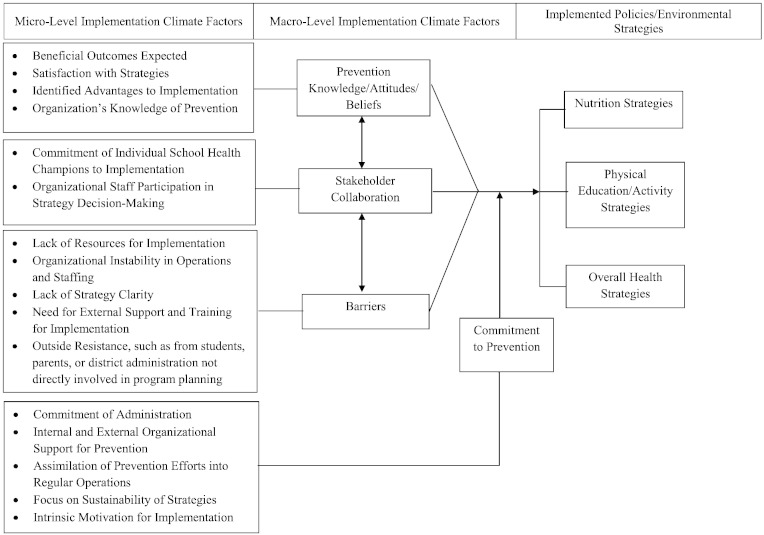
Utilizing a participatory research survey approach conducted in December 2011 with school health professionals (N = 62) and a multiple regression design, a moderated predictive model of implementation climate (i.e., attitudes and beliefs about prevention, school commitment to prevention, barriers, and stakeholder collaboration) was tested.
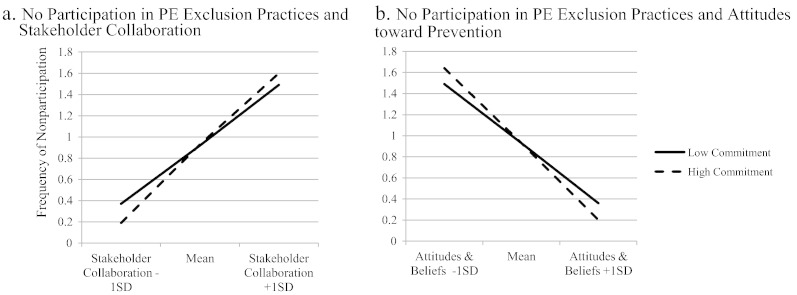
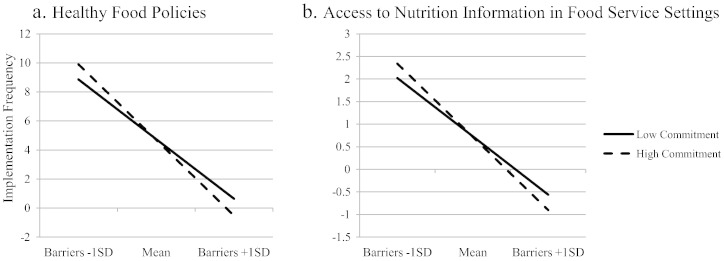
Barriers to obesity prevention efforts, such as lack of resources, support, or strategy clarity, hinder implementation of healthy food policies despite strong school commitment to prevention. Along with the commitment to prevention, stakeholder collaboration predicts physical education strategies, specifically reducing restricted access to physical education as a punishment for student misconduct.
Obesity prevention strategy implementation relies on the supportiveness and structure of school climates. Barriers to prevention can impede efforts despite school commitment toward prevention, while stakeholder collaboration can enhance the likelihood that practices are in place.
研究表明,学校可以通过实施促进学生健康的循证策略在预防肥胖方面发挥关键作用。本研究探讨了美国西南部幼儿园至八年级项目中循证健康与保健政策及实践实施背后的学校氛围因素。
采用2011年12月对学校卫生专业人员(N = 62)进行的参与式研究调查方法和多元回归设计,测试了实施氛围(即对预防的态度和信念、学校对预防的承诺、障碍以及利益相关者合作)的调节预测模型。
尽管学校对预防工作有坚定承诺,但肥胖预防工作的障碍,如缺乏资源、支持或策略清晰度,阻碍了健康食品政策的实施。除了预防承诺外,利益相关者合作还能预测体育教育策略,特别是减少因学生行为不端而限制体育教育的机会。
肥胖预防策略的实施依赖于学校氛围的支持性和架构。尽管学校致力于预防,但预防障碍仍可能阻碍工作进展,而利益相关者合作则可以提高实践到位的可能性。