Moench Kelly M, Maroun Mouna, Kavushansky Alexandra, Wellman Cara
Department of Psychological & Brain Sciences, Center for the Integrative Study of Animal Behavior, and Program in Neuroscience, Indiana University, Bloomington, IN, USA.
Department of Neurobiology, Faculty of Natural Sciences, University of Haifa, Haifa, Israel.
Neurobiol Stress. 2015 Dec 14;3:23-33. doi: 10.1016/j.ynstr.2015.12.002. eCollection 2016 Jun.
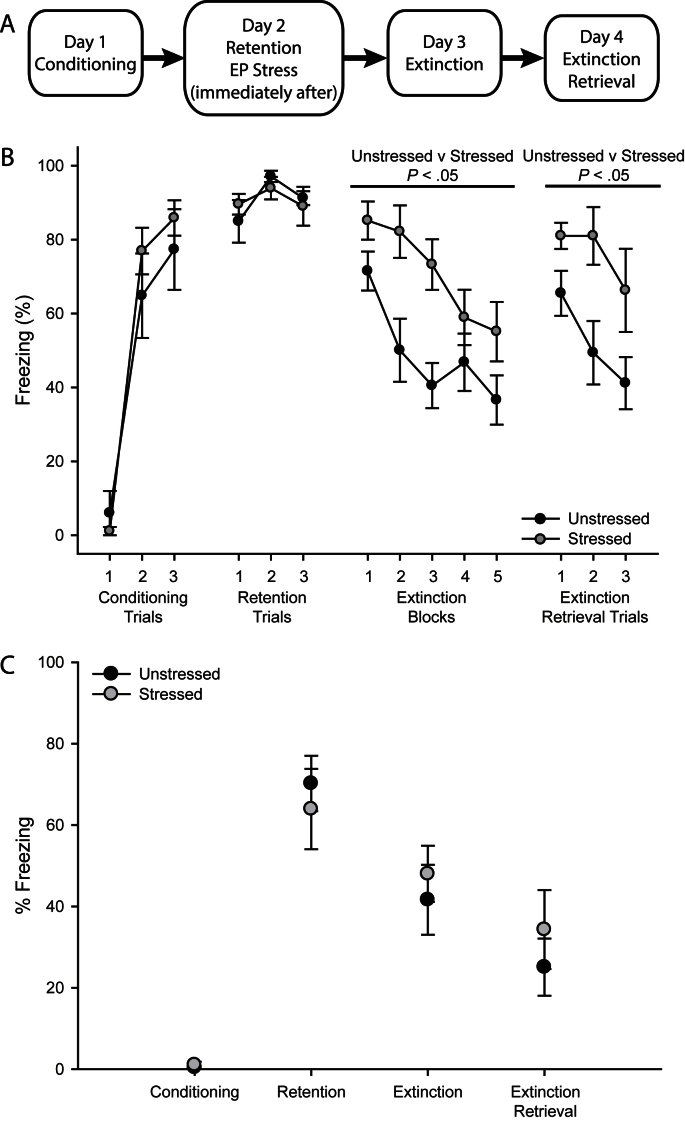
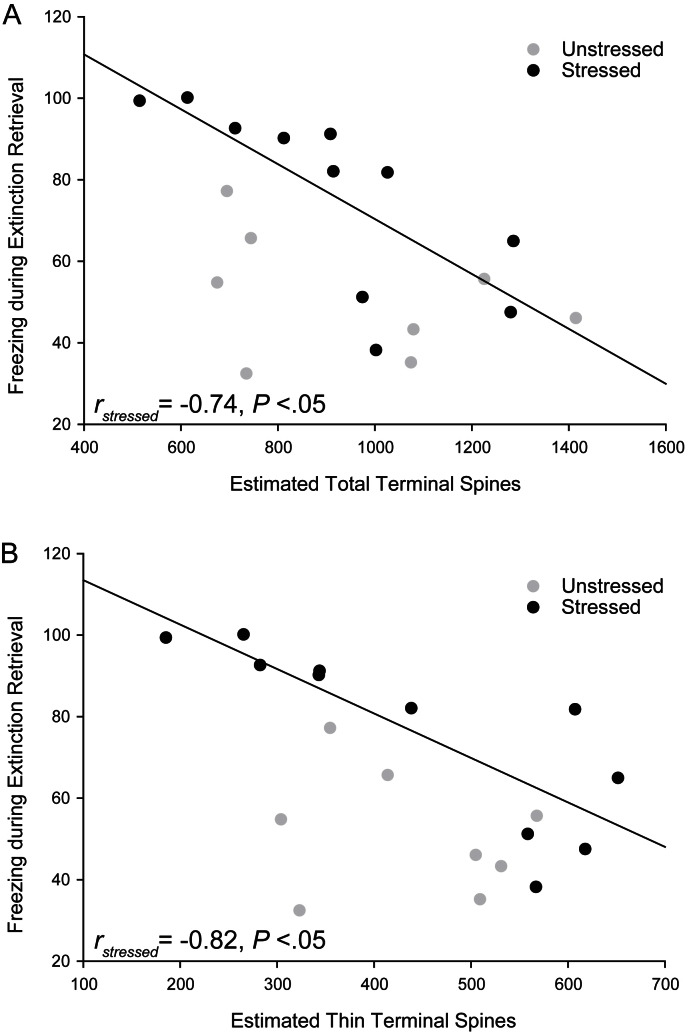
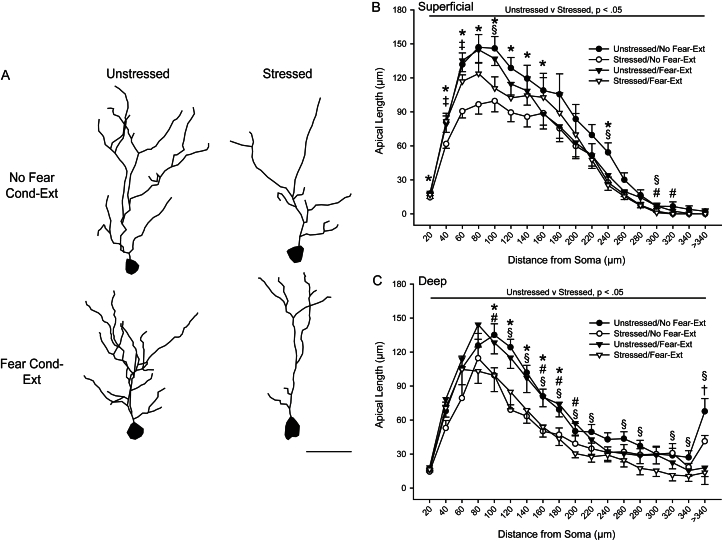
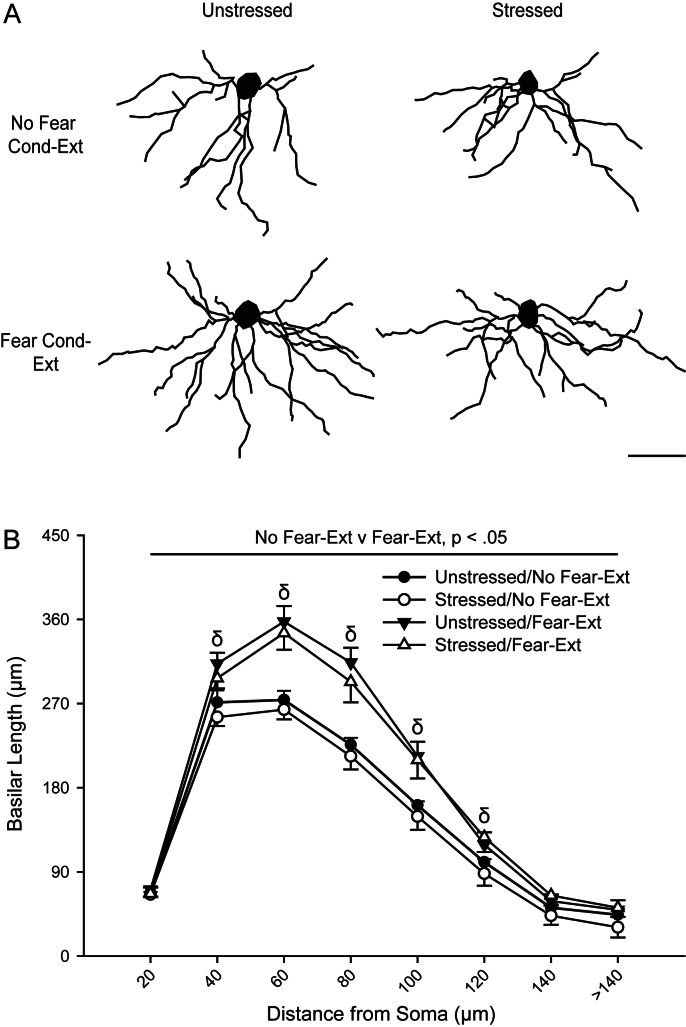
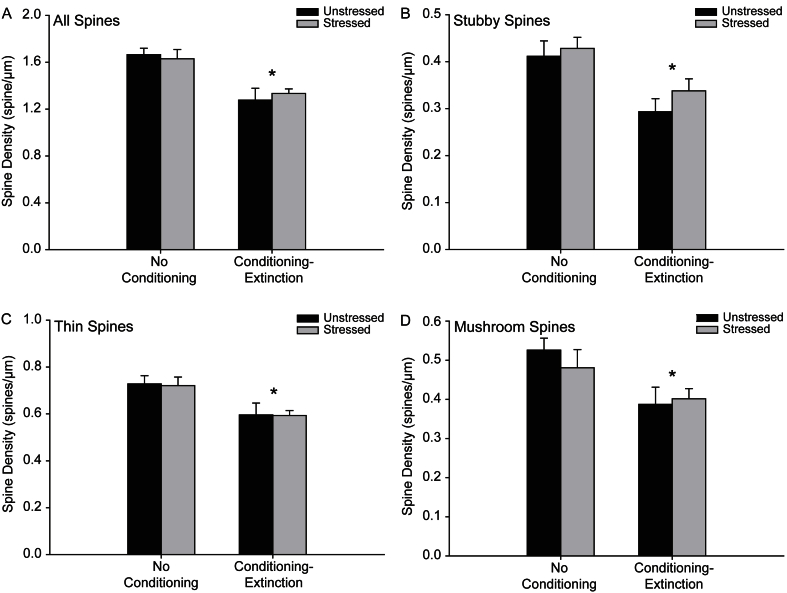
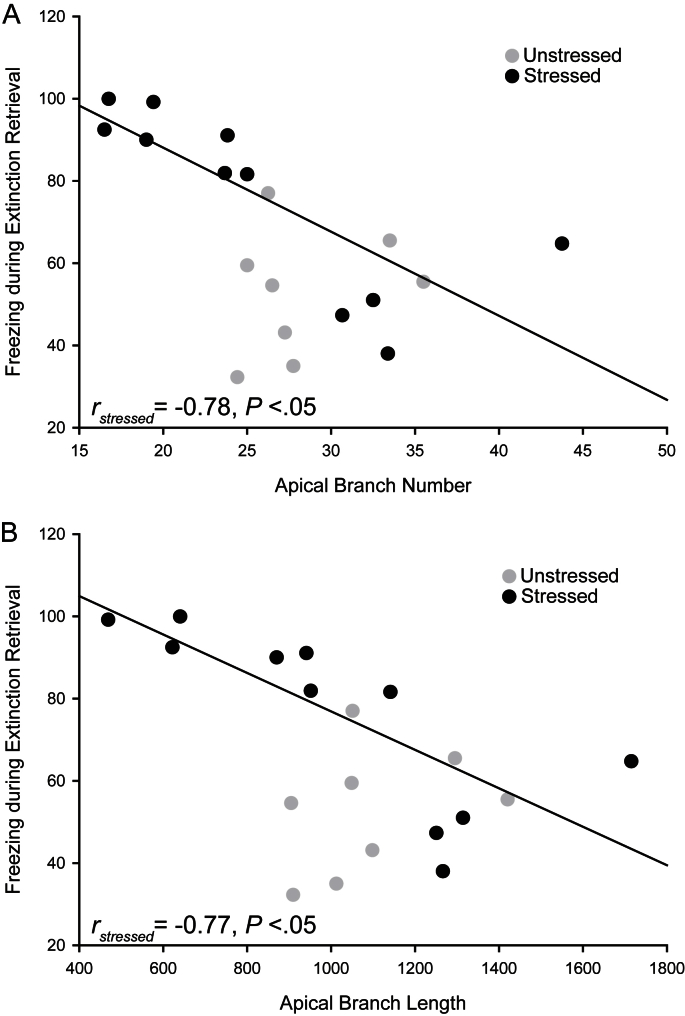
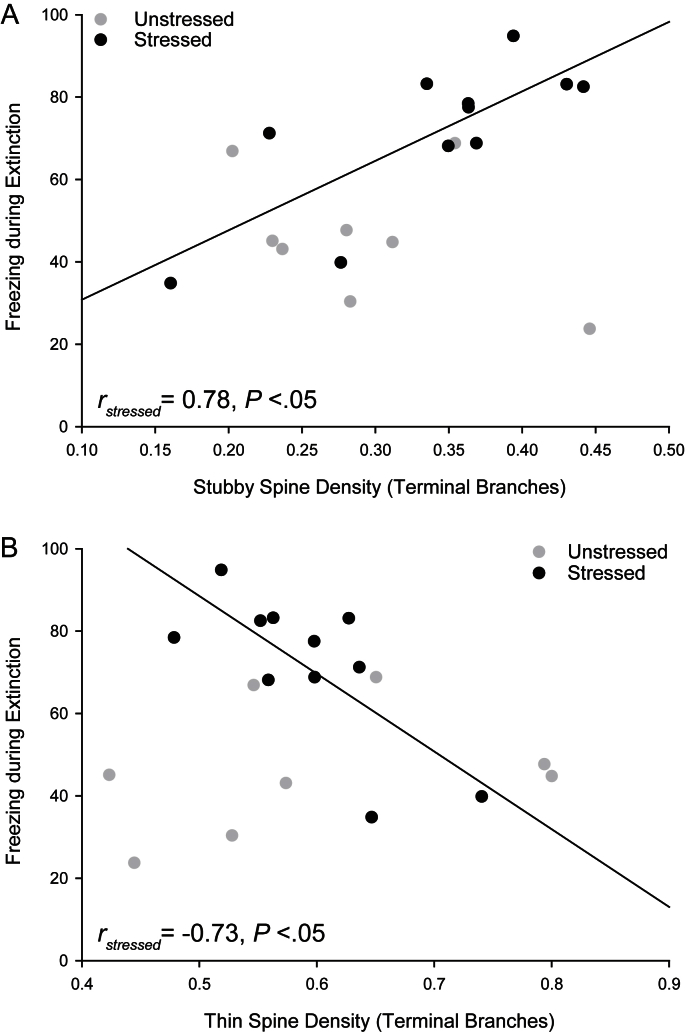
Dysfunction in corticolimbic circuits that mediate the extinction of learned fear responses is thought to underlie the perseveration of fear in stress-related psychopathologies, including post-traumatic stress disorder. Chronic stress produces dendritic hypertrophy in basolateral amygdala (BLA) and dendritic hypotrophy in medial prefrontal cortex, whereas acute stress leads to hypotrophy in both BLA and prelimbic cortex. Additionally, both chronic and acute stress impair extinction retrieval. Here, we examined the effects of a single elevated platform stress on extinction learning and dendritic morphology in infralimbic cortex, a region considered to be critical for extinction. Acute stress produced resistance to extinction, as well as dendritic retraction in infralimbic cortex. Spine density on apical and basilar terminal branches was unaffected by stress. However, animals that underwent conditioning and extinction had decreased spine density on apical terminal branches. Thus, whereas dendritic morphology in infralimbic cortex appears to be particularly sensitive to stress, changes in spines may more sensitively reflect learning. Further, in stressed rats that underwent conditioning and extinction, the level of extinction learning was correlated with spine densities, in that rats with poorer extinction retrieval had more immature spines and fewer thin spines than rats with better extinction retrieval, suggesting that stress may have impaired learning-related spine plasticity. These results may have implications for understanding the role of medial prefrontal cortex in learning deficits associated with stress-related pathologies.
介导习得性恐惧反应消退的皮质边缘回路功能障碍被认为是创伤后应激障碍等与压力相关的精神病理学中恐惧持续存在的基础。慢性应激会导致基底外侧杏仁核(BLA)树突肥大和内侧前额叶皮质树突萎缩,而急性应激则会导致BLA和前边缘皮质均出现萎缩。此外,慢性和急性应激都会损害消退记忆提取。在此,我们研究了单次高架平台应激对边缘下皮质(一个被认为对消退至关重要的区域)的消退学习和树突形态的影响。急性应激产生了对消退的抵抗,以及边缘下皮质的树突回缩。顶端和基底终末分支上的棘密度不受应激影响。然而,经历条件化和消退的动物顶端终末分支上的棘密度降低。因此,虽然边缘下皮质的树突形态似乎对应激特别敏感,但棘的变化可能更敏感地反映学习情况。此外,在经历条件化和消退的应激大鼠中,消退学习水平与棘密度相关,即消退记忆提取较差的大鼠比消退记忆提取较好的大鼠有更多未成熟的棘和更少的细棘,这表明应激可能损害了与学习相关的棘可塑性。这些结果可能对理解内侧前额叶皮质在与压力相关的病理学相关的学习缺陷中的作用具有启示意义。