Paredes Denisse, Knippenberg Anna R, Bulin Sarah E, Keppler Lydia J, Morilak David A
Department of Pharmacology and Center for Biomedical Neuroscience, University of Texas Health Science Center at San Antonio, 7703 Floyd Curl Drive, San Antonio, TX, 78229, USA.
South Texas Veterans Health Care System, San Antonio, TX, 78229, USA.
Neurobiol Stress. 2022 Jul 8;19:100468. doi: 10.1016/j.ynstr.2022.100468. eCollection 2022 Jul.
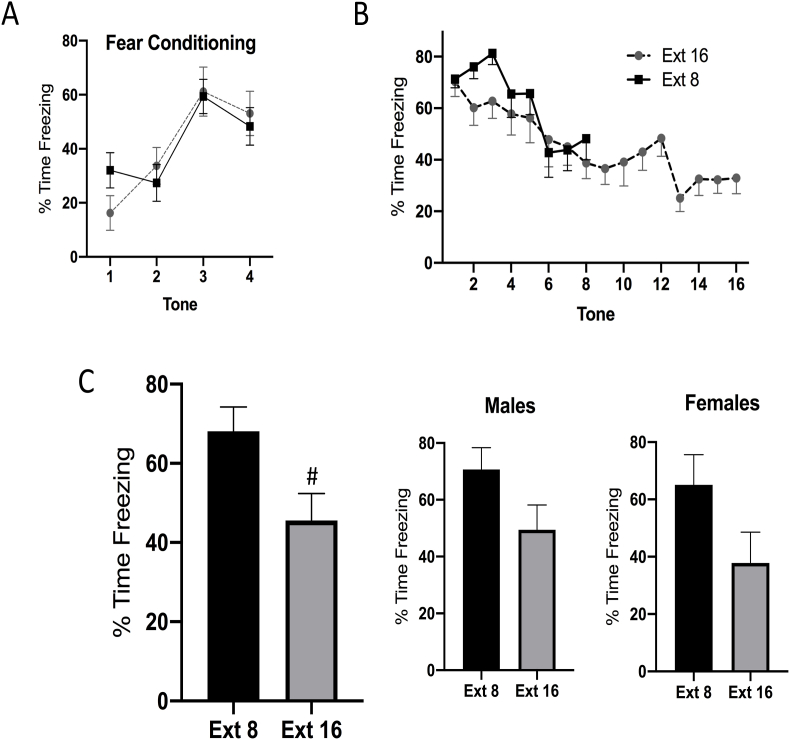
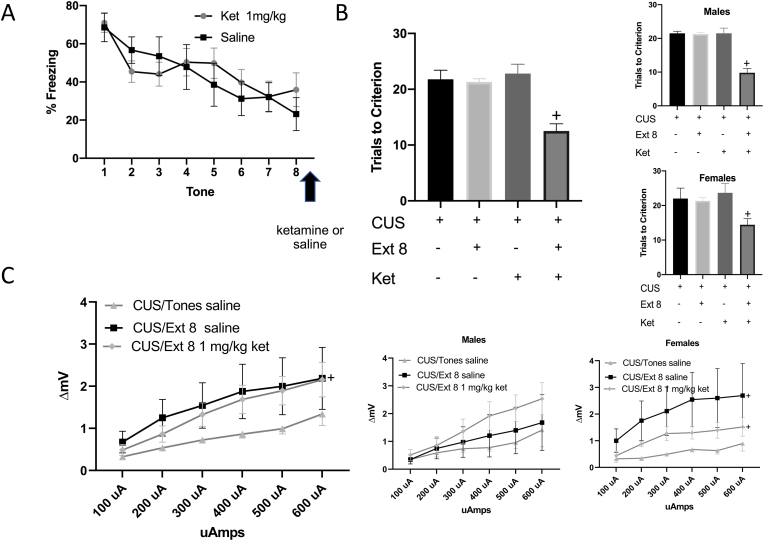
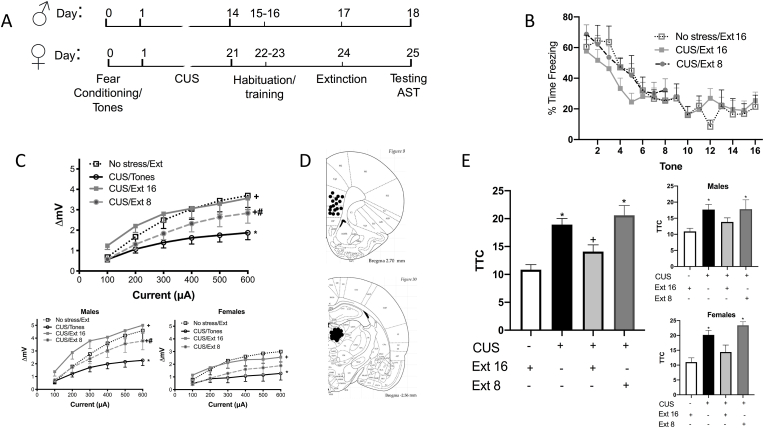
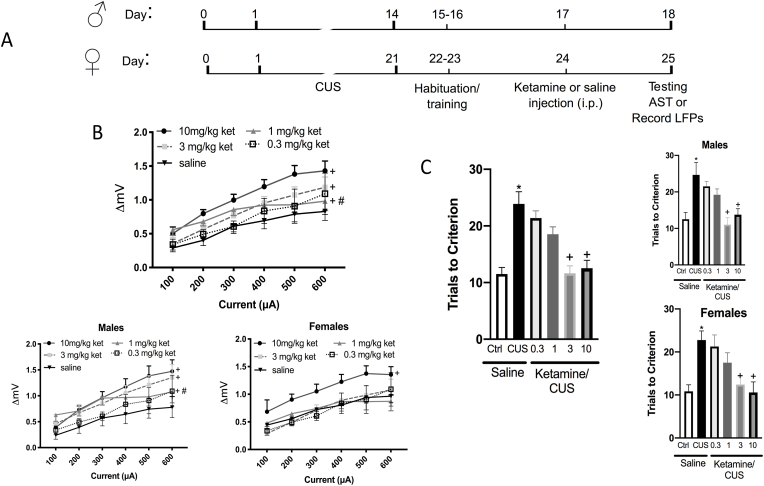
Post-traumatic stress disorder (PTSD) is a debilitating illness characterized by dysfunction in the medial prefrontal cortex (mPFC). Although both pharmacological and cognitive behavioral interventions have shown some promise at alleviating symptoms, high attrition and persistence of treatment-resistant symptoms pose significant challenges that remain unresolved. Specifically, prolonged exposure therapy, a gold standard intervention to treat PTSD, has high dropout rates resulting in many patients receiving less than a fully effective course of treatment. Administering pharmacological treatments together with behavioral psychotherapies like prolonged exposure may offer an important avenue for enhancing therapeutic efficacy sooner, thus reducing the duration of treatment and mitigating the impact of attrition. In this study, using extinction learning as a rat model of exposure therapy, we hypothesized that administering ketamine as an adjunct treatment together with extinction will enhance the efficacy of extinction in reversing stress-induced deficits in set shifting, a measure of cognitive flexibility. Results showed that combining a sub-effective dose of ketamine with a shortened, sub-effective extinction protocol fully reversed stress-induced cognitive set-shifting deficits in both male and female rats. These effects may be due to shared molecular mechanisms between extinction and ketamine, such as increased neuronal plasticity in common circuitry (e.g., hippocampus-mPFC), or increased BDNF signaling. This work suggests that fast-acting drugs, such as ketamine, can be effectively used in combination with behavioral interventions to reduce treatment duration and potentially mitigate the impact of attrition. Future work is needed to delineate other pharmacotherapies that may complement the effects of extinction via shared or independent mechanisms.
创伤后应激障碍(PTSD)是一种使人衰弱的疾病,其特征是内侧前额叶皮质(mPFC)功能失调。尽管药物治疗和认知行为干预在缓解症状方面都显示出了一定的前景,但高脱落率和难治性症状的持续存在带来了重大挑战,仍未得到解决。具体而言,延长暴露疗法作为治疗PTSD的金标准干预措施,脱落率很高,导致许多患者接受的治疗疗程不完全有效。将药物治疗与延长暴露等行为心理治疗联合使用,可能为更快提高治疗效果提供一条重要途径,从而缩短治疗时间并减轻脱落的影响。在本研究中,我们使用消退学习作为暴露疗法的大鼠模型,假设将氯胺酮作为辅助治疗与消退联合使用,将增强消退在逆转应激诱导的定势转换缺陷方面的效果,定势转换是认知灵活性的一种衡量指标。结果表明,将亚有效剂量的氯胺酮与缩短的、亚有效消退方案相结合,能完全逆转雄性和雌性大鼠应激诱导的认知定势转换缺陷。这些效应可能是由于消退和氯胺酮之间存在共同的分子机制,比如共同神经回路(如海马体 - mPFC)中神经元可塑性增加,或脑源性神经营养因子(BDNF)信号增强。这项研究表明,像氯胺酮这样起效快的药物可以有效地与行为干预联合使用,以缩短治疗时间,并有可能减轻脱落的影响。未来需要开展更多工作来确定其他可能通过共同或独立机制补充消退效果的药物疗法。